Und dann auf "Zum Home-Bildschirm [+]".

Stöbern
genialokal zum Startbildschirm hinzufügen
Installieren Sie die genialokal App auf Ihrem Startbildschirm für einen schnellen Zugriff und eine komfortable Nutzung.
Installieren Sie die genialokal App auf Ihrem Startbildschirm für einen schnellen Zugriff und eine komfortable Nutzung.
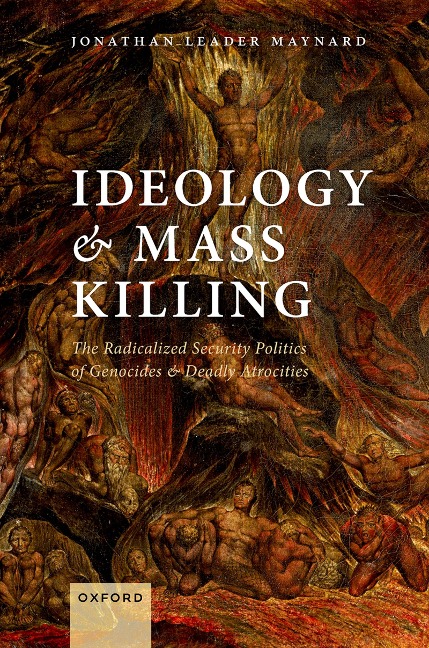
In research on 'mass killings' such as genocides and campaigns of state terror, the role of ideology is hotly debated. For some scholars, ideologies are crucial in providing the extremist goals and hatreds that motivate ideologically committed people to kill. But many other scholars are sceptical: contending that perpetrators of mass killing rarely seem ideologically committed, and that rational self-interest or powerful forms of social pressure are more important drivers of violence than ideology. In Ideology and Mass Killing, Jonathan Leader Maynard challenges both these prevailing views, advancing an alternative 'neo-ideological' perspective which systematically retheorises the key ideological foundations of large-scale violence against civilians. Integrating cutting-edge research from multiple disciplines, including political science, political psychology, history and sociology, Ideology and Mass Killing demonstrates that ideological justifications vitally shape such violence in ways that go beyond deep ideological commitment. Most disturbingly of all, the key ideological foundations of mass killings are found to lie, not in extraordinary political goals or hatreds, but in radicalised versions of those conventional, widely accepted ideas that underpin the politics of security in ordinary societies across the world. This study then substantiates this account by a detailed examination of four contrasting cases of mass killing - Stalinist Repression in the Soviet Union between 1930 and 1938, the Allied Bombing Campaign against Germany and Japan in World War II from 1940 to 1945, mass atrocities in the Guatemalan Civil War between 1978 and 1983, and the Rwandan Genocide in 1994. This represents the first volume to offer a dedicated, comparative theory of ideology's role in mass killing, while also developing a powerful new account of how ideology affects violence and politics more generally.
Jonathan Leader Maynard is a Lecturer in International Politics in the Department of Political Economy at King's College London. He received his doctorate from the University of Oxford in 2014, where he was also the Rank-Manning Junior Research Fellow and then Departmental Lecturer in International Relations at New College between 2013 and 2020. He has published in leading international journals including the Journal of Peace Research, Ethics, the British Journal of Political Science, and Terrorism and Political Violence.
- 1: Introduction - 2: Clarifying Ideology - 3: How Does Ideology Explain Mass Killing? - 4: The Hardline Justification of Mass Killing - 5: Stalinist Repression - 6: Allied Area Bombing in World War II - 7: Mass Killing in Guatemala's Civil War - 8: The Rwandan Genocide - 9: Conclusion
Dieses eBook wird im PDF-Format geliefert und ist mit einem Adobe Kopierschutz (DRM) versehen. Sie können dieses eBook mit allen Geräten lesen, die das PDF-Format und den Adobe Kopierschutz (DRM) unterstützen.
Zum Beispiel mit den folgenden Geräten:
• tolino Reader
Laden Sie das eBook direkt über den Reader-Shop auf dem tolino herunter oder übertragen Sie das eBook auf Ihren tolino mit einer kostenlosen Software wie beispielsweise Adobe Digital Editions.
• Sony Reader & andere eBook Reader
Laden Sie das eBook direkt über den Reader-Shop herunter oder übertragen Sie das eBook mit der kostenlosen Software Sony READER FOR PC/Mac oder Adobe Digital Editions auf ein Standard-Lesegeräte mit epub- und Adobe DRM-Unterstützung.
• Tablets & Smartphones
Möchten Sie dieses eBook auf Ihrem Smartphone oder Tablet lesen, finden Sie hier unsere kostenlose Lese-App für iPhone/iPad und Android Smartphone/Tablets.
• PC & Mac
Lesen Sie das eBook direkt nach dem Herunterladen mit einer kostenlosen Lesesoftware, beispielsweise Adobe Digital Editions, Sony READER FOR PC/Mac oder direkt über Ihre eBook-Bibliothek in Ihrem Konto unter „Meine eBooks“ - „online lesen“.
Schalten Sie das eBook mit Ihrer persönlichen Adobe ID auf bis zu sechs Geräten gleichzeitig frei.
Bitte beachten Sie, dass die Kindle-Geräte das Format nicht unterstützen und dieses eBook somit nicht auf Kindle-Geräten lesbar ist.