Und dann auf "Zum Home-Bildschirm [+]".

Stöbern
genialokal zum Startbildschirm hinzufügen
Installieren Sie die genialokal App auf Ihrem Startbildschirm für einen schnellen Zugriff und eine komfortable Nutzung.
Installieren Sie die genialokal App auf Ihrem Startbildschirm für einen schnellen Zugriff und eine komfortable Nutzung.

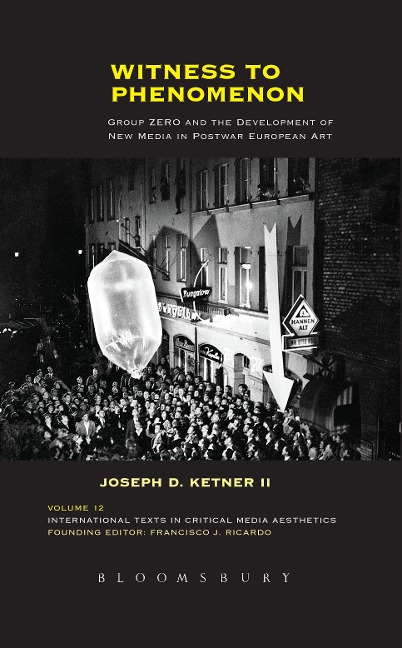
Witness to Phenomenon articulates a fresh examination of the German Group Zero-Heinz Mack, Otto Piene, and Günter Uecker-and other new tendency artists, who rejected painting and introduced new art media in postwar Europe. Group ZERO evolved into a network across Europe- Amsterdam, Milan, Paris, and Zagreb. This pan-European affiliation of artists generated a continuous stream of innovative artistic statements through the 1960s, incorporating non-traditional materials and new technologies to create kinetic art, light installations, performances, immersive multimedia installations, monumental land art, and the communication media of video and television. They transformed the visual arts from the inanimate objet d'art to a sensory experience by adopting the ascendant philosophy of Phenomenology as their conceptual foundation. Drawing from a decade of research on unpublished archives of the artists and critics of this period, this publication positions Group ZERO as a catalytic art moment in the transition from modern to contemporary art.
Joseph D. Ketner II is Foster Chair in Contemporary Art and Distinguished Curator in Residence at Emerson College, Boston, USA. A curator and art historian for over thirty years, Ketner has curated exhibitions and publishing on a range of topics from nineteenth century African American art, particularly Robert S. Duncanson, and modern and contemporary European and American art. His recent publications include books on Warhol; as well as essays on Heinz Mack and Otto Piene for Sperone Westwater Gallery, New York.
Acknowledgements
Introduction
Chapter 1: Europe After the Rain: Un art autre, art informel
Chapter 2: "Does Contemporary Painting Influence the Shape of the World?": The Problem of Painting and the Question of Reality
Chapter 3: ZERO, the New Tendency, and New Media
Chapter 4: Artists Actions into Theater
Chapter 5: Aistheton: Immersive Multimedia Environments
Chapter 6: The Vision of Television
Chapter 7: Coda
Endnotes
Bibliography