Und dann auf "Zum Home-Bildschirm [+]".

Stöbern
genialokal zum Startbildschirm hinzufügen
Installieren Sie die genialokal App auf Ihrem Startbildschirm für einen schnellen Zugriff und eine komfortable Nutzung.
Installieren Sie die genialokal App auf Ihrem Startbildschirm für einen schnellen Zugriff und eine komfortable Nutzung.
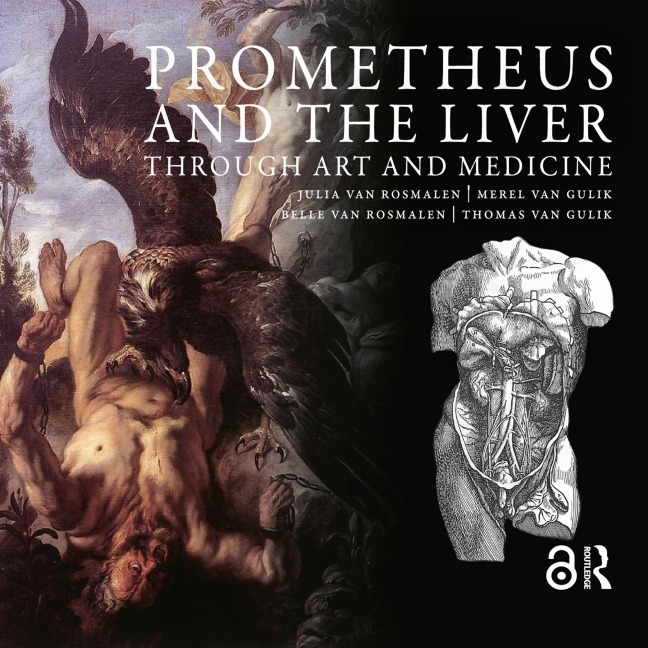
Prometheus was punished by the supreme god Zeus for giving to mankind the Olympic fire with which they learned to think and feel. He was chained to a cliff in the Caucasus, where, to make matters worse, he was visited daily by an eagle who ate part of his liver. At night, however, his liver grew back. We now know that the liver can regenerate, but were the ancient Greeks aware of this quality? The myth of Prometheus has been a source of inspiration for many visual artists over the centuries. In this book, the medical history of the liver is traced through the ages through an examination of historical texts on the organ's functions and properties, parallel to the art movements in which the fascinating iconography of Prometheus is reviewed. The book offers a surprising interplay of art and medicine, placing emphasis on the unique morphology of the liver.
Julia van Rosmalen specialized in the iconography of medieval art at the Courtauld Institute of Art. She worked as a Voluntary Research Fellow at the Catholic University Leuven. She has conducted this work as part of the Prometheus Project under Professor Thomas van Gulik at the Amsterdam University Medical Centers. Merel van Gulik studied classics and Italian language and culture at the University of Amsterdam. Belle van Rosmalen is a PhD candidate at the Department of Surgery at the Amsterdam University Medical Centers, University of Amsterdam. Thomas van Gulik is emeritus Professor of Surgery at the Amsterdam University Medical Centers, University of Amsterdam.
Introduction, The Prometheus myth, The depiction of Prometheus in classical antiquity, The liver according to the ancient Greeks and the etruscans, The haruspex and Hepatoscopy, Prometheus in the Middle Ages, The liver in the in the Middle Ages, according to Galenus,Prometheus in the Renaissance, The liver in the renaissance as described by Reisch, Vesalius and Da Vinci, Prometheus in the Baroque, The wounds of christ and prometheus, two of a kind? The liver in the Baroque, according to van der Spiegel, Glisson and Bidloo,Prometheus and modernity, Mary Shelley's Frankenstein: or the modern Prometheus, The liver in the enlightenment, The 20th century Prometheus, Liver surgery and liver regeneration, Regeneration of the Hydra polyp, Acknowledgements, On the Authors, Image descriptions, Bibliography.
Dieses eBook wird im PDF-Format geliefert und ist mit einem Adobe Kopierschutz (DRM) versehen. Sie können dieses eBook mit allen Geräten lesen, die das PDF-Format und den Adobe Kopierschutz (DRM) unterstützen.
Zum Beispiel mit den folgenden Geräten:
• tolino Reader
Laden Sie das eBook direkt über den Reader-Shop auf dem tolino herunter oder übertragen Sie das eBook auf Ihren tolino mit einer kostenlosen Software wie beispielsweise Adobe Digital Editions.
• Sony Reader & andere eBook Reader
Laden Sie das eBook direkt über den Reader-Shop herunter oder übertragen Sie das eBook mit der kostenlosen Software Sony READER FOR PC/Mac oder Adobe Digital Editions auf ein Standard-Lesegeräte mit epub- und Adobe DRM-Unterstützung.
• Tablets & Smartphones
Möchten Sie dieses eBook auf Ihrem Smartphone oder Tablet lesen, finden Sie hier unsere kostenlose Lese-App für iPhone/iPad und Android Smartphone/Tablets.
• PC & Mac
Lesen Sie das eBook direkt nach dem Herunterladen mit einer kostenlosen Lesesoftware, beispielsweise Adobe Digital Editions, Sony READER FOR PC/Mac oder direkt über Ihre eBook-Bibliothek in Ihrem Konto unter „Meine eBooks“ - „online lesen“.
Schalten Sie das eBook mit Ihrer persönlichen Adobe ID auf bis zu sechs Geräten gleichzeitig frei.
Bitte beachten Sie, dass die Kindle-Geräte das Format nicht unterstützen und dieses eBook somit nicht auf Kindle-Geräten lesbar ist.