
Stöbern
genialokal zum Startbildschirm hinzufügen
Installieren Sie die genialokal App auf Ihrem Startbildschirm für einen schnellen Zugriff und eine komfortable Nutzung.
Installieren Sie die genialokal App auf Ihrem Startbildschirm für einen schnellen Zugriff und eine komfortable Nutzung.
Tippen Sie einfach auf Teilen:
 Und dann auf "Zum Home-Bildschirm [+]".
Bei genialokal.de kaufen Sie online bei Ihrer lokalen, inhabergeführten Buchhandlung!
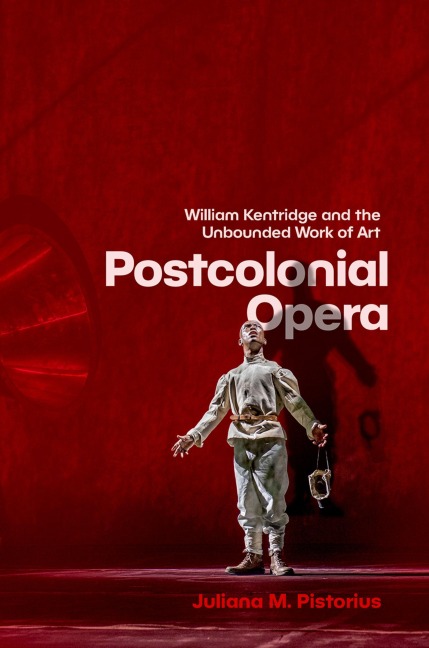
Opera has long been known for its ability to be used as a tool for colonial expression. But it is increasingly used to narrate histories of colonial trauma, oppression, and struggle. What does it mean for a colonial form to represent the experiences of those it used to exclude and undermine? How can opera adapt to meet the challenges of ethical representation and reparation? In response to these questions, Postcolonial Opera: William Kentridge and the Unbounded Work of Art examines the social and political role of opera in the postcolony. Taking the multimedia operatic experiments of William Kentridge, South Africa's most celebrated contemporary visual artist, as a starting point, author Juliana M. Pistorius investigates contemporary opera's potential to process the troubled histories that haunt post- and decolonial societies. Centered around the critical-theoretical themes of return, confession, mourning, time, displacement, and totality, the book considers Kentridge's productions for puppets (Il Ritorno d'Ulisse, 1998; Confessions of Zeno, 2002), his operatic installation for a miniature automated theatre (Black Box/Chambre Noire, 2005), his chamber work for performers and machines (Refuse the Hour, 2012), and his 'processional operas' (Triumphs and Laments, 2016; The Head & the Load, 2018). Pistorius argues that the artist's newly conceived operatic form, built on ideas of unboundedness rather than totality or formlessness, offers opportunities to engage anew with questions of race, coloniality, and cultural belonging in the postcolony. While Kentridge's pieces take the artist's responsibility to deal with the genre's colonial past seriously, she shows how they also offer humor, beauty, and catalytic opportunities to reimagine the form and function of opera in the postcolonial present. Postcolonial Opera intervenes in contemporary debates about opera's relevance and contributes to the growing study of the art form's relationship with race and coloniality. Ultimately, Pistorius argues that Kentridge's multimedia experiments--at once local and global--present compelling perspectives on the contradictions and compromises of the genre's position in the postcolony.
Juliana M. Pistorius is a Marie Sklodowska Curie Global Research Fellow at University College London and the University of the Witwatersrand, South Africa. Her research engages with questions of race, coloniality, and political resistance in Western art music, with a special focus on opera in apartheid and post-apartheid South Africa. Since graduating with a DPhil from the University of Oxford she has held a Leverhulme Early Career Research Fellowship at the University of Huddersfield and has been admitted as a research fellow to Africa Open Institute for Music, Research, and Innovation at the Stellenbosch University. She is a founding member of the Black Opera Research Network (BORN) and the reviews editor for Cambridge Opera Journal.
Acknowledgements About the Companion Website List of Figures Introduction Chapter 1: Return Chapter 2: Confession Chapter 3: Mourning Chapter 4: Time Chapter 5: Place Chapter 6: Totality Conclusion: Future Bibliography Index
Dieses eBook wird im PDF-Format geliefert und ist mit einem Adobe Kopierschutz (DRM) versehen. Sie können dieses eBook mit allen Geräten lesen, die das PDF-Format und den Adobe Kopierschutz (DRM) unterstützen.
Zum Beispiel mit den folgenden Geräten:
• tolino Reader
Laden Sie das eBook direkt über den Reader-Shop auf dem tolino herunter oder übertragen Sie das eBook auf Ihren tolino mit einer kostenlosen Software wie beispielsweise Adobe Digital Editions.
• Sony Reader & andere eBook Reader
Laden Sie das eBook direkt über den Reader-Shop herunter oder übertragen Sie das eBook mit der kostenlosen Software Sony READER FOR PC/Mac oder Adobe Digital Editions auf ein Standard-Lesegeräte mit epub- und Adobe DRM-Unterstützung.
• Tablets & Smartphones
Möchten Sie dieses eBook auf Ihrem Smartphone oder Tablet lesen, finden Sie hier unsere kostenlose Lese-App für iPhone/iPad und Android Smartphone/Tablets.
• PC & Mac
Lesen Sie das eBook direkt nach dem Herunterladen mit einer kostenlosen Lesesoftware, beispielsweise Adobe Digital Editions, Sony READER FOR PC/Mac oder direkt über Ihre eBook-Bibliothek in Ihrem Konto unter „Meine eBooks“ - „online lesen“.
Schalten Sie das eBook mit Ihrer persönlichen Adobe ID auf bis zu sechs Geräten gleichzeitig frei.
Bitte beachten Sie, dass die Kindle-Geräte das Format nicht unterstützen und dieses eBook somit nicht auf Kindle-Geräten lesbar ist.