
Stöbern
genialokal zum Startbildschirm hinzufügen
Installieren Sie die genialokal App auf Ihrem Startbildschirm für einen schnellen Zugriff und eine komfortable Nutzung.
Installieren Sie die genialokal App auf Ihrem Startbildschirm für einen schnellen Zugriff und eine komfortable Nutzung.
Tippen Sie einfach auf Teilen:
 Und dann auf "Zum Home-Bildschirm [+]".
Bei genialokal.de kaufen Sie online bei Ihrer lokalen, inhabergeführten Buchhandlung!
Ihr gewünschter Artikel ist in 0 Buchhandlungen vorrätig - wählen Sie hier eine Buchhandlung in Ihrer Nähe aus:

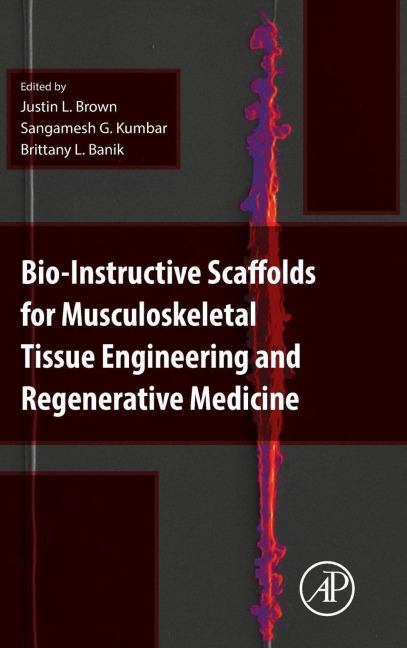
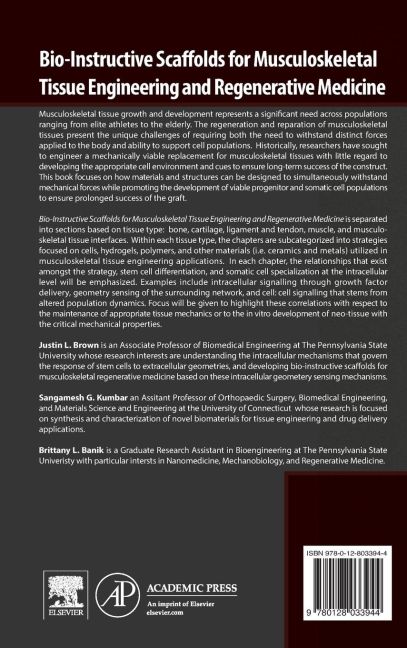
Bio-Instructive Scaffolds for Musculoskeletal Tissue Engineering and Regenerative Medicine explores musculoskeletal tissue growth and development across populations, ranging from elite athletes to the elderly. The regeneration and reparation of musculoskeletal tissues present the unique challenges of requiring both the need to withstand distinct forces applied to the body and ability to support cell populations. The book is separated into sections based on tissue type, including bone, cartilage, ligament and tendon, muscle, and musculoskeletal tissue interfaces. Within each tissue type, the chapters are subcategorized into strategies focused on cells, hydrogels, polymers, and other materials (i.e. ceramics and metals) utilized in musculoskeletal tissue engineering applications. In each chapter, the relationships that exist amongst the strategy, stem cell differentiation and somatic cell specialization at the intracellular level are emphasized. Examples include intracellular signaling through growth factor delivery, geometry sensing of the surrounding network, and cell signaling that stems from altered population dynamics.
Justin Brown is an Associate Professor of Biomedical Engineering at the Pennsylvania State University. He received his Ph.D. (Biomedical Engineering) and studied as a postdoctoral fellow (Cell and Molecular Biology) at the University of Virginia. His Ph.D. research focused on the use of novel biodegradable polyphosphazenes and poly(L-lactide) to construct novel scaffolds for bone tissue engineering presenting both micro and nanostructures. His postdoctoral research focused on MAPK signaling in osteoblasts in response to synthetic nanofiber architectures. His current research interests are fundamental mechanisms stem cells use to sense and respond to translational biomaterial interfaces.
Part I: Introduction Chapter 1: Bio-Instructive Cues in Scaffolds for Musculoskeletal Tissue Engineering and Regenerative Medicine Chapter 2: Functionalizing With Bioactive Peptides to Generate Bio-Instructive Scaffolds Part II: Bone Chapter 3: Bio-Instructive Scaffolds for Bone Regeneration Part III: Tendon/Ligament Chapter 4: Bio-Instructive Scaffolds for Tendon/Ligament Regeneration Part IV: Cartilage Chapter 5: Bio-Instructive Scaffolds for Cartilage Regeneration Part V: Muscle Chapter 6: Ultrastructure and Biomechanics of Skeletal Muscle ECM: Implications in Tissue Regeneration Chapter 7: Bio-Instructive Scaffolds for Muscle Regeneration: NonCrosslinked Polymers Chapter 8: Bio-Instructive Scaffolds for Skeletal Muscle Regeneration: Conductive Materials Part VI: Musculoskeletal Interfaces Chapter 9: Bio-Instructive Scaffolds for Musculoskeletal Interfaces