Und dann auf "Zum Home-Bildschirm [+]".

Stöbern
genialokal zum Startbildschirm hinzufügen
Installieren Sie die genialokal App auf Ihrem Startbildschirm für einen schnellen Zugriff und eine komfortable Nutzung.
Installieren Sie die genialokal App auf Ihrem Startbildschirm für einen schnellen Zugriff und eine komfortable Nutzung.
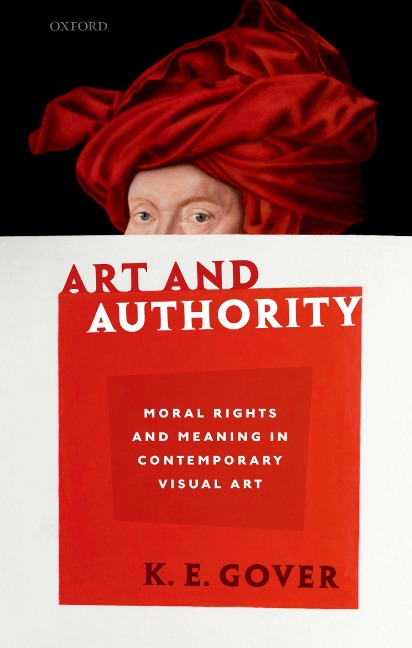
People engage with authored works all the time. They buy paintings, read books, download songs - they may even be artists themselves. Very rarely, however, is the concept of authorship brought into question. The basic idea that the artist as an author maintains some kind of claim to his or her creation, even as it circulates in the world at large, seems natural. It is the basis for copyright law and moral rights legislation which protect the rights of authors. But what is an author, and why do artists receive special legal recognition and protection that the creators of other kinds of artefacts do not? It is often assumed that artists have a special bond with their artworks, but the nature of this bond and its function as the source of an artist's authority over their work often goes unquestioned. Art and Authority is a philosophical essay on artistic freedom: its sources, nature, and limits. Artistic freedom can mean different things depending on the context in which it is invoked. K. E. Gover argues that the most fundamental form of artistic freedom involves the artist's authority to accept or disavow the works that they produce and to curate the works that bear their name. Our very concept of what an artwork is the intentional expression of the artist, for its own sake depends on this second-order endorsement by the artist of what they have made. Using real-world cases and controversies in contemporary visual art, Gover argues that the leading accounts of artistic authorship in the legal and philosophical literature have overlooked the significance of this moment.
K. E. Gover is currently a JD candidate at Harvard Law School. She was a philosophy professor at Bennington College from 2005-2019, and held a visiting professorship at Columbia University in 2019-2020.
- 1: Introduction - 2: Art, Authorship, and Authorization - 3: When the Work is Finished - 4: The Artist and the Institution - 5: Boundary Issues: Reconsidering the Artist's Sanction - 6: Taking Pictures: Appropriation Art, Copyright, and Intentionalism - 7: Conclusion
Dieses eBook wird im PDF-Format geliefert und ist mit einem Adobe Kopierschutz (DRM) versehen. Sie können dieses eBook mit allen Geräten lesen, die das PDF-Format und den Adobe Kopierschutz (DRM) unterstützen.
Zum Beispiel mit den folgenden Geräten:
• tolino Reader
Laden Sie das eBook direkt über den Reader-Shop auf dem tolino herunter oder übertragen Sie das eBook auf Ihren tolino mit einer kostenlosen Software wie beispielsweise Adobe Digital Editions.
• Sony Reader & andere eBook Reader
Laden Sie das eBook direkt über den Reader-Shop herunter oder übertragen Sie das eBook mit der kostenlosen Software Sony READER FOR PC/Mac oder Adobe Digital Editions auf ein Standard-Lesegeräte mit epub- und Adobe DRM-Unterstützung.
• Tablets & Smartphones
Möchten Sie dieses eBook auf Ihrem Smartphone oder Tablet lesen, finden Sie hier unsere kostenlose Lese-App für iPhone/iPad und Android Smartphone/Tablets.
• PC & Mac
Lesen Sie das eBook direkt nach dem Herunterladen mit einer kostenlosen Lesesoftware, beispielsweise Adobe Digital Editions, Sony READER FOR PC/Mac oder direkt über Ihre eBook-Bibliothek in Ihrem Konto unter „Meine eBooks“ - „online lesen“.
Schalten Sie das eBook mit Ihrer persönlichen Adobe ID auf bis zu sechs Geräten gleichzeitig frei.
Bitte beachten Sie, dass die Kindle-Geräte das Format nicht unterstützen und dieses eBook somit nicht auf Kindle-Geräten lesbar ist.