Und dann auf "Zum Home-Bildschirm [+]".

Stöbern
genialokal zum Startbildschirm hinzufügen
Installieren Sie die genialokal App auf Ihrem Startbildschirm für einen schnellen Zugriff und eine komfortable Nutzung.
Installieren Sie die genialokal App auf Ihrem Startbildschirm für einen schnellen Zugriff und eine komfortable Nutzung.
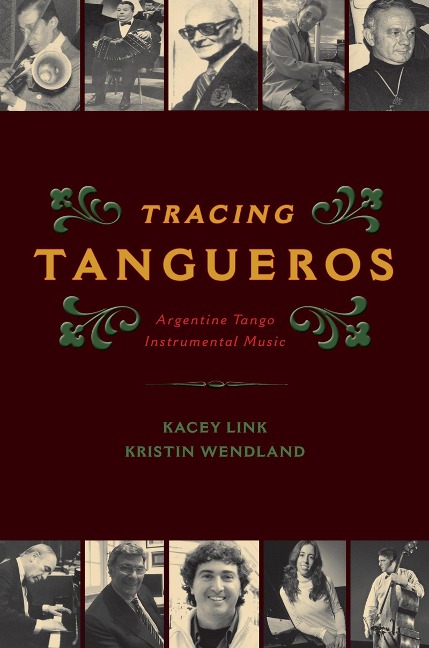
Tracing Tangueros offers an inside view of Argentine tango music in the context of the growth and development of the art form's instrumental and stylistic innovations. Rather than perpetuating the glamorous worldwide conceptions that often only reflect the tango that left Argentina nearly 100 years ago, authors Kacey Link and Kristin Wendland trace tango's historical and stylistic musical trajectory in Argentina, beginning with the guardia nueva's crystallization of the genre in the 1920s, moving through tango's Golden Age (1932-1955), and culminating with the "Music of Buenos Aires" today. Through the transmission, discussion, examination, and analysis of primary sources currently unavailable outside of Argentina, including scores, manuals of style, archival audio/video recordings, and live video footage of performances and demonstrations, Link and Wendland frame and define Argentine tango music as a distinct expression possessing its own musical legacy and characteristic musical elements. Beginning by establishing a broad framework of the tango art form, the book proceeds to move through twelve in-depth profiles of representative tangueros (tango musicians) within the genre's historical and stylistic trajectory. Through this focused examination of tangueros and their music, Link and Wendland show how the dynamic Argentine tango grows from one tanguero linked to another, and how the composition techniques and performance practices of each generation are informed by that of the past.
Kacey Link, D.M.A., is a pianist and scholar residing in Southern California. Kristin Wendland, Ph.D., is a Senior Lecturer at Emory University Department of Music. Together they have given lectures and presentations on Argentine tango throughout the United States as invited university guests and for professional societies.
AcknowledgmentsAbout the Companion Website
Introduction. Argentine Tango: A Multidimensional Art Form Part One: Argentine Tango Instrumental Music I. What Makes It an Argentine Tango? II. Trajectory of Argentine Tango Instrumental Music III. Arranging and Performance Techniques
Part Two: Representative Argentine Tangueros and Their Orchestras from the Guardia Nueva to Today IV. The Guardia Nueva and the Golden Age (1925-55) Julio De Caro Aníbal TroiloOsvaldo Pugliese Cafecito Interlude: Juan D'Arienzo and Carlos Di Sarli V. Post-Golden Age (1955-1990) Horacio Salgán Astor Piazzolla Julián Plaza Leopoldo Federico Cafecito Interlude: Rodolfo Mederos and Néstor Marconi VI. The "Music of Buenos Aires" (1990-present) Damián Bolotin Sonia Possetti Juan Pablo Navarro Postre: Part Two Conclusion NotesBibliographyIndex of Titles and TranslationsGeneral Index
Dieses eBook wird im PDF-Format geliefert und ist mit einem Adobe Kopierschutz (DRM) versehen. Sie können dieses eBook mit allen Geräten lesen, die das PDF-Format und den Adobe Kopierschutz (DRM) unterstützen.
Zum Beispiel mit den folgenden Geräten:
• tolino Reader
Laden Sie das eBook direkt über den Reader-Shop auf dem tolino herunter oder übertragen Sie das eBook auf Ihren tolino mit einer kostenlosen Software wie beispielsweise Adobe Digital Editions.
• Sony Reader & andere eBook Reader
Laden Sie das eBook direkt über den Reader-Shop herunter oder übertragen Sie das eBook mit der kostenlosen Software Sony READER FOR PC/Mac oder Adobe Digital Editions auf ein Standard-Lesegeräte mit epub- und Adobe DRM-Unterstützung.
• Tablets & Smartphones
Möchten Sie dieses eBook auf Ihrem Smartphone oder Tablet lesen, finden Sie hier unsere kostenlose Lese-App für iPhone/iPad und Android Smartphone/Tablets.
• PC & Mac
Lesen Sie das eBook direkt nach dem Herunterladen mit einer kostenlosen Lesesoftware, beispielsweise Adobe Digital Editions, Sony READER FOR PC/Mac oder direkt über Ihre eBook-Bibliothek in Ihrem Konto unter „Meine eBooks“ - „online lesen“.
Schalten Sie das eBook mit Ihrer persönlichen Adobe ID auf bis zu sechs Geräten gleichzeitig frei.
Bitte beachten Sie, dass die Kindle-Geräte das Format nicht unterstützen und dieses eBook somit nicht auf Kindle-Geräten lesbar ist.