Und dann auf "Zum Home-Bildschirm [+]".

Stöbern
genialokal zum Startbildschirm hinzufügen
Installieren Sie die genialokal App auf Ihrem Startbildschirm für einen schnellen Zugriff und eine komfortable Nutzung.
Installieren Sie die genialokal App auf Ihrem Startbildschirm für einen schnellen Zugriff und eine komfortable Nutzung.
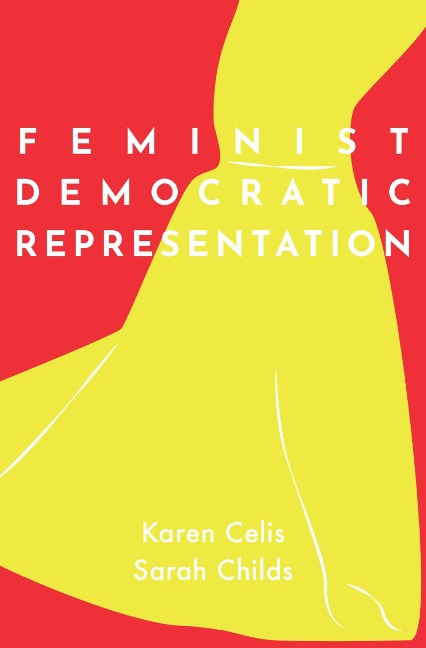
Popular consensus has long been that if "enough women" are present in political institutions they will represent "women's interests." Yet many believe that differences among women--women disagreeing about what is in "their interest"--fatally undermine both the principle and the practice of women's group representation. In this book, Karen Celis and Sarah Childs redress women's poverty of political representation with a new feminist account of democratic representation. Rather than giving up on women's group representation, Celis and Childs re-think and re-design representative institutions, taking women's differences--both ideological and intersectional--as their starting point. Feminist Democratic Representation considers a broad spectrum of contemporary problematics--abortion, prostitution/sex work, Muslim women's dress, and Marine Le Pen--to discuss women's under- and misrepresentation and the "good, bad and the ugly" representative. As problem-driven scholars firmly grounded in feminist and democratic empirical and theoretical political science, Celis and Childs imagine what good representation for women in all their diversity could look like--representation as it should be. To realize this ideal in today's established representative democracies, they present a second-generation feminist design for parliaments and legislatures, underpinned by a re-thinking of feminist and democratic principles. Celis and Childs conceive of representation as a mélange of dimensions, and they shift the focus in women's group representation from feminist outcome to feminist process. Inclusive, responsive, and egalitarian representation for all women demands a new category of representatives in parliaments: the "affected representatives of women" who are epistemologically and experientially close to differently affected women. Affected representatives passionately advocate within political institutions, and publicly hold elected representatives to account. Feminist processes of representation have wide effects and deepen relationships between women and their democratic institutions. Against the more fashionable tide of post-representative politics, Feminist Democratic Representation argues not simply for more, but significantly better, representation.
Karen Celis is Research Professor at the Department of Political Science, and co-director of Research of RHEA Research Centre Gender Diversity Intersectionality of the Vrije Universiteit Brussel. She conducts theoretical and empirical research on the democratic quality of political representation from the perspective of disadvantaged groups and intersectionality. She is co-editor of The Oxford Handbook on Gender and Politics. Sarah Childs is Professor of Gender and Politics at Royal Holloway, University of London. Her research is centered on the theory and practice of women's representation, gender and political parties, parliaments, and institutional change. She is the author of New Labour's Women MPs and Women and British Party Politics, co-author of Sex, Gender and the Conservative Party with Paul Webb, and author of 2016 The Good Parliament Report on the UK House of Commons.
Acknowledgments An Essay on Women's Political Representation Chapter 1. Introduction: Reclaiming Representative Democracy For Women Chapter 2. When Are Women Well-Represented? The Dimensional Approach Chapter 3. The Good Representation of Women: A Procedural Approach Chapter 4. Designing for Feminist Democratic Representation Chapter 5. Affected representatives, Group Advocacy, and Account Giving Chapter 6. The Promise of Feminist Democratic Representation Conclusion: A Return to the Vignettes Notes References Index
Dieses eBook wird im PDF-Format geliefert und ist mit einem Adobe Kopierschutz (DRM) versehen. Sie können dieses eBook mit allen Geräten lesen, die das PDF-Format und den Adobe Kopierschutz (DRM) unterstützen.
Zum Beispiel mit den folgenden Geräten:
• tolino Reader
Laden Sie das eBook direkt über den Reader-Shop auf dem tolino herunter oder übertragen Sie das eBook auf Ihren tolino mit einer kostenlosen Software wie beispielsweise Adobe Digital Editions.
• Sony Reader & andere eBook Reader
Laden Sie das eBook direkt über den Reader-Shop herunter oder übertragen Sie das eBook mit der kostenlosen Software Sony READER FOR PC/Mac oder Adobe Digital Editions auf ein Standard-Lesegeräte mit epub- und Adobe DRM-Unterstützung.
• Tablets & Smartphones
Möchten Sie dieses eBook auf Ihrem Smartphone oder Tablet lesen, finden Sie hier unsere kostenlose Lese-App für iPhone/iPad und Android Smartphone/Tablets.
• PC & Mac
Lesen Sie das eBook direkt nach dem Herunterladen mit einer kostenlosen Lesesoftware, beispielsweise Adobe Digital Editions, Sony READER FOR PC/Mac oder direkt über Ihre eBook-Bibliothek in Ihrem Konto unter „Meine eBooks“ - „online lesen“.
Schalten Sie das eBook mit Ihrer persönlichen Adobe ID auf bis zu sechs Geräten gleichzeitig frei.
Bitte beachten Sie, dass die Kindle-Geräte das Format nicht unterstützen und dieses eBook somit nicht auf Kindle-Geräten lesbar ist.