Und dann auf "Zum Home-Bildschirm [+]".

Stöbern
genialokal zum Startbildschirm hinzufügen
Installieren Sie die genialokal App auf Ihrem Startbildschirm für einen schnellen Zugriff und eine komfortable Nutzung.
Installieren Sie die genialokal App auf Ihrem Startbildschirm für einen schnellen Zugriff und eine komfortable Nutzung.

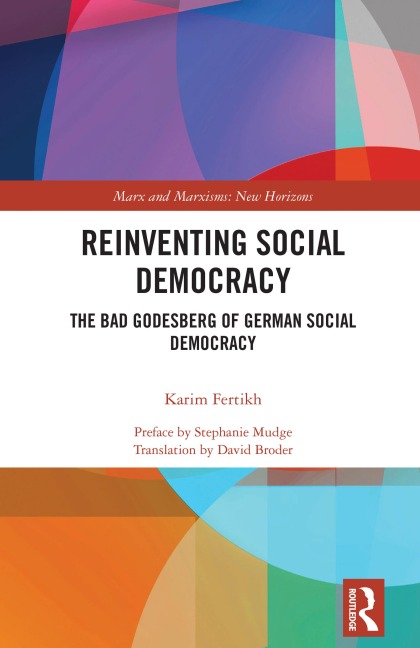
During the twentieth century, social democracy in Europe experienced profound ideological changes. The Bad Godesberg programme of November 1959 is widely considered one of the most momentous of these shifts in European social-democratic ideology. Reinventing Social Democracy explores the programme's genesis and offers an original interpretation of both the written text and its subsequent uses. Employing innovative analytical tools underutilised in the examination of social democracy's history, including quantitative history and prosopography, Karim Fertikh analyses the making of political ideas in the Social-Democratic Party of Germany (SPD). Comparing this process under both the Weimar and Bonn Republics, he describes the construction of Marxism in the social-democratic programmes of the 1920s, to better understand the shifts that occurred after World War II. Fertikh expertly highlights the transformations in social-democratic ideas, linking these developments to the changing face of party intellectuals and of their role in the SPD. Finally, he follows the programme through to the 2000s to identify the clear break with the ideological tradition of social democracy. Reinventing Social Democracy enriches our understanding of the historical and ideological forces that shaped social democracy during a crucial period in European history. This study offers rich material for courses on German politics, political parties, history of Germany, and the history of political ideas.
Karim Fertikh is Assistant Professor of Political Science at the University of Strasbourg (Sciences Po Strasbourg) and a junior member of the Institut universitaire de France. He has widely published on the history of German social democracy and on EU politics.
Preface. Introduction. 1. The Changes in the Social Democrats' Intellectual Milieu 2. 'The Old Socialist Idea That Knowledge Is Power' 3. Producing a Programmatic Text: A Political Sociology of the Commission's Work 4. In the Name of the Party 5. Bad Godesberg and its Afterlives. Conclusion