
Stöbern
genialokal zum Startbildschirm hinzufügen
Installieren Sie die genialokal App auf Ihrem Startbildschirm für einen schnellen Zugriff und eine komfortable Nutzung.
Installieren Sie die genialokal App auf Ihrem Startbildschirm für einen schnellen Zugriff und eine komfortable Nutzung.
Tippen Sie einfach auf Teilen:
 Und dann auf "Zum Home-Bildschirm [+]".
Bei genialokal.de kaufen Sie online bei Ihrer lokalen, inhabergeführten Buchhandlung!
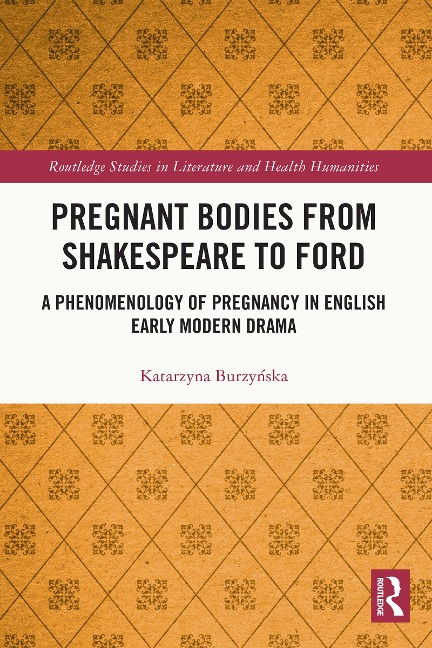
This book explores how the pregnant body is portrayed, perceived and enacted in Shakespeare's and his contemporaries' drama by means of a phenomenological analysis and a recourse to early modern popular medical discourse on reproduction. Phenomenology of pregnancy is a fairly new and radical body of philosophy that questions the post-Cartesian chasm of an almost autonomous reason and an enclosed and self-sufficient (male) body as foundations of identity. Early modern drama, as is argued, was written and staged at the backdrop of revolutionary changes in medicine and science where old and new theories on the embodied self-clashed. In this world where more and more men were expected to steadily grow isolated from their bodies, the pregnant body constituted an embattled contradiction. Indebted to the theories of embodiment this book offers a meticulous and detailed investigation of a plethora of pregnant characters and their "pregnant embodiment" in the pre-modern works by Shakespeare, Middleton, Webster and Ford. The analysis in each chapter argues for an indivisible link between an intensely embodied experience of pregnancy as enacted in space and identity-shaping processes resulting in a more acute sense of selfhood and agency. Despite seemingly disparate experiences of the selected heroines and the repeated attempts at containment of their "unruly" bodies, the ever transforming and "spatial" pregnant identities remain loci of embodied selfhood and agency. This book provocatively argues that fictional characters' experience reflects tangible realities of early modern women, while often deflecting the scientific consensus on reproduction in the period.
Katarzyna Burzynska holds a PhD in English literature and is currently an Assistant Professor at the Faculty of English, Adam Mickiewicz University in Poznan. Her research interests include English early modern drama, eco-feminism, vegan studies and philosophical analysis of literature. In 2016 she published The Early Modern (Re)discovery of 'Overhuman' Potential: Marlowe's and Shakespeare's Over-reachers in the Light of Nietzsche's Philosophy. The current monograph is a result of a research project entitled "Sir, she came in great with child, and longing": Phenomenology of pregnancy in English early modern drama (Measure for Measure 2.1.96)" financed by National Science Centre, Poland (no. UMO-2017/27/B/HS2/00089).
Introduction: Early Modern and Modern Discourses of Pregnancy and Maternity - Conception, Quickening and Engulfing Expansion: Pregnant Embodiment in Shakespeare's Early Pregnancy Plays - Pregnancy, Labour and the Postpartum Period: Pregnant Embodiment in Shakespeare's Late Pregnancy Plays- Delivery and Lying-in in Middleton's City Comedies- Illicit and Secret Pregnancy in Post-Shakespearean Tragedies Conclusion
Dieses eBook wird im PDF-Format geliefert und ist mit einem Adobe Kopierschutz (DRM) versehen. Sie können dieses eBook mit allen Geräten lesen, die das PDF-Format und den Adobe Kopierschutz (DRM) unterstützen.
Zum Beispiel mit den folgenden Geräten:
• tolino Reader
Laden Sie das eBook direkt über den Reader-Shop auf dem tolino herunter oder übertragen Sie das eBook auf Ihren tolino mit einer kostenlosen Software wie beispielsweise Adobe Digital Editions.
• Sony Reader & andere eBook Reader
Laden Sie das eBook direkt über den Reader-Shop herunter oder übertragen Sie das eBook mit der kostenlosen Software Sony READER FOR PC/Mac oder Adobe Digital Editions auf ein Standard-Lesegeräte mit epub- und Adobe DRM-Unterstützung.
• Tablets & Smartphones
Möchten Sie dieses eBook auf Ihrem Smartphone oder Tablet lesen, finden Sie hier unsere kostenlose Lese-App für iPhone/iPad und Android Smartphone/Tablets.
• PC & Mac
Lesen Sie das eBook direkt nach dem Herunterladen mit einer kostenlosen Lesesoftware, beispielsweise Adobe Digital Editions, Sony READER FOR PC/Mac oder direkt über Ihre eBook-Bibliothek in Ihrem Konto unter „Meine eBooks“ - „online lesen“.
Schalten Sie das eBook mit Ihrer persönlichen Adobe ID auf bis zu sechs Geräten gleichzeitig frei.
Bitte beachten Sie, dass die Kindle-Geräte das Format nicht unterstützen und dieses eBook somit nicht auf Kindle-Geräten lesbar ist.