Und dann auf "Zum Home-Bildschirm [+]".

Stöbern
genialokal zum Startbildschirm hinzufügen
Installieren Sie die genialokal App auf Ihrem Startbildschirm für einen schnellen Zugriff und eine komfortable Nutzung.
Installieren Sie die genialokal App auf Ihrem Startbildschirm für einen schnellen Zugriff und eine komfortable Nutzung.
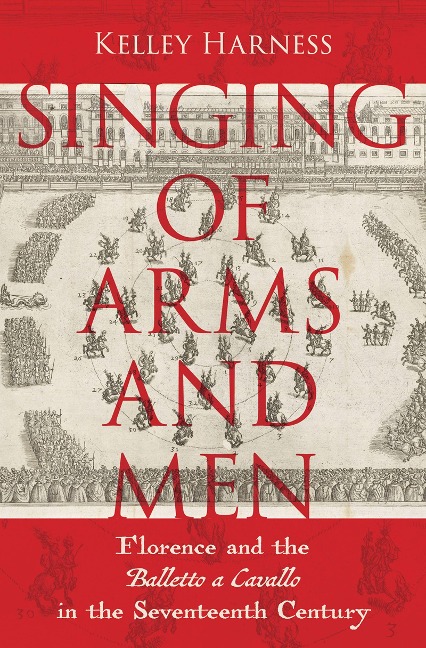
Equestrian ballets (balletti a cavallo), although little known today, emerged as valued dramatic entertainments in early modern Europe, capable of demonstrating the wealth and magnificence of the patrons who commissioned them as well as the horsemanship and military skills of the noblemen who rode in them. Although the horse ballet did not originate in Florence, that city--and its ruling grand dukes, the Medici--acquired a reputation for excellence in the genre. Between 1608 and 1686, the court commissioned horse ballets to commemorate important state events such as Medici weddings or visits by foreign visitors. In Singing of Arms and Men, author Kelley Harness undertakes the first comprehensive study of the seventeenth-century Florentine horse ballets. She demonstrates how these works communicated messages relevant to the occasions for which they were performed, delivered by means of texts sung in styles similar to contemporary opera and punctuated by choreography and dramatic structure. Mock battles fought with swords and pistols animated audiences but also provided visible instances of conflict, which were then interrupted by the sudden arrival of a deus ex machina, who commanded the combatants to instead join forces to defeat a common enemy. The knights then demonstrated newfound cooperation through their creation of choreographed figures danced on horseback in time to music. Documentary evidence confirms that the Medici family expended significant financial and human resources on these one-time events, revealing just how much work it took to appear effortless. Ultimately, Harness shows how the balletto a cavallo played a crucial role in Medici self-fashioning during the period, and that the 250 noblemen invited to lend their equestrian skills both confirmed their family's relationship to the Medici and were provided a venue for demonstrating critical markers of masculine nobility.
Kelley Harness specializes in Florentine music and theater of the sixteenth and seventeenth centuries, situating the works she studies within broader social and artistic contexts. Much of her past scholarship has focused on women's patronage, including her book Echoes of Women's Voices: Music, Art, and Female Patronage in Early Modern Florence and articles dealing with musical representations of biblical women such as Judith and Saint Mary Magdalene. She is a past Editor-in-Chief of the Journal of Seventeenth-Century Music and is a member of the musicology faculty at the University of Minnesota.
Acknowledgments Abbreviations Note on sources Introduction Chapter 1. Ardens evexit ad aethera virtus: The Beginnings of the Balletto a cavallo in Florence Chapter 2. Musical and Dramatic Conventions in the Florentine Horse Ballets Chapter 3. Florentine Horse Ballets and Renaissance Chivalric Poetry, 1616-1652 Chapter 4. Applied Ariosto: Riders in the Florentine Horse Ballets Chapter 5. Displacing chivalry with mythology: Hercules and the Horse Ballets of 1652 and 1661 Chapter 6. Laboring for Hercules: The Cost of Conspicuous Consumption Chapter 7. Hercules at a Crossroads: The Final Medici Horse Ballets, 1671-1686 Appendix I: Alphabetical list of all riders in the Florentine horse ballets, 1608-1686, along with years of participation and role/squad Appendix II: Payroll of 2 July 1661 with subtotals for each occupation (FM115, fols. 224v-231v) Bibliography Index
Dieses eBook wird im PDF-Format geliefert und ist mit einem Adobe Kopierschutz (DRM) versehen. Sie können dieses eBook mit allen Geräten lesen, die das PDF-Format und den Adobe Kopierschutz (DRM) unterstützen.
Zum Beispiel mit den folgenden Geräten:
• tolino Reader
Laden Sie das eBook direkt über den Reader-Shop auf dem tolino herunter oder übertragen Sie das eBook auf Ihren tolino mit einer kostenlosen Software wie beispielsweise Adobe Digital Editions.
• Sony Reader & andere eBook Reader
Laden Sie das eBook direkt über den Reader-Shop herunter oder übertragen Sie das eBook mit der kostenlosen Software Sony READER FOR PC/Mac oder Adobe Digital Editions auf ein Standard-Lesegeräte mit epub- und Adobe DRM-Unterstützung.
• Tablets & Smartphones
Möchten Sie dieses eBook auf Ihrem Smartphone oder Tablet lesen, finden Sie hier unsere kostenlose Lese-App für iPhone/iPad und Android Smartphone/Tablets.
• PC & Mac
Lesen Sie das eBook direkt nach dem Herunterladen mit einer kostenlosen Lesesoftware, beispielsweise Adobe Digital Editions, Sony READER FOR PC/Mac oder direkt über Ihre eBook-Bibliothek in Ihrem Konto unter „Meine eBooks“ - „online lesen“.
Schalten Sie das eBook mit Ihrer persönlichen Adobe ID auf bis zu sechs Geräten gleichzeitig frei.
Bitte beachten Sie, dass die Kindle-Geräte das Format nicht unterstützen und dieses eBook somit nicht auf Kindle-Geräten lesbar ist.