Und dann auf "Zum Home-Bildschirm [+]".

Stöbern
genialokal zum Startbildschirm hinzufügen
Installieren Sie die genialokal App auf Ihrem Startbildschirm für einen schnellen Zugriff und eine komfortable Nutzung.
Installieren Sie die genialokal App auf Ihrem Startbildschirm für einen schnellen Zugriff und eine komfortable Nutzung.

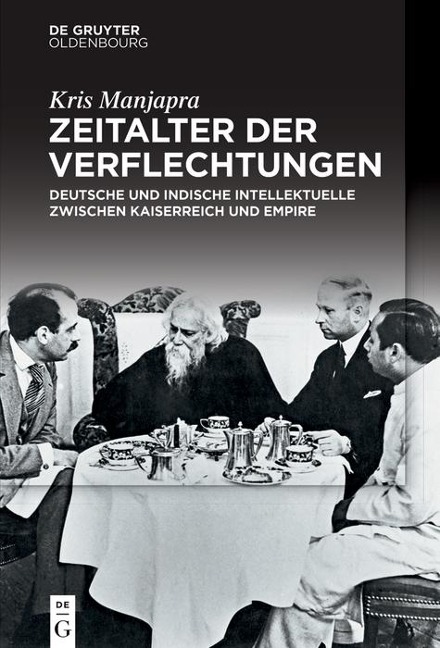
Age of Entanglement explores the patterns of connection linking German and Indian intellectuals from the nineteenth century to the years after the Second World War. Kris Manjapra traces the intersecting ideas and careers of philologists, physicists, poets, economists, and others who shared ideas, formed networks, and studied one another's worlds. Moving beyond well-rehearsed critiques of colonialism, this study recasts modern intellectual history in terms of the knotted intellectual itineraries of seeming strangers. Collaborations in the sciences, arts, and humanities produced extraordinary meetings of German and Indian minds. Meghnad Saha met Albert Einstein, Stella Kramrisch brought the Bauhaus to Calcutta, and Girindrasekhar Bose began a correspondence with Sigmund Freud. Rabindranath Tagore traveled to Germany to recruit scholars for a new university, and Himanshu Rai worked with Franz Osten to establish movie studios in Bombay. These interactions, Manjapra argues, evinced shared responses to the hegemony of the British empire. Germans and Indians hoped to find in one another the tools needed to disrupt an Anglocentric world order. As Manjapra demonstrates, transnational encounters are not inherently progressive. From Orientalism to Aryanism to scientism, German-Indian entanglements were neither necessarily liberal nor conventionally cosmopolitan, often characterized as much by manipulation as by genuine cooperation.
Kris Manjapra is an associate professor of history at Tufts University in the United States. He studied global, transnational, and comparative history at Harvard University. His fields of expertise include modern South Asia, modern Germany, the modern Caribbean and intellectual and social histories of the Global South. Manjapra's work adopts postcolonial and critical perspectives on the study of race, colonialism, diaspora, and capitalism. Manjapra's new research focuses on global plantation histories that connect the Caribbean Sea and the Indian Ocean in the nineteenth and twentieth centuries. Kris Manjapra is the chair of the Department of Studies in Race, Colonialism, and Diaspora at Tufts University, and has held fellowships from the Alexander von Humboldt Foundation, the Radcliffe Institute of Advanced Study, and the Wissenschaftskolleg zu Berlin. Zeitalter der Verflechtung explored the tangled cultural politics of Indian and German thinkers during the long nineteenth century, in the age of anti-colonial nationalism. It received the international 2019 Merck-Tagore Award.