Stöbern
genialokal zum Startbildschirm hinzufügen
Installieren Sie die genialokal App auf Ihrem Startbildschirm für einen schnellen Zugriff und eine komfortable Nutzung.
Installieren Sie die genialokal App auf Ihrem Startbildschirm für einen schnellen Zugriff und eine komfortable Nutzung.
Tippen Sie einfach auf Teilen:
 Und dann auf "Zum Home-Bildschirm [+]".
Ihr gewünschter Artikel ist in 0 Buchhandlungen vorrätig - wählen Sie hier eine Buchhandlung in Ihrer Nähe aus:

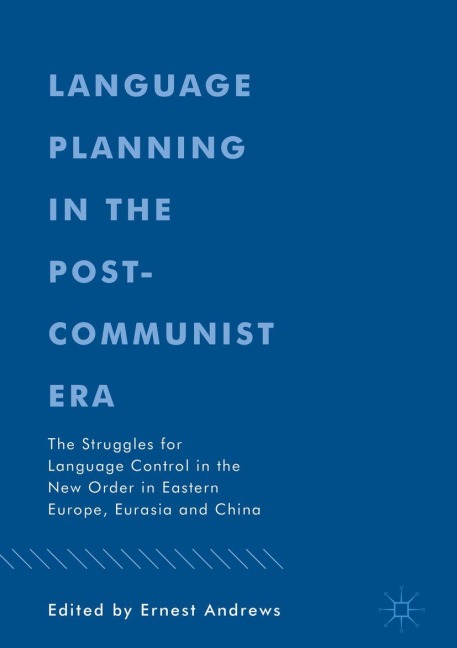
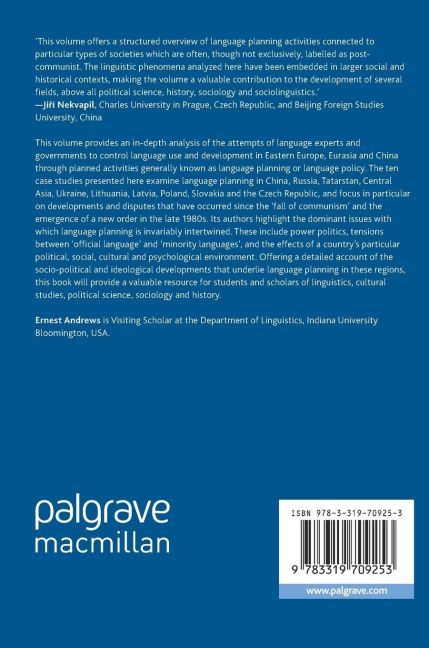
This volume provides an in-depth analysis of the attempts of language experts and governments to control language use and development in Eastern Europe, Eurasia and China through planned activities generally known as language planning or language policy. The ten case studies presented here examine language planning in China, Russia, Tatarstan, Central Asia, Ukraine, Lithuania, Latvia, Poland, Slovakia and the Czech Republic, and focus in particular on developments and disputes that have occurred since the -fall of communism- and the emergence of a new order in the late 1980s. Its authors highlight the dominant issues with which language planning is invariably intertwined. These include power politics, tensions between -official language- and -minority languages-, and the effects of a country-s particular political, social, cultural and psychological environment. Offering a detailed account of the socio-political and ideological developments that underlie language planning in these regions, this book will provide a valuable resource for students and scholars of linguistics, cultural studies, political science, sociology and history.
Ernest Andrews is Visiting Scholar at the Department of Linguistics, Indiana University Bloomington, USA. His previous publications include Linguistic Changes in Post-Communist Eastern Europe and Eurasia (2008), and Legacies of Totalitarian Language in the Discourse Culture of the Post-Totalitarian Era: The Case of Eastern Europe, Russia and China (2011).
Introduction; Ernest Andrews.- Chapter 1: Language Planning: Theoretical Background; Ernest Andrews.- Chapter 2: Language Planning in China: Unity, Diversity, and Social Control; Fengyuan Ji.- Chapter 3: Language Policy in Russia: Language, Identity and Nationality; Joan Chevalier.- Chapter 4: Language Policy and Power Politics in Post-Soviet Tatarstan; Teresa Wigglesworth-Baker.- Chapter 5: Language Policy and Hegemony in the Central Asian Republics Ayse Dietrich.- Chapter 6: Language Policy in Independent Ukraine: A Battle for National and Linguistic Empowerment; Vladislava Reznik.- Chapter 7: Lithuanian Language Planning: A Battle for Language and for Power; Loreta Vaicekauskien- and Nerijus Sepetis.- Chapter 8: Language Planning in Latvia as a Struggle for National Sovereignty; Andrejs Veisbergs.- Chapter 9: The Polish Language Act: Legislating Language in a Complicated Linguistic-Political Landscape; Magda Stroinska and Ernest Andrews.- Chapter 10: Language Planningin Slovakia: Nation-Building in the Context of European Integration; Marián Sloboda, Lucia Molnár Satinská and Mira Náb-lková.- Chapter 11: Forms of Language Planning and Policy in the Czech Republic; Hana Srpova.