Und dann auf "Zum Home-Bildschirm [+]".

Stöbern
genialokal zum Startbildschirm hinzufügen
Installieren Sie die genialokal App auf Ihrem Startbildschirm für einen schnellen Zugriff und eine komfortable Nutzung.
Installieren Sie die genialokal App auf Ihrem Startbildschirm für einen schnellen Zugriff und eine komfortable Nutzung.
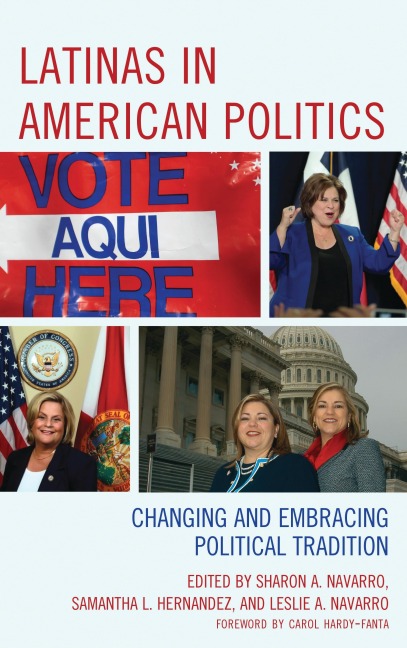
The challenges that women face as political candidates can be compounded by race. In the case of Latinas, stereotypes as well as national media coverage and labeling of "Latino" issues potentially creates an electoral burden for Latina candidates at the local, state, and national level. The intersection of race and gender is complicated and often creates more questions than it answers. How are Latinas elected? Are they served by this complex identity or hindered by it? Latinas in American Politics: Embracing and Changing Political Tradition begins addressing the issues by examining the stereotypes Latinas face while running for political office. More specifically, the perception of voters on ideological standings of Latinas provides insight as to what party Latinas are identified with and how they can use this to their advantage. In addition to establishing the role stereotypes play in the electability of Latinas, the way they use and diffuse these stereotypes via campaigns is examined. The images that Latinas present and how they interact with voters via social media establishes a new dynamic in campaigning and allows for theory building in the area of race, gender, and campaigns. Aside from campaigning, party identification for a Latina creates a different barrier. How do Latinas bridge this? Case studies of prominent Latina officials are examined to understand within which contexts and under what conditions Latinas as candidates and as elected officials will experience intersectionality as advantage and disadvantage. Finally, the examination of Latina congressional members shows whether and how the intersection of gender and ethnicity in descriptive representation contributes uniquely to patterns of substantive representation. Ultimately, this volume demonstrates how the intersection of race and gender creates unique situations for representation and electability of candidates.
Sharon A. Navarro is associate professor of political science at the University of Texas at San Antonio.
Samantha L. Hernandez is a PhD student in the School of Politics and Global Studies at Arizona State University.
Leslie A. Navarro is a strategic advisor for organizations and higher education institutions on accreditation, planning, program development, and organizational culture and a former college president.
Foreword, Carol Hardy-Fanta
Introduction
Part 1. National Elections:Beliefs, Campaign Strategies, Electability, and Legislative Strength
Chapter 1: Is there a Gender Divide: Exploring Latinas' Political Worlds and the Intersectional Dimensions, John Garcia
Chapter 2: Una Ventaja? A Survey Experiment of the Viability of Latina Candidates, Jessica Lavariega Monforti and Sarah Allen Gershon
Chapter 3: Voter Stereotypes of Latino and Latina Candidates, Ivy A. M. Cargile, Jennifer L. Merolla, and Jean Reith Schroedel
Chapter 4: Latina Legislators in Congress: Assessing the Experiences and Influence of the First Generation of Latina Lawmakers, Walter Clark Wilson and Juan Urbano
Chapter 5: Virtually Shaking Hands and Kissing Babies: Congressional Candidates and Social Media Campaigns, Samantha L. Hernandez
Part 2. State Elections: Political Ascension, Campaigns, Communication, and Governing
Chapter 6: Networked Representation: Latina Legislators on Twitter, Jose Marichal
Chapter 7: Advantage and Disadvantages for Latina Officeholders: The Case of New Mexico, Julia Marin Hellwege and Christine Marie Sierra
Chapter 8: "Liberal Leticia" and the Race for Texas Lieutenant Governor, Sharon A. Navarro
Chapter 9: Latina Political Leaders in Rhode Island: Patterns of Recruitment, Ambition, and Constraint, Lizeth Gonzalez and Tony Affigne
Chapter 10: Latina Intersectionality and Race-Gendering In Texas' Legislative Process, Patricia D. Lopez
Conclusion
Dieses eBook wird im PDF-Format geliefert und ist mit einem Adobe Kopierschutz (DRM) versehen. Sie können dieses eBook mit allen Geräten lesen, die das PDF-Format und den Adobe Kopierschutz (DRM) unterstützen.
Zum Beispiel mit den folgenden Geräten:
• tolino Reader
Laden Sie das eBook direkt über den Reader-Shop auf dem tolino herunter oder übertragen Sie das eBook auf Ihren tolino mit einer kostenlosen Software wie beispielsweise Adobe Digital Editions.
• Sony Reader & andere eBook Reader
Laden Sie das eBook direkt über den Reader-Shop herunter oder übertragen Sie das eBook mit der kostenlosen Software Sony READER FOR PC/Mac oder Adobe Digital Editions auf ein Standard-Lesegeräte mit epub- und Adobe DRM-Unterstützung.
• Tablets & Smartphones
Möchten Sie dieses eBook auf Ihrem Smartphone oder Tablet lesen, finden Sie hier unsere kostenlose Lese-App für iPhone/iPad und Android Smartphone/Tablets.
• PC & Mac
Lesen Sie das eBook direkt nach dem Herunterladen mit einer kostenlosen Lesesoftware, beispielsweise Adobe Digital Editions, Sony READER FOR PC/Mac oder direkt über Ihre eBook-Bibliothek in Ihrem Konto unter „Meine eBooks“ - „online lesen“.
Schalten Sie das eBook mit Ihrer persönlichen Adobe ID auf bis zu sechs Geräten gleichzeitig frei.
Bitte beachten Sie, dass die Kindle-Geräte das Format nicht unterstützen und dieses eBook somit nicht auf Kindle-Geräten lesbar ist.