Und dann auf "Zum Home-Bildschirm [+]".

Stöbern
genialokal zum Startbildschirm hinzufügen
Installieren Sie die genialokal App auf Ihrem Startbildschirm für einen schnellen Zugriff und eine komfortable Nutzung.
Installieren Sie die genialokal App auf Ihrem Startbildschirm für einen schnellen Zugriff und eine komfortable Nutzung.
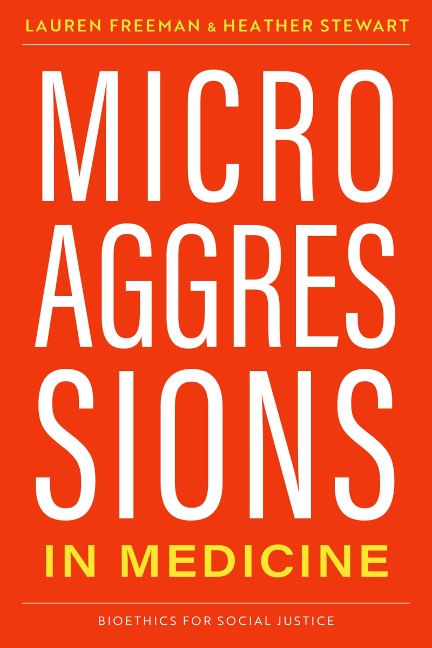
In a world that too often marginalizes people based on their race, gender, sexual orientation, body size, or disability, medicine can often be no different. Far from doing no harm, it treats some patients unfairly, leading to detrimental effects. Guided by diverse patient testimonies and case studies, Microaggressions in Medicine focuses on the harms that such patients face. It amplifies their voices, stories, and experiences, which have too-often been excluded from mainstream bioethical, medical, and popular discussions. Microaggressions in medicine are not rare, but frequent in the healthcare experiences of marginalized patients. Recognizing this can help patients better understand and make sense of their experiences. As bioethicists Lauren Freeman and Heather Stewart argue, building such an awareness can also help current and future healthcare professionals recognize the serious and enduring consequences that microaggressions have on their patients. Freeman and Stewart offer practical strategies for healthcare professionals to reduce microaggressions in their practices. The harms of microaggressions are anything but micro. Healthcare professionals have a moral obligation to prevent them as much as possible. Health equity can be achieved, but only through first recognizing the harm caused by microaggressions in medical contexts. Shining a light on microaggressions in medicine and offering concrete ways for health professionals to avoid them in the future will make a positive difference in the lives of marginalized patients as they interact with medical institutions and practitioners. All patients deserve high quality, patient-centered care but healthcare professionals must change their practices in order to achieve such equity.
Lauren Freeman is Professor of Philosophy at University of Louisville; Director of the M.A. in Applied Philosophy; and an affiliated faculty member in the Department of Women's, Gender, and Sexuality Studies. She is the co-editor of Microaggressions and Philosophy (2020) and was editor of The American Philosophical Association's journal Studies in Feminism and Philosophy (2019-2022). Heather Stewart is Assistant Professor of Philosophy at Oklahoma State University.
Acknowledgements Series Foreword Introduction Chapter 1: Microaggressions: A Brief History Chapter 2: Microaggressions Reconsidered: A Critique Of The Act-Based Account Of Microaggressions Chapter 3: Microaggressions Reconsidered: A Harm-Based Account Chapter 4: Epistemic Microaggressions Chapter 5: Emotional Microaggressions Chapter 6: Self-Identity Microaggressions Chapter 7: How To Avoid Committing Microaggressions: A Practical Guide For Healthcare Professionals Conclusion References Index
Dieses eBook wird im PDF-Format geliefert und ist mit einem Adobe Kopierschutz (DRM) versehen. Sie können dieses eBook mit allen Geräten lesen, die das PDF-Format und den Adobe Kopierschutz (DRM) unterstützen.
Zum Beispiel mit den folgenden Geräten:
• tolino Reader
Laden Sie das eBook direkt über den Reader-Shop auf dem tolino herunter oder übertragen Sie das eBook auf Ihren tolino mit einer kostenlosen Software wie beispielsweise Adobe Digital Editions.
• Sony Reader & andere eBook Reader
Laden Sie das eBook direkt über den Reader-Shop herunter oder übertragen Sie das eBook mit der kostenlosen Software Sony READER FOR PC/Mac oder Adobe Digital Editions auf ein Standard-Lesegeräte mit epub- und Adobe DRM-Unterstützung.
• Tablets & Smartphones
Möchten Sie dieses eBook auf Ihrem Smartphone oder Tablet lesen, finden Sie hier unsere kostenlose Lese-App für iPhone/iPad und Android Smartphone/Tablets.
• PC & Mac
Lesen Sie das eBook direkt nach dem Herunterladen mit einer kostenlosen Lesesoftware, beispielsweise Adobe Digital Editions, Sony READER FOR PC/Mac oder direkt über Ihre eBook-Bibliothek in Ihrem Konto unter „Meine eBooks“ - „online lesen“.
Schalten Sie das eBook mit Ihrer persönlichen Adobe ID auf bis zu sechs Geräten gleichzeitig frei.
Bitte beachten Sie, dass die Kindle-Geräte das Format nicht unterstützen und dieses eBook somit nicht auf Kindle-Geräten lesbar ist.