Und dann auf "Zum Home-Bildschirm [+]".

Stöbern
genialokal zum Startbildschirm hinzufügen
Installieren Sie die genialokal App auf Ihrem Startbildschirm für einen schnellen Zugriff und eine komfortable Nutzung.
Installieren Sie die genialokal App auf Ihrem Startbildschirm für einen schnellen Zugriff und eine komfortable Nutzung.
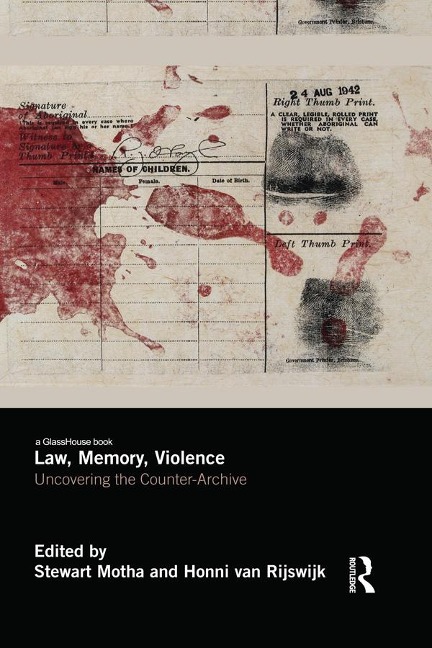
The demand for recognition, responsibility, and reparations is regularly invoked in the wake of colonialism, genocide, and mass violence: there can be no victims without recognition, no perpetrators without responsibility, and no justice without reparations. Or so it seems from law's limited repertoire for assembling the archive after 'the disaster'. Archival and memorial practices are central to contexts where transitional justice, addressing historical wrongs, or reparations are at stake. The archive serves as a repository or 'storehouse' of what needs to be gathered and recognised so that it can be left behind in order to inaugurate the future. The archive manifests law's authority and its troubled conscience. It is an indispensable part of the liberal legal response to biopolitical violence. This collection challenges established approaches to transitional justice by opening up new dialogues about the problem of assembling law's archive. The volume presents research drawn from multiple jurisdictions that address the following questions. What resists being archived? What spaces and practices of memory - conscious and unconscious - undo legal and sovereign alibis and confessions? And what narrative forms expose the limits of responsibility, recognition, and reparations? By treating the law as an 'archive', this book traces the failure of universalised categories such as 'perpetrator', 'victim', 'responsibility', and 'innocence,' posited by the liberal legal state. It thereby uncovers law's counter-archive as a challenge to established forms of representing and responding to violence.
Stewart Motha, School of Law, Birkbeck, University of London, UK. Honni van Rijswijk, School of Law, University of Technology Sydney, Australia.
1. Introduction 2. Storytelling and the Counter-Archive: Recollecting Hannah Arendt's 'Reflections on Little Rock' 3. Constitutions Are Not Enough / The Museum as Law's Counter-Archive 4. Re-placing the native on the land: law's archive and the preservation of Indian testimony on the 1970s development frontier in Canada 5. Archiving Victimhood: Practices of Inscription in International Criminal Law 6. Archives of Evil: Law, Gaze, and Body 7. Animating the Archive: Legal Sources and the New Materialisms 8. The Indian Ocean as Archive of the Present 9. Un-Remembering: Mistake and Apology in Ephemeral Performance 10. What hearings fail to hear: Testimony and law's counter-archive 11. Recycled Legality: Documents, Files and the Many Lives of the Paper State 12. Memory and Metaphor 13. The Figure of the Child and the Politics of Legal Responsibility 14. Weisheit der Zelle: Rethinking the concept of the political
Dieses eBook wird im PDF-Format geliefert und ist mit einem Adobe Kopierschutz (DRM) versehen. Sie können dieses eBook mit allen Geräten lesen, die das PDF-Format und den Adobe Kopierschutz (DRM) unterstützen.
Zum Beispiel mit den folgenden Geräten:
• tolino Reader
Laden Sie das eBook direkt über den Reader-Shop auf dem tolino herunter oder übertragen Sie das eBook auf Ihren tolino mit einer kostenlosen Software wie beispielsweise Adobe Digital Editions.
• Sony Reader & andere eBook Reader
Laden Sie das eBook direkt über den Reader-Shop herunter oder übertragen Sie das eBook mit der kostenlosen Software Sony READER FOR PC/Mac oder Adobe Digital Editions auf ein Standard-Lesegeräte mit epub- und Adobe DRM-Unterstützung.
• Tablets & Smartphones
Möchten Sie dieses eBook auf Ihrem Smartphone oder Tablet lesen, finden Sie hier unsere kostenlose Lese-App für iPhone/iPad und Android Smartphone/Tablets.
• PC & Mac
Lesen Sie das eBook direkt nach dem Herunterladen mit einer kostenlosen Lesesoftware, beispielsweise Adobe Digital Editions, Sony READER FOR PC/Mac oder direkt über Ihre eBook-Bibliothek in Ihrem Konto unter „Meine eBooks“ - „online lesen“.
Schalten Sie das eBook mit Ihrer persönlichen Adobe ID auf bis zu sechs Geräten gleichzeitig frei.
Bitte beachten Sie, dass die Kindle-Geräte das Format nicht unterstützen und dieses eBook somit nicht auf Kindle-Geräten lesbar ist.