Und dann auf "Zum Home-Bildschirm [+]".

Stöbern
genialokal zum Startbildschirm hinzufügen
Installieren Sie die genialokal App auf Ihrem Startbildschirm für einen schnellen Zugriff und eine komfortable Nutzung.
Installieren Sie die genialokal App auf Ihrem Startbildschirm für einen schnellen Zugriff und eine komfortable Nutzung.
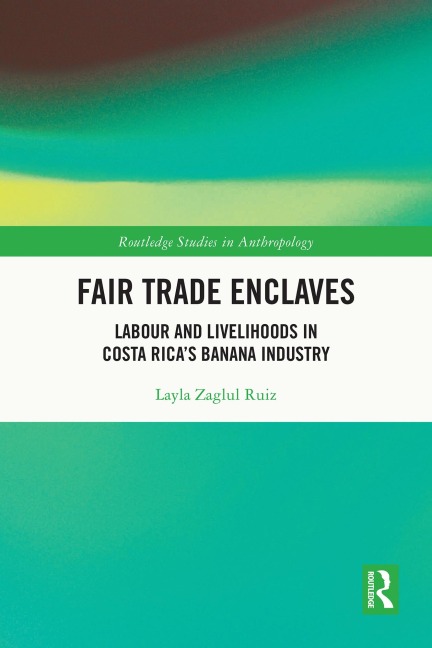
Fair Trade Enclaves tells the story of exploitation and inequality in the production of Fair Trade bananas. It draws on immersive fieldwork in Costa Rica, which was the original testing ground for US-owned plantations and is today the world's third-largest exporter of bananas. The book offers an ethnographic study of Fair Trade's impact on the 'Dollar' banana system and considers how the growth in Fair Trade affects workers' livelihoods at the source of production. It documents the labour conditions and daily struggles of Costa Rican banana workers, featuring a comparative anthropological assessment of Fair Trade and conventional farms. The chapters provide a window onto Fair Trade's ability to effect change within one of the world's most exploitative and enduring commodity chains, exposing how Fair Trade currently fails to challenge the structural exploitation of banana production within the dollar system. The author reveals how, in some respects, workers at the conventional farm enjoy better conditions compared with those employed on the Fair Trade farm. The book is valuable reading for scholars of Anthropology, Development, and Latin American Studies.
Layla Zaglul Ruiz is a Canning House Research Fellow in the Latin America and Caribbean Center at the London School of Economics, UK.
Acknowledgments 1. Introduction Disjunctions in the Fair Trade Movement Fair Trade enclaves within neoliberalism The discourse of crisis Self-exploitation and co-ownership Research methods and positionality Book structure 2. Producing bananas Producing bananas in Costa Rica Producing Alianza (and Caché) bananas Conclusions 3. Fair trade contradictions Contracts Working hours and payment Freedom of association Conclusions 4. Materializing power on the shop floor Caché: controlling through conflict and violence Alianza: Relatedness and kinship on the shopfloor Conclusions 5. Discourse of crisis in public and private spheres The shop floor in crisis Conclusion 6. The cost of quality The evolution of banana quality standards Surviving the market with extra-class bananas More restrictions, the same 'perfect fruit' Is first-class consumption ethical? Conclusion 7. The lack of social capital Agrofair's modus operandi Conclusion 8. Conclusion. Index
Dieses eBook wird im PDF-Format geliefert und ist mit einem Adobe Kopierschutz (DRM) versehen. Sie können dieses eBook mit allen Geräten lesen, die das PDF-Format und den Adobe Kopierschutz (DRM) unterstützen.
Zum Beispiel mit den folgenden Geräten:
• tolino Reader
Laden Sie das eBook direkt über den Reader-Shop auf dem tolino herunter oder übertragen Sie das eBook auf Ihren tolino mit einer kostenlosen Software wie beispielsweise Adobe Digital Editions.
• Sony Reader & andere eBook Reader
Laden Sie das eBook direkt über den Reader-Shop herunter oder übertragen Sie das eBook mit der kostenlosen Software Sony READER FOR PC/Mac oder Adobe Digital Editions auf ein Standard-Lesegeräte mit epub- und Adobe DRM-Unterstützung.
• Tablets & Smartphones
Möchten Sie dieses eBook auf Ihrem Smartphone oder Tablet lesen, finden Sie hier unsere kostenlose Lese-App für iPhone/iPad und Android Smartphone/Tablets.
• PC & Mac
Lesen Sie das eBook direkt nach dem Herunterladen mit einer kostenlosen Lesesoftware, beispielsweise Adobe Digital Editions, Sony READER FOR PC/Mac oder direkt über Ihre eBook-Bibliothek in Ihrem Konto unter „Meine eBooks“ - „online lesen“.
Schalten Sie das eBook mit Ihrer persönlichen Adobe ID auf bis zu sechs Geräten gleichzeitig frei.
Bitte beachten Sie, dass die Kindle-Geräte das Format nicht unterstützen und dieses eBook somit nicht auf Kindle-Geräten lesbar ist.