
Stöbern
genialokal zum Startbildschirm hinzufügen
Installieren Sie die genialokal App auf Ihrem Startbildschirm für einen schnellen Zugriff und eine komfortable Nutzung.
Installieren Sie die genialokal App auf Ihrem Startbildschirm für einen schnellen Zugriff und eine komfortable Nutzung.
Tippen Sie einfach auf Teilen:
 Und dann auf "Zum Home-Bildschirm [+]".
Bei genialokal.de kaufen Sie online bei Ihrer lokalen, inhabergeführten Buchhandlung!
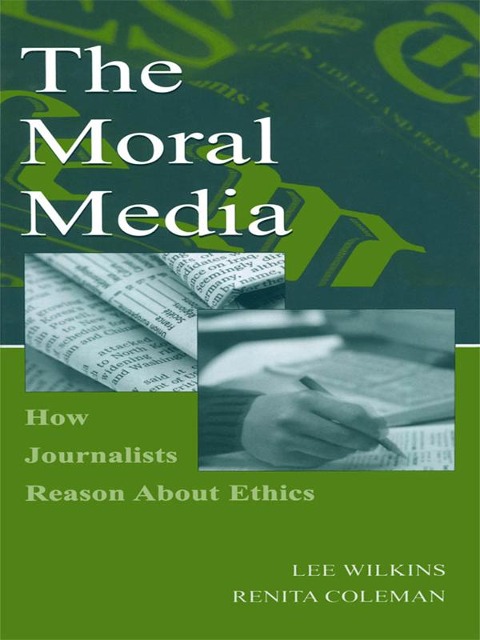
The Moral Media provides readers with preliminary answers to questions about ethical thinking in a professional environment. Representing one of the first publications of journalists' and advertising practitioners' response to the Defining Issues Test (DIT), this book compares thinking about ethics by these two groups with the thinking of other professionals. This text is divided into three parts: *Part I includes chapters that explain the DIT and place it within the larger history of three fields: psychology, philosophy, and mass communication. It also provides both a statistical (quantitative) and narrative (qualitative) analysis of journalists' responses to the DIT. *Part II adds to scholarship theory building in these three disciplines and makes changes in the DIT that adds an element of visual information processing to the test. *Part III explores the larger meaning of this effort overall and links the results to theory and practice in these three fields. The Moral Media pursues connections among various intellectual disciplines, between the academy and the profession of journalism, and among those who believe that what journalists do is essential. As a result, this book is appropriate for aspiring journalists; scholars in journalism and mass communication; psychologists, particularly those interested in human development and behavior; and philosophers.
Contents: Preface. Part I: Understanding Journalists' Responses to Moral Questions. Moral Development Theory: A Historical Approach. Methods: Multiple Approaches to Asking Questions. Context and Results: The Defining Issues Test. Moral Development: In Their Own Words. Part II: The Struggle to Think Deeply--Pictures, Deception, and Persuasion. What's a Picture Worth When It Comes to Ethical Reasoning? Ethical Reasoning and the Color Bind. S.T. Lee, The Ethics of Journalistic Deception. A. Cunningham, Advertising Practitioners Respond: The News Is Not Good. Part III: Implications for Teachers, Scholars, and Professionals. Teaching Journalists About Ethics: What This Study Suggests. Theory: A Moving Target. Appendix.
Dieses eBook wird im PDF-Format geliefert und ist mit einem Adobe Kopierschutz (DRM) versehen. Sie können dieses eBook mit allen Geräten lesen, die das PDF-Format und den Adobe Kopierschutz (DRM) unterstützen.
Zum Beispiel mit den folgenden Geräten:
• tolino Reader
Laden Sie das eBook direkt über den Reader-Shop auf dem tolino herunter oder übertragen Sie das eBook auf Ihren tolino mit einer kostenlosen Software wie beispielsweise Adobe Digital Editions.
• Sony Reader & andere eBook Reader
Laden Sie das eBook direkt über den Reader-Shop herunter oder übertragen Sie das eBook mit der kostenlosen Software Sony READER FOR PC/Mac oder Adobe Digital Editions auf ein Standard-Lesegeräte mit epub- und Adobe DRM-Unterstützung.
• Tablets & Smartphones
Möchten Sie dieses eBook auf Ihrem Smartphone oder Tablet lesen, finden Sie hier unsere kostenlose Lese-App für iPhone/iPad und Android Smartphone/Tablets.
• PC & Mac
Lesen Sie das eBook direkt nach dem Herunterladen mit einer kostenlosen Lesesoftware, beispielsweise Adobe Digital Editions, Sony READER FOR PC/Mac oder direkt über Ihre eBook-Bibliothek in Ihrem Konto unter „Meine eBooks“ - „online lesen“.
Schalten Sie das eBook mit Ihrer persönlichen Adobe ID auf bis zu sechs Geräten gleichzeitig frei.
Bitte beachten Sie, dass die Kindle-Geräte das Format nicht unterstützen und dieses eBook somit nicht auf Kindle-Geräten lesbar ist.