Und dann auf "Zum Home-Bildschirm [+]".

Stöbern
genialokal zum Startbildschirm hinzufügen
Installieren Sie die genialokal App auf Ihrem Startbildschirm für einen schnellen Zugriff und eine komfortable Nutzung.
Installieren Sie die genialokal App auf Ihrem Startbildschirm für einen schnellen Zugriff und eine komfortable Nutzung.
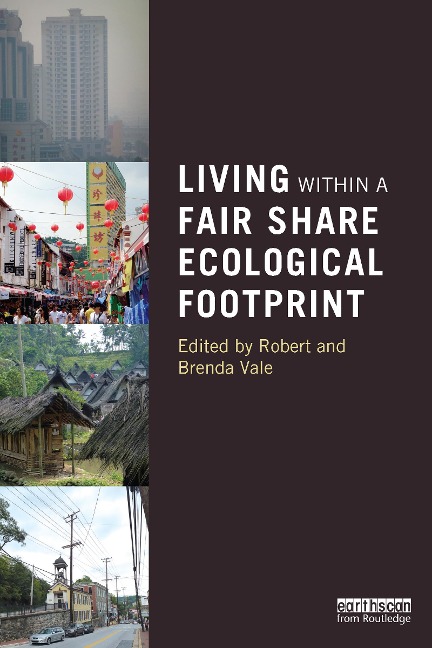
According to many authorities the impact of humanity on the earth is already overshooting the earth's capacity to supply humanity's needs. This is an unsustainable position. This book does not focus on the problem but on the solution, by showing what it is like to live within a fair earth share ecological footprint. The authors describe numerical methods used to calculate this, concentrating on low or no cost behaviour change, rather than on potentially expensive technological innovation. They show what people need to do now in regions where their current lifestyle means they are living beyond their ecological means, such as in Europe, North America and Australasia. The calculations focus on outcomes rather than on detailed discussion of the methods used. The main objective is to show that living with a reduced ecological footprint is both possible and not so very different from the way most people currently live in the west. The book clearly demonstrates that change in behaviour now will avoid some very challenging problems in the future. The emphasis is on workable, practical and sustainable solutions based on quantified research, rather than on generalities about overall problems facing humanity.
Robert and Brenda Vale are Professorial Research Fellows in the School of Architecture, Victoria University of Wellington, New Zealand. They share common research interests in ecological footprinting and sustainable building design, and are both currently working on the new Foundation for Research, Science and Technology (FRST) project to deliver ecological footprinting and systems approaches to sustainable development of communities.
Part 1: Introduction 1. Footprints and Fair Earth Share Part 2: What does Living within a Fair Earth Share Mean? 2.1: Personal Footprint 2. Food 3. Domestic Travel 4. Consumer Goods 5. The Dwelling 6. Tourism 2.2: Collective Footprint 7. Infrastructure 8. Government 9. Services Part 3: Footprints in the Past 10. A Study of Wellington in the 1950s Part 4: Footprints in the Present 11. A Study of China 12. A Study of Suberban Thailand 13. Kampung Naga, Indonesia 14. A Study of Hanoi, Vietnam 15. A Study of Suburban New Zealand 16. The Hockerton Housing Project, England 17. Education for Lower Footprints 18. Footprints and Income 19. Sustainable Urban Form Part 5: Conclusions 20. "I wouldn't Start from Here..."
Dieses eBook wird im PDF-Format geliefert und ist mit einem Adobe Kopierschutz (DRM) versehen. Sie können dieses eBook mit allen Geräten lesen, die das PDF-Format und den Adobe Kopierschutz (DRM) unterstützen.
Zum Beispiel mit den folgenden Geräten:
• tolino Reader
Laden Sie das eBook direkt über den Reader-Shop auf dem tolino herunter oder übertragen Sie das eBook auf Ihren tolino mit einer kostenlosen Software wie beispielsweise Adobe Digital Editions.
• Sony Reader & andere eBook Reader
Laden Sie das eBook direkt über den Reader-Shop herunter oder übertragen Sie das eBook mit der kostenlosen Software Sony READER FOR PC/Mac oder Adobe Digital Editions auf ein Standard-Lesegeräte mit epub- und Adobe DRM-Unterstützung.
• Tablets & Smartphones
Möchten Sie dieses eBook auf Ihrem Smartphone oder Tablet lesen, finden Sie hier unsere kostenlose Lese-App für iPhone/iPad und Android Smartphone/Tablets.
• PC & Mac
Lesen Sie das eBook direkt nach dem Herunterladen mit einer kostenlosen Lesesoftware, beispielsweise Adobe Digital Editions, Sony READER FOR PC/Mac oder direkt über Ihre eBook-Bibliothek in Ihrem Konto unter „Meine eBooks“ - „online lesen“.
Schalten Sie das eBook mit Ihrer persönlichen Adobe ID auf bis zu sechs Geräten gleichzeitig frei.
Bitte beachten Sie, dass die Kindle-Geräte das Format nicht unterstützen und dieses eBook somit nicht auf Kindle-Geräten lesbar ist.