Und dann auf "Zum Home-Bildschirm [+]".

Stöbern
genialokal zum Startbildschirm hinzufügen
Installieren Sie die genialokal App auf Ihrem Startbildschirm für einen schnellen Zugriff und eine komfortable Nutzung.
Installieren Sie die genialokal App auf Ihrem Startbildschirm für einen schnellen Zugriff und eine komfortable Nutzung.

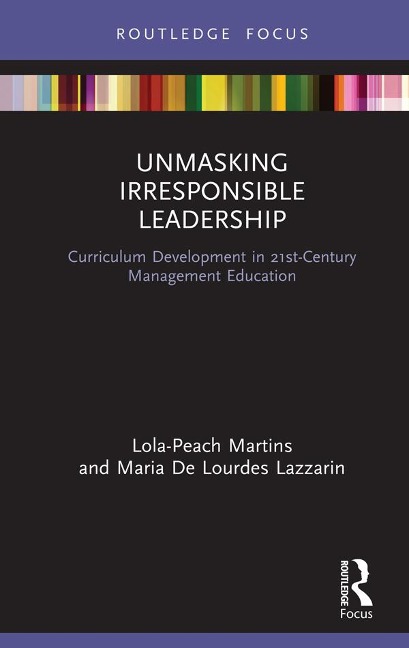
This book is unique given its scholarly angle in unmasking irresponsible leadership (IL) by focusing on its meaning. For the first time the concept of irresponsible leadership (IL) is explored in depth, the plethora of terms used in various disciplines is synthesised, and the ped-andragogy of teaching IL as a threshold concept of responsible leadership (RL) is discussed. The methodological approach adopted is creative and sound. Following the call for business schools to do more in developing responsible leadership curriculum, the book is the first of its kind devoted to advocating a radical change in the management curriculum. It draws attention to the essence of developing a shared in-depth understanding of IL by addressing the misconceptions of theories and issues that have contributed to the epidemic corporate scandals worldwide. The authors provide a suite of reflective/reflexive tools for RL learning and development, including the first IL definitional framework useful for understanding IL perspectives. In addition the book is the first to introduce the ILRL board game, which increases the learner's flow state. Thus, the book highlights how various tools can be useful for engagement, and understanding curricula and ped-andragogical issues vis-à-vis corporate leadership practices and sustainability in turbulent times. Our targeted audience: Academic researchers, final year undergraduates, and postgraduate (including Executive MBA) students and Higher Education Curricula developers/designers. The book provides many benefits, some of which include: Pertinent answers to important questions about responsible leadership and curriculum development; sophistication of qualitative research in management studies; in-depth understanding of irresponsible leadership from a cross-disciplinary perspective; support for leadership employability endeavours and equipping students with in-depth understanding of RL; assisting with developing reflective and reflexive practice; and in terms of ped-andragogy, encouraging innovation and creativity in teaching IL as a threshold concept of RL to reduce unnecessary management curricula bias.
Lola-Peach Martins is Senior Lecturer in HRM at Middlesex University, UK. She is leading Middlesex University's UN PRME (United Nations Principles for Responsible Management Education) Curriculum Development Project. Maria De Lourdes Lazzarin is a researcher in Qualitative Social Research and holds a PhD in Management awarded by the University of Kent.
Part 1 Setting the scene for creating an IL definitional framework 1 Introduction Why this book? Corporate Scandals and the Irresponsible Leadership Definition Dilemma A Plethora of Term Neoliberalist Views of RL and IL Practices; and Criticism Directed at Business Schools References 2 Creating an IL Definitional Framework: Research Methodology Research Methods, Practice and Analysis References Part 2 Contextualising IL: An interdisciplinary approach 3 Social Irresponsibility (SI), Corporate Social Irresponsibility (CSI), And Unethical Leadership (UL) Who Are Leaders (all levels of management, including CEOs) and What Does it Mean to Lead Others? References 4 Dark Triad Leadership (DTL) and Toxic Leadership (TL) Narcissism, Machiavellianism, and Sub-Clinical Psychopathy References 5 Irresponsible Leadership (IL): Adjective-Noun General Meaning of Irresponsible and Irresponsibility: Who's Saying What? Negative Forces: Evil, Causing Harm to Others (Intension to Harm) References Chapter 6 Creating an IL Definitional Framework: Content/Context Analysis Content Analysis 1/Context Analysis 1: "Irresponsibility" - 400+ Synonyms List and NViVo Text Search for IL Terms Identified within Text Content Analysis 2/Context Analysis 2: Word Frequency Test and World Cloud Samples References Chapter 7 Creating the IL Definition Framework: Cluster Analysis Context: Analysis 3 Higher and Lower Clusters References Chapter 8 Conclusion of Parts 1 and 2 References Part 3 IL curriculum development contemplation Chapter 9 Critical Issues Vis-à-vis Developing IL Curriculum in Turbulent Times Developing New Curriculum, Content and Educational Progress to Align with Organisational and Business Sustainability in the 21st Century Developing Adaptive, Reflexive/Reflective Ped-Andragogical Approaches to Support Personal Risilience and Flexibility During Social-Economic Turbulence and Implications for HEIs References Chapter 10 Ped-Andragogical Approaches to LMD in View of Applying the IL Definitional Framework Leading Teams and Team Leadership How should the Subject 'IL' be taught in the classroom to enhance RL learning? Gaming and Engagement Courses and Programmes LMD: Art Based Learning and Engagement Teaching Strategy: A Student Centred Approach to Teaching and Learning References Chapter 11 A Radical Change in the Management Curricula Closing Statement: A Radical Change in the Management Curricula Significance of the Book Future Research References Appendix 1 Full Dendrogram: Core IL Fields Cluster Analysis Appendix 2: DTL Case Study Appendix 3: Disruptive Behaviours/Situations Appendix 4: Reflection Colouring Book