Und dann auf "Zum Home-Bildschirm [+]".

Stöbern
genialokal zum Startbildschirm hinzufügen
Installieren Sie die genialokal App auf Ihrem Startbildschirm für einen schnellen Zugriff und eine komfortable Nutzung.
Installieren Sie die genialokal App auf Ihrem Startbildschirm für einen schnellen Zugriff und eine komfortable Nutzung.
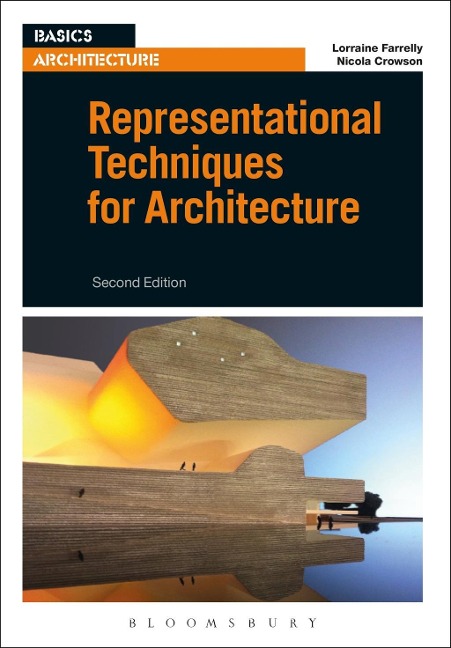
Representational Techniques for Architecture (2nd edition) explores the techniques used to represent architectural design. It describes a broad array of methodologies for developing architectural ideas, ranging from two- and three-dimensional conceptual sketches, through to the working drawings required for the construction of buildings. It offers a range of practical drawing methods, showing how to present and plan layouts, make conceptual sketches, work with scale, use collage and photomontage to create contemporary images, along with techniques to prepare and plan design portfolios.The book also deals with contemporary computer modelling and drawing techniques.
Students and practitioners will find this a clear and useful companion to a vital aspect of architectural design.Thirty per cent of the material in the second edition will be new: many of the images will be replaced, new text will be added and existing text updated.
The second edition includes explanations of the most up-to-date CAD technology and illustrations showing how it can be used to create architectural models and plans. Additional case studies will be drawn from American and international architectural practices and studios in order to attract the US market.The enhanced project sections encourage students to explore further the techniques that they have acquired.
Introduction
Chapter 1: Sketch
Tools and materials
Conceptual sketches
Analytical sketches
Observational sketches
Sketchbooks
Experimental techniques
Case study
Project: sketch
Chapter 2: Scale
Measuring
Full size
Detail scale
Interior scale
Building scale
Urban scale
Not to scale
Case study
Project: scale
Chapter 3: Orthographic Projection
Plans
Sections
Elevations
Drawing convection
Drawing categories
Case study
Project: drawing
Chapter 4: Three-dimensional Images
Perspective
Axonometric drawings
Isometric drawings
Other applications
Photomontage and collage
Project: perspective
Chapter 5: Modelling
Physical models
Physical modelling equipment
Model scales
CAD models
CAD software
Fly through
Project: modelling
Chapter 6: Layout and Presentation
Layout
Graphic presentations
Oral presentations
Storyboards
Portfolios
Case study
Project: layout and presentation.
Conclusion
Glossary
Further resources
Index
Acknowledgementsand credits
Dieses eBook wird im PDF-Format geliefert und ist mit einem Adobe Kopierschutz (DRM) versehen. Sie können dieses eBook mit allen Geräten lesen, die das PDF-Format und den Adobe Kopierschutz (DRM) unterstützen.
Zum Beispiel mit den folgenden Geräten:
• tolino Reader
Laden Sie das eBook direkt über den Reader-Shop auf dem tolino herunter oder übertragen Sie das eBook auf Ihren tolino mit einer kostenlosen Software wie beispielsweise Adobe Digital Editions.
• Sony Reader & andere eBook Reader
Laden Sie das eBook direkt über den Reader-Shop herunter oder übertragen Sie das eBook mit der kostenlosen Software Sony READER FOR PC/Mac oder Adobe Digital Editions auf ein Standard-Lesegeräte mit epub- und Adobe DRM-Unterstützung.
• Tablets & Smartphones
Möchten Sie dieses eBook auf Ihrem Smartphone oder Tablet lesen, finden Sie hier unsere kostenlose Lese-App für iPhone/iPad und Android Smartphone/Tablets.
• PC & Mac
Lesen Sie das eBook direkt nach dem Herunterladen mit einer kostenlosen Lesesoftware, beispielsweise Adobe Digital Editions, Sony READER FOR PC/Mac oder direkt über Ihre eBook-Bibliothek in Ihrem Konto unter „Meine eBooks“ - „online lesen“.
Schalten Sie das eBook mit Ihrer persönlichen Adobe ID auf bis zu sechs Geräten gleichzeitig frei.
Bitte beachten Sie, dass die Kindle-Geräte das Format nicht unterstützen und dieses eBook somit nicht auf Kindle-Geräten lesbar ist.