Und dann auf "Zum Home-Bildschirm [+]".

Stöbern
genialokal zum Startbildschirm hinzufügen
Installieren Sie die genialokal App auf Ihrem Startbildschirm für einen schnellen Zugriff und eine komfortable Nutzung.
Installieren Sie die genialokal App auf Ihrem Startbildschirm für einen schnellen Zugriff und eine komfortable Nutzung.

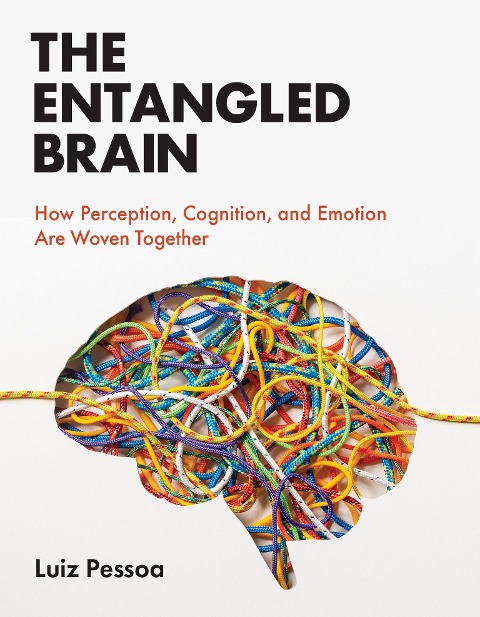


What kind of object is the brain? And how does it really work? A neuroscientist offers a new vision of the brain as a fully integrated, networked organ. Popular neuroscience accounts often focus on specific mind-brain aspects like addiction, cognition, or memory, but The Entangled Brain tackles a much bigger question: What kind of object is the brain? Neuroscientist Luiz Pessoa describes the brain as a highly networked, interconnected system that cannot be neatly decomposed into a set of independent parts. One can't point to the brain and say, "This is where emotion happens" (or any other mental faculty). Pessoa argues that only by understanding how large-scale neural circuits combine multiple and diverse signals can we truly appreciate how the brain supports the mind. Presenting the brain as an integrated organ and drawing on neuroscience, computation, mathematics, systems theory, and evolution, The Entangled Brain explains how brain functions result from cross-cutting brain processing, not the function of segregated areas. Parts of the brain work in a coordinated fashion across large-scale distributed networks in which disparate parts of the cortex and the subcortex work simultaneously to bring about behaviors. Pessoa intuitively explains the concepts needed to formalize this idea of the brain as a complex system and how to unleash powerful understandings built with "collective computations."
Luiz Pessoa is Professor of Psychology at the University of Maryland, College Park, and Director of the Maryland Neuroimaging Center. He is the author of The Cognitive-Emotional Brain (The MIT Press).
Preface ix 1 From One Area at a Time to Networked Systems 1 2 Learning a Bit of Anatomy 15 3 The Minimal Brain: Building Simple Defenses and Seeking Rewards 31 4 What Do Brain Areas Do? 47 5 Emotion and Motivation: The Subcortical Players 65 6 Emotion and Motivation: The Cortex Comes to the Party 93 7 Cognition and the Prefrontal Cortex 111 8 Complex Systems: The Science of Interacting Parts 129 9 500 Million Years of Evolution 145 10 The Big Network: Putting Things Together 167 11 Unlearning Fear 193 12 It's All about Complex, Entangled Networks 215 Glossary 231 Notes 235 References 247 Index 261