Und dann auf "Zum Home-Bildschirm [+]".

Stöbern
genialokal zum Startbildschirm hinzufügen
Installieren Sie die genialokal App auf Ihrem Startbildschirm für einen schnellen Zugriff und eine komfortable Nutzung.
Installieren Sie die genialokal App auf Ihrem Startbildschirm für einen schnellen Zugriff und eine komfortable Nutzung.
Ihr gewünschter Artikel ist in 0 Buchhandlungen vorrätig - wählen Sie hier eine Buchhandlung in Ihrer Nähe aus:

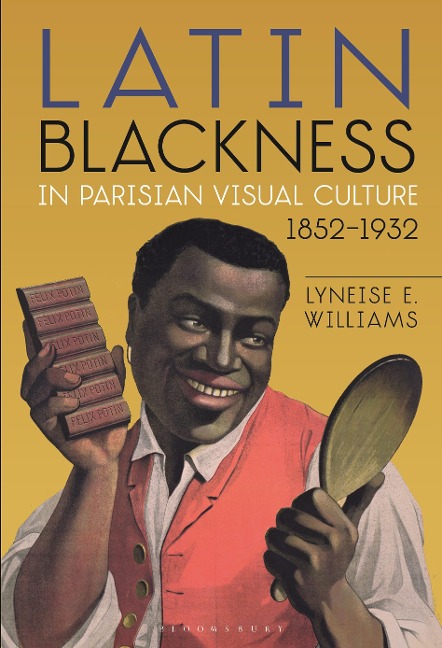
Latin Blackness in Parisian Visual Culture, 1852-1932 examines an understudied visual language used to portray Latin Americans in mid-19th to early 20th-century Parisian popular visual media. It charts how the term "Latinize" was introduced to connect France's early 19th-century endeavors to create Latin America-an expansion of the French empire into the Latin-language speaking Spanish and Portuguese Americas-to its perception of the people who lived there. Elites who traveled to Paris from their newly independent nations in the 1840s were denigrated in visual media, rather than depicted as equals in a developing global economy. Darkened skin, brushed onto images of Latin Americans of European descent, mitigated their ability to claim the privileges of their ancestral heritage; whitened skin, among other codes, imposed on depictions of Black Latin Americans denied their Blackness and rendered them relatively assimilatable compared to colonial Africans, Black people from the Caribbean, and African Americans. In addition to identifying 19th-century Latinizing codes, this book focuses on shifts in latinizing visuality between 1890 and 1933 through three case studies: the depictions of popular Cuban circus entertainer Chocolat; representations of Panamanian World Bantamweight Champion boxer Alfonso Teofilo Brown; and paintings of Black Uruguayans created by Pedro Figari, a Uruguayan artist, during his residence in Paris between 1925 and 1933.
Lyneise E. Williams
List of Illustrations Acknowledgements Introduction The Term "Latin American" Why Paris? Much More Than Primitivism Reduced to Latin Americans Parisian Figurations of Blackness from the Mid-Nineteenth to the Early Twentieth Century Overview of the Study Chapter 1: Playing Up Blackness and Indianness; Downplaying Europeanness Editing Francisco Laso: Racializing Spanish and Portuguese Americans Performing Rastaquerismo Justified by Anthropology: Quatrefages, Hamy, and the Casta Paintings Latin American Self-Representation The Shifting Rastaquouère Maintaining Anthropological Interpretations in the Early Twentieth Century Conclusion Chapter 2: Chocolat the Clown: Not Just Black Chocolat and Footit: Partners in Contrast The Auguste Chocolat The Give and Take of Chocolat and Footit Chocolat and Footit at the Nouveau Cirque Chocolat as Brand Image Beneath the Surface Chocolat as Mixed Animal Chocolat the Contaminant Impure Chocolat(e) Chocolat, That Special Ingredient: The Racially Mixed Object of Desire Complicating Notions of Minstrelsy Lip Interventions Representations Through Clothing Sexualizing Black Dandies Assimilating the Latin Beyond the Circus Chocolat, Object of Gay Desire Chocolat and the Elite and the Virile Conclusion Chapter 3: Alfonso Teofilo Brown: Agency and Impositions of Blackness and Europeanness Sport and the Imagined Ideal Male Body Black Boxers in Turn-of-the-Century France Gangly Brown The Purity and Hybridity of Gangly Brown Brown the Gentleman Images of Black Difference Brown the Philanthropist Conclusion Chapter 4: Figari's Blacks: Negotiating French and Southern Cone Blackness Figari and Paris Contested Whiteness and the Black Body Conceptualizing Regional Identity Through the Anthropological Gaze Candombe as Framing Device Gender and Race in Candombe Objects as Markers Figari as "Naïf" Painter Increasing Latin American Presence in Paris Perceptions of Black Uruguayans Figari's Evolution in Paris Contradictions and Contrasts between Figari's Paintings and Written Work Conclusion Coda Select Bibliography