Und dann auf "Zum Home-Bildschirm [+]".

Stöbern
genialokal zum Startbildschirm hinzufügen
Installieren Sie die genialokal App auf Ihrem Startbildschirm für einen schnellen Zugriff und eine komfortable Nutzung.
Installieren Sie die genialokal App auf Ihrem Startbildschirm für einen schnellen Zugriff und eine komfortable Nutzung.
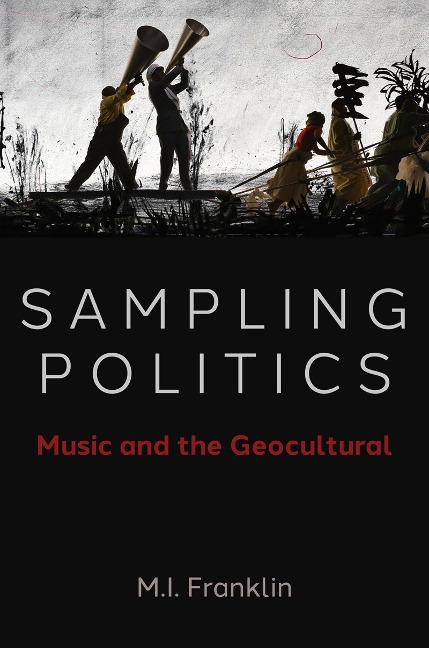
Music sampling has become a predominantly digitalized practice. It was popularized with the rise of Rap and Hip-Hop, as well as ambient music scenes, but it has a history stretching back to the earliest days of sound recording and experimental music making from around the world. Digital tools and networks allow artists to sample music across national borders and from diverse cultural traditions with relative ease, prompting questions around not only fair use, copyright, and freedom of expression, but also cultural appropriation and "copywrongs." For example, non-commercial forms of sharing that are now commonplace on the web bring musicians and their audiences into closer contact with emerging regimes of commercial web-tracking and state-sponsored online surveillance. Moreover, when musicians actively engage in political or social causes through their music, they are liable to both commercial and state forces of control. Shifts back to corporate ownership and control of the global music business--online and offline--highlight competing claims for commercial and cultural ownership and control of sampled music from local communities, music labels, and artists. Each case study is based on archival research, close listening, and musical analysis, alongside conversations and public reflections from artists such as David Byrne, Annirudha Das, Asian Dub Foundation, John Cage, Brian Eno, Sarah Jones, Gil Scott-Heron, Karlheinz Stockhausen, Dunya Yunis, and Sonia Mehta. Sampling Politics provides ways to listen and hear (again) how sampling practices and music making work, on its own terms and in context. In so doing, M.I. Franklin corrects some errors in the public record, addressing some longstanding misperceptions over the creative, legal, and cultural legacy of music sampling in some cases of rich, and complex practices that have also been called musical "borrowing," "cultural appropriation," or "theft." This book considers the musicalities and musicianship at stake in each case, as well as the respective creative practices and performance cultures underscoring the ethics of attribution and collaboration when sampling artists make music.
M.I. Franklin is Professor of Global Media and Politics at Goldsmiths University of London.
Acknowledgments List of Figures Chapter 1: Introduction Chapter 2: The World Around Us: Against Musical Common Sense Chapter 3: The Empire Samples Back: Raga, Dub, and Fortress Europe Chapter 4: Loss of Innocence: Found Sounds before and after 9/11 Chapter 5: Re-Imagining Westphalia: Electroacoustic Reminders Chapter 6: "His Master's Voice" and (R)evolutionary Signifyin' Chapter 7: Conclusion Appendix I: Dr Das on Political Frequencies Appendix II: Hymnen Listening Guide Bibliography Index
Dieses eBook wird im PDF-Format geliefert und ist mit einem Adobe Kopierschutz (DRM) versehen. Sie können dieses eBook mit allen Geräten lesen, die das PDF-Format und den Adobe Kopierschutz (DRM) unterstützen.
Zum Beispiel mit den folgenden Geräten:
• tolino Reader
Laden Sie das eBook direkt über den Reader-Shop auf dem tolino herunter oder übertragen Sie das eBook auf Ihren tolino mit einer kostenlosen Software wie beispielsweise Adobe Digital Editions.
• Sony Reader & andere eBook Reader
Laden Sie das eBook direkt über den Reader-Shop herunter oder übertragen Sie das eBook mit der kostenlosen Software Sony READER FOR PC/Mac oder Adobe Digital Editions auf ein Standard-Lesegeräte mit epub- und Adobe DRM-Unterstützung.
• Tablets & Smartphones
Möchten Sie dieses eBook auf Ihrem Smartphone oder Tablet lesen, finden Sie hier unsere kostenlose Lese-App für iPhone/iPad und Android Smartphone/Tablets.
• PC & Mac
Lesen Sie das eBook direkt nach dem Herunterladen mit einer kostenlosen Lesesoftware, beispielsweise Adobe Digital Editions, Sony READER FOR PC/Mac oder direkt über Ihre eBook-Bibliothek in Ihrem Konto unter „Meine eBooks“ - „online lesen“.
Schalten Sie das eBook mit Ihrer persönlichen Adobe ID auf bis zu sechs Geräten gleichzeitig frei.
Bitte beachten Sie, dass die Kindle-Geräte das Format nicht unterstützen und dieses eBook somit nicht auf Kindle-Geräten lesbar ist.