Und dann auf "Zum Home-Bildschirm [+]".

Stöbern
genialokal zum Startbildschirm hinzufügen
Installieren Sie die genialokal App auf Ihrem Startbildschirm für einen schnellen Zugriff und eine komfortable Nutzung.
Installieren Sie die genialokal App auf Ihrem Startbildschirm für einen schnellen Zugriff und eine komfortable Nutzung.


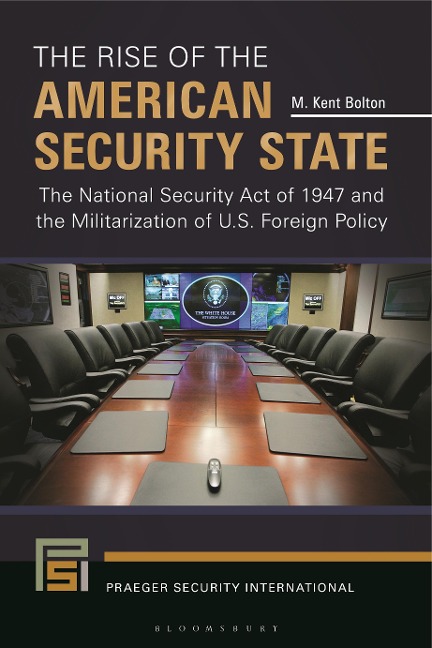
This book examines the impact of the National Security Act of 1947, the most important foreign policy legislation that many Americans (including policymakers and academics) have never heard of.
Since September 11, 2001, the White House-under both Bush and Obama-has pushed the envelope of taking the United States to war (without declarations), interrogating prisoners of war, spying on potential threats, and acting unilaterally. Why have these trends occurred? How has the apex of foreign power shifted, causing a sea change that has fueled a continual turf war between Capitol Hill and the White House? And perhaps most critically, what is America's role in the world now, and what should it be?
The Rise of the American Security State: The National Security Act of 1947 and the Militarization of U.S. Foreign Policy argues that the National Security Act of 1947 and the early Cold War created a bipartisan consensus among U.S. policymakers that spanned several administrations. The result of this consensus and the National Security Act was the creation of permanent institutions: the permanent Defense Department with a secretary of defense; the intelligence community, which has grown to 17 agencies; and significantly, the National Security Council inside the presidency. Collectively, these three developments have led to the militarization of U.S. foreign policy. Readers will grasp how concepts and strategies that were in their infancy during the Cold War era have persisted and continued to affect today's U.S. foreign policy.
M. Kent Bolton is professor of political science and global studies at California State University San Marcos (CSUSM).
Part I: U.S. Foreign Policy and the Rise of the American Security State
1 Understanding U.S. Foreign Policy
2 The Cold War, the Cold War Consensus, and the National Security Act of 1947
Part II: Case Studies from the Cold War
3 The Early Cold War: The 1950s
4 The Main Cold War Years: 1960s-1980s
5 The Transition from the Cold War to the Post-Cold War Period
Part III: The Rise of the American Security State
6 What the National Security Act Has Meant for U.S. Foreign Policy
7 The National Security Act and the Militarization of U.S. Foreign Policy
Notes
Bibliography
Index
Dieses eBook wird im PDF-Format geliefert und ist mit einem Adobe Kopierschutz (DRM) versehen. Sie können dieses eBook mit allen Geräten lesen, die das PDF-Format und den Adobe Kopierschutz (DRM) unterstützen.
Zum Beispiel mit den folgenden Geräten:
• tolino Reader
Laden Sie das eBook direkt über den Reader-Shop auf dem tolino herunter oder übertragen Sie das eBook auf Ihren tolino mit einer kostenlosen Software wie beispielsweise Adobe Digital Editions.
• Sony Reader & andere eBook Reader
Laden Sie das eBook direkt über den Reader-Shop herunter oder übertragen Sie das eBook mit der kostenlosen Software Sony READER FOR PC/Mac oder Adobe Digital Editions auf ein Standard-Lesegeräte mit epub- und Adobe DRM-Unterstützung.
• Tablets & Smartphones
Möchten Sie dieses eBook auf Ihrem Smartphone oder Tablet lesen, finden Sie hier unsere kostenlose Lese-App für iPhone/iPad und Android Smartphone/Tablets.
• PC & Mac
Lesen Sie das eBook direkt nach dem Herunterladen mit einer kostenlosen Lesesoftware, beispielsweise Adobe Digital Editions, Sony READER FOR PC/Mac oder direkt über Ihre eBook-Bibliothek in Ihrem Konto unter „Meine eBooks“ - „online lesen“.
Schalten Sie das eBook mit Ihrer persönlichen Adobe ID auf bis zu sechs Geräten gleichzeitig frei.
Bitte beachten Sie, dass die Kindle-Geräte das Format nicht unterstützen und dieses eBook somit nicht auf Kindle-Geräten lesbar ist.