Und dann auf "Zum Home-Bildschirm [+]".

Stöbern
genialokal zum Startbildschirm hinzufügen
Installieren Sie die genialokal App auf Ihrem Startbildschirm für einen schnellen Zugriff und eine komfortable Nutzung.
Installieren Sie die genialokal App auf Ihrem Startbildschirm für einen schnellen Zugriff und eine komfortable Nutzung.
Ihr gewünschter Artikel ist in 0 Buchhandlungen vorrätig - wählen Sie hier eine Buchhandlung in Ihrer Nähe aus:

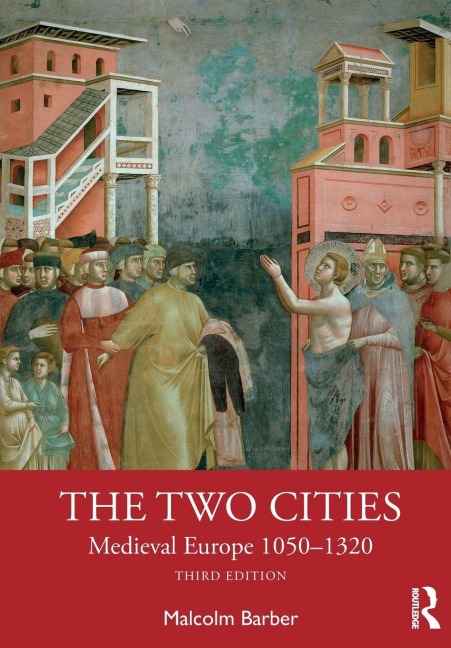
Covering a colourful period of medieval history from the schism between the eastern and western churches to the death of Dante, The Two Cities provides an introduction to key topic.
Malcolm Barber is Emeritus Professor of Medieval History at the University of Reading, UK. He is the author of books on the Templars, the Cathars and the Crusader States in the twelfth century, and the co-author of texts on the Templars, letters from the East in the twelfth and thirteenth centuries (with Keith Bate) and Ambroise's history of the Holy War (with Marianne Ailes). He taught history at the University of Reading for nearly forty years until his retirement in 2005.
Introduction Part I The social and economic structure 1 The physical environment 2 Social structure 3 Economic development Part II The Church 4 The Papacy 5 The Crusades 6 Monasticism and the friars 7 Popular religion and heresy Part III Political change 8 The Empire 9 The Kingdom of Sicily 10 The Italian city-states 11 The Capetian monarchy 12 The Kingdom of England 13 Wales and Ireland 14 The Kingdom of the Scots 15 The Iberian kingdoms 16 The states of eastern and northern Europe 17 The Crusader States Part IV Perceptions of the world 18 The medieval world view 19 Intellectual life 20 Art and society 21 Western Christendom and the wider world