Und dann auf "Zum Home-Bildschirm [+]".

Stöbern
genialokal zum Startbildschirm hinzufügen
Installieren Sie die genialokal App auf Ihrem Startbildschirm für einen schnellen Zugriff und eine komfortable Nutzung.
Installieren Sie die genialokal App auf Ihrem Startbildschirm für einen schnellen Zugriff und eine komfortable Nutzung.
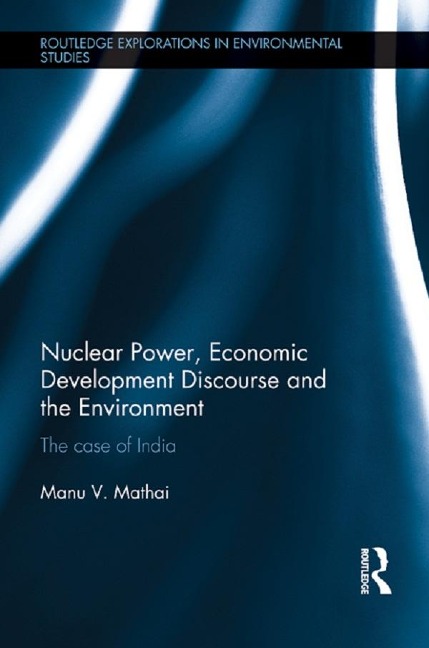
Nuclear power is often characterized as a "green technology." Technologies are rarely, if ever, socially isolated artefacts. Instead, they materially represent an embodiment of values and priorities. Nuclear power is no different. It is a product of a particular political economy and the question is whether that political economy can helpfully engage with the challenge of addressing the environmental crisis on a finite, inequitable and shared planet. For developing countries like India, who are presently making infrastructure investments which will have long legacies, it is imperative that these investments wrestle with such questions and prove themselves capable of sufficiency, greater equality and inclusiveness. This book offers a critique of civilian nuclear power as a green energy strategy for India and develops and proposes an alternative "synergy for sustainability." It situates nuclear power as a socio-technical infrastructure embodying a particular development discourse and practice of energy and economic development. The book reveals the political economy of this arrangement and examines the latter's ability to respond to the environmental crisis. Manu V. Mathai argues that the existing overwhelmingly growth-focused, highly technology-centric approach for organizing economic activity is unsustainable and needs to be reformed. Within this imperative for change, nuclear power in India is found to be and is characterized as an "authoritarian technology." Based on this political economy critique the book proposes an alternative, a synergy of ideas from the fields of development economics, energy planning and science, technology and society studies.
Manu V. Mathai is a Research Fellow with the Science and Technology for Sustainable Societies Program at the United Nations University Institute for Advanced Studies, Japan.
Preface 1. Passions of Power and the "Tryst with Destiny" 2. Modernity, Cornucopianism and the Megamachine 3. The Evolution of India's Economic Development Discourse: Independence to 1985 4. The Embrace of Nuclear Power and The Development-Energy Treadmill In India 5. The Advance of Economic Liberalization in India: 1985 to Present 6. Political Economy of Nuclear Power in India 7. Beyond Cornucopianism and the Megamachine Organization 8. Epilogue
Dieses eBook wird im PDF-Format geliefert und ist mit einem Adobe Kopierschutz (DRM) versehen. Sie können dieses eBook mit allen Geräten lesen, die das PDF-Format und den Adobe Kopierschutz (DRM) unterstützen.
Zum Beispiel mit den folgenden Geräten:
• tolino Reader
Laden Sie das eBook direkt über den Reader-Shop auf dem tolino herunter oder übertragen Sie das eBook auf Ihren tolino mit einer kostenlosen Software wie beispielsweise Adobe Digital Editions.
• Sony Reader & andere eBook Reader
Laden Sie das eBook direkt über den Reader-Shop herunter oder übertragen Sie das eBook mit der kostenlosen Software Sony READER FOR PC/Mac oder Adobe Digital Editions auf ein Standard-Lesegeräte mit epub- und Adobe DRM-Unterstützung.
• Tablets & Smartphones
Möchten Sie dieses eBook auf Ihrem Smartphone oder Tablet lesen, finden Sie hier unsere kostenlose Lese-App für iPhone/iPad und Android Smartphone/Tablets.
• PC & Mac
Lesen Sie das eBook direkt nach dem Herunterladen mit einer kostenlosen Lesesoftware, beispielsweise Adobe Digital Editions, Sony READER FOR PC/Mac oder direkt über Ihre eBook-Bibliothek in Ihrem Konto unter „Meine eBooks“ - „online lesen“.
Schalten Sie das eBook mit Ihrer persönlichen Adobe ID auf bis zu sechs Geräten gleichzeitig frei.
Bitte beachten Sie, dass die Kindle-Geräte das Format nicht unterstützen und dieses eBook somit nicht auf Kindle-Geräten lesbar ist.