Und dann auf "Zum Home-Bildschirm [+]".

Stöbern
genialokal zum Startbildschirm hinzufügen
Installieren Sie die genialokal App auf Ihrem Startbildschirm für einen schnellen Zugriff und eine komfortable Nutzung.
Installieren Sie die genialokal App auf Ihrem Startbildschirm für einen schnellen Zugriff und eine komfortable Nutzung.
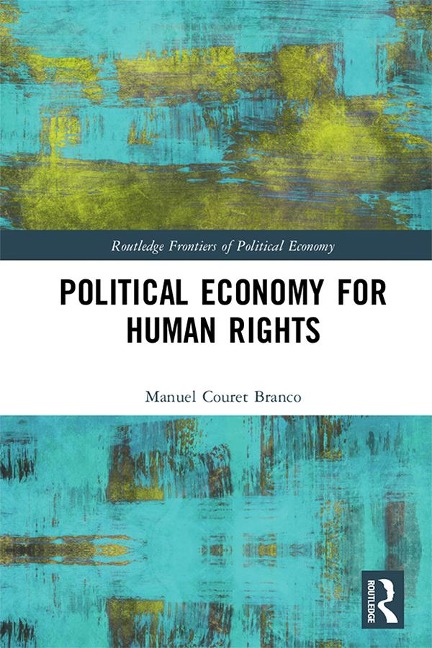
Over time there has been a miscommunication between mainstream economics and human rights that has paved the way to a justificatory ideology that validates the submission of human rights to the logic of market capitalism. This book shows how the discourse of mainstream economics is intrinsically opposed to the strengthening of human rights and outlines the principles upon which a human rights-based political economy can be built. Considering a variety of recognized human rights, such as the right to water and sanitation, the right to social security, the right to work, cultural freedom and democracy, this book describes how mainstream economics theory conflicts with these rights and explores alternative modes of thinking that incorporate human rights concerns into economics. Moreover, the book also reflects on the teaching of political economy for human rights. It sets out that a political economy favourable to human rights must be pluralist, interdisciplinary, participatory, de-commodified, non-utilitarian and non-consequentialist. The author proposes that it must not only assume the performative character of economics but also, and especially, its transformative purpose. Political Economy for Human Rights will offer students, academics, activists and policy makers useful tools to understand some of the main contradictions of contemporary societies and new paths leading to a more just and fraternal world. It will also be of great interest to the general public concerned with human rights and economic issues.
Manuel Couret Branco is full professor of economics at the University of Évora, Portugal. His teaching mainly focuses on development economics, history of economic thought and political economy of human rights. His research interests concern the interaction of economic and non-economic factors, such as ethics, politics or culture.
Introduction. 1. Political economy and human rights: Engaging the conversation 2. Decommodification for human rights. 3. Political economy for the right to work 4. Political economy for cultural freedom 5. Political economy for democracy 6. Teaching political economy for human rights Conclusion Bibliography Index
Dieses eBook wird im PDF-Format geliefert und ist mit einem Adobe Kopierschutz (DRM) versehen. Sie können dieses eBook mit allen Geräten lesen, die das PDF-Format und den Adobe Kopierschutz (DRM) unterstützen.
Zum Beispiel mit den folgenden Geräten:
• tolino Reader
Laden Sie das eBook direkt über den Reader-Shop auf dem tolino herunter oder übertragen Sie das eBook auf Ihren tolino mit einer kostenlosen Software wie beispielsweise Adobe Digital Editions.
• Sony Reader & andere eBook Reader
Laden Sie das eBook direkt über den Reader-Shop herunter oder übertragen Sie das eBook mit der kostenlosen Software Sony READER FOR PC/Mac oder Adobe Digital Editions auf ein Standard-Lesegeräte mit epub- und Adobe DRM-Unterstützung.
• Tablets & Smartphones
Möchten Sie dieses eBook auf Ihrem Smartphone oder Tablet lesen, finden Sie hier unsere kostenlose Lese-App für iPhone/iPad und Android Smartphone/Tablets.
• PC & Mac
Lesen Sie das eBook direkt nach dem Herunterladen mit einer kostenlosen Lesesoftware, beispielsweise Adobe Digital Editions, Sony READER FOR PC/Mac oder direkt über Ihre eBook-Bibliothek in Ihrem Konto unter „Meine eBooks“ - „online lesen“.
Schalten Sie das eBook mit Ihrer persönlichen Adobe ID auf bis zu sechs Geräten gleichzeitig frei.
Bitte beachten Sie, dass die Kindle-Geräte das Format nicht unterstützen und dieses eBook somit nicht auf Kindle-Geräten lesbar ist.