Und dann auf "Zum Home-Bildschirm [+]".

Stöbern
genialokal zum Startbildschirm hinzufügen
Installieren Sie die genialokal App auf Ihrem Startbildschirm für einen schnellen Zugriff und eine komfortable Nutzung.
Installieren Sie die genialokal App auf Ihrem Startbildschirm für einen schnellen Zugriff und eine komfortable Nutzung.
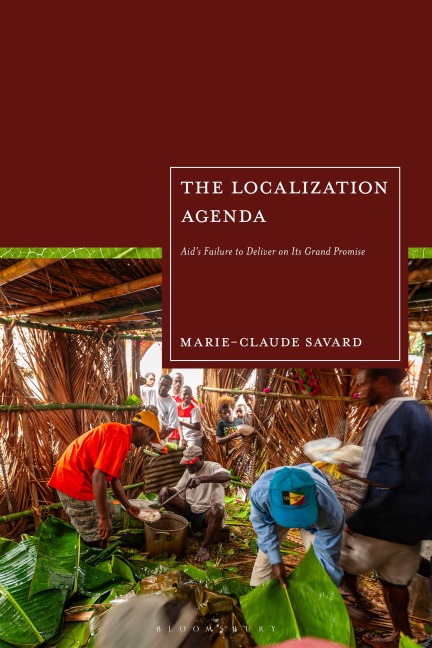
This book tells the story of the humanitarian industry's latest failed attempt at reform, identifies the key contradiction at the heart of it, and suggests ways to do things better.
In 2016, the United Nations, international organizations and heads of state launched the Grand Bargain - "A Shared Commitment to Better Serve People in Need" - thereby announcing a systemwide reform. Key among the commitments was localization: placing local organizations at the centre of emergency responses. However, today, very little has changed, with most attributing the lack of progress to technical issues, such as donor requirements, contracting mechanisms, and local responders' capacities.
However, this book argues that a paradox within the localization agenda is to blame. Drawing from in-depth research with diverse aid organizations, however, Marie-Claude Savard argues that the real problem is that the humanitarian industry is a territory upon which knowledge - the currency of technocratic regimes - is produced and guarded by power-wielding gatekeepers, who determine what constitutes a legitimate emergency responder. Those gatekeepers mandate international NGOs and standard-setting organizations to shepherd nonconforming local organizations towards their standards. This process only reaffirms enduring North-South hierarchies. Ultimately, the reformative potential of the localization agenda is thwarted by its own, internal contradictions-but there are ways of doing things differently by aiming for a true polycentrism that could lead to more sustainable, enduring change.
Marie-Claude Savard is Professor of Critical Management Studies and International Assistance at the University of Quebec at Montreal, Canada. She is the scientific director of l'Observatoire canadien sur les crises et l'action humanitaires (the Canadian Research Centre on Humanitarian Crises and Aid).
Foreword by Dennis Dijkzeul, Executive Director of the Institute for International Law of Peace and Armed Conflict
1. Localization: Failure to Launch?
2. Emergency Assistance and the Rise of Technocratic Thinking
3. The Localization Agenda: What We Know, What We Don't Know
4. The Gatekeepers
5. The Shepherds
6. The Case of Amani
7. Running to Stand Still - The Humanitarian System's Self-preservation Mechanisms
8. Towards a Polycentric Ideal of Aid
References
Dieses eBook wird im PDF-Format geliefert und ist mit einem Adobe Kopierschutz (DRM) versehen. Sie können dieses eBook mit allen Geräten lesen, die das PDF-Format und den Adobe Kopierschutz (DRM) unterstützen.
Zum Beispiel mit den folgenden Geräten:
• tolino Reader
Laden Sie das eBook direkt über den Reader-Shop auf dem tolino herunter oder übertragen Sie das eBook auf Ihren tolino mit einer kostenlosen Software wie beispielsweise Adobe Digital Editions.
• Sony Reader & andere eBook Reader
Laden Sie das eBook direkt über den Reader-Shop herunter oder übertragen Sie das eBook mit der kostenlosen Software Sony READER FOR PC/Mac oder Adobe Digital Editions auf ein Standard-Lesegeräte mit epub- und Adobe DRM-Unterstützung.
• Tablets & Smartphones
Möchten Sie dieses eBook auf Ihrem Smartphone oder Tablet lesen, finden Sie hier unsere kostenlose Lese-App für iPhone/iPad und Android Smartphone/Tablets.
• PC & Mac
Lesen Sie das eBook direkt nach dem Herunterladen mit einer kostenlosen Lesesoftware, beispielsweise Adobe Digital Editions, Sony READER FOR PC/Mac oder direkt über Ihre eBook-Bibliothek in Ihrem Konto unter „Meine eBooks“ - „online lesen“.
Schalten Sie das eBook mit Ihrer persönlichen Adobe ID auf bis zu sechs Geräten gleichzeitig frei.
Bitte beachten Sie, dass die Kindle-Geräte das Format nicht unterstützen und dieses eBook somit nicht auf Kindle-Geräten lesbar ist.