Und dann auf "Zum Home-Bildschirm [+]".

Stöbern
genialokal zum Startbildschirm hinzufügen
Installieren Sie die genialokal App auf Ihrem Startbildschirm für einen schnellen Zugriff und eine komfortable Nutzung.
Installieren Sie die genialokal App auf Ihrem Startbildschirm für einen schnellen Zugriff und eine komfortable Nutzung.
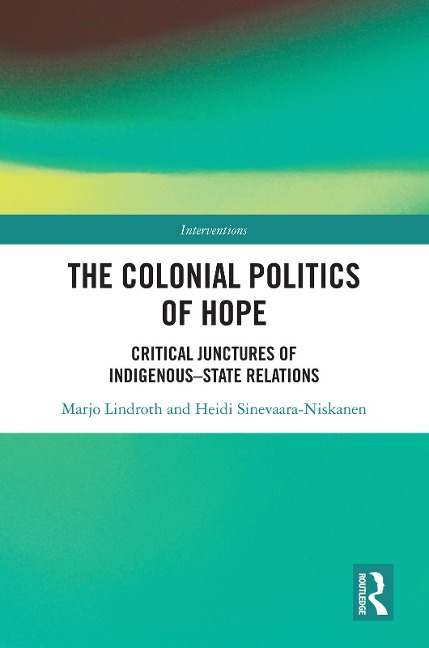
Through analyses of cases in Australia, Finland, Greenland and elsewhere, the book illuminates how states appropriate hope as a means to stall and circumscribe political processes of recognising the rights of indigenous peoples. The book examines hope in indigenous-state relations today. Engaging with hope both empirically and conceptually, the work analyses the dynamic between hope, politics and processes of rights and recognition. In particular, the book introduces the notion of the politics of hope and how it plays out in three salient cases: planned constitutional changes that would finally recognise the indigenous peoples of Australia, the lengthy debate on the ratification of ILO Convention 169 Concerning Indigenous and Tribal Peoples in Independent Countries in Finland and the prospect of Greenland's independence after its gaining self-government in 2009. Juxtaposing these contexts, the book illustrates the ways in which hope has become a useful political tool in enabling states to sidestep the peoples' claims for justice and redress. The book puts forward insights on the power of hope - by definition future oriented - in diminishing the urgency of present concerns. This is hope's most potent colonial force. This book brings together studies on indigenous-state relations, social scientific discussions on hope, and critical postcolonial, feminist and governmentality analyses.
Marjo Lindroth is a university researcher in the Arctic Centre at the University of Lapland, Finland. Heidi Sinevaara-Niskanen is a university lecturer and feminist scholar at the University of Lapland, Finland. Lindroth's and Sinevaara-Niskanen's previous joint work includes the book Global Politics and its Violent Care for Indigeneity: Sequels to Colonialism (Palgrave Macmillan, 2018), which illustrates how the inclusion and recognition of indigeneity in global politics constitute a continuation of colonial practices. Their work has been published in journals such as International Political Sociology, Global Society, and Resilience: International Policies, Practices and Discourse.
1 Hope on the horizon 2 Equivocal hope 3 Battlefields of recognition 4 Fickle contractuality 5 Colonialism in the grammar of hope 6 Conclusion
Dieses eBook wird im PDF-Format geliefert und ist mit einem Adobe Kopierschutz (DRM) versehen. Sie können dieses eBook mit allen Geräten lesen, die das PDF-Format und den Adobe Kopierschutz (DRM) unterstützen.
Zum Beispiel mit den folgenden Geräten:
• tolino Reader
Laden Sie das eBook direkt über den Reader-Shop auf dem tolino herunter oder übertragen Sie das eBook auf Ihren tolino mit einer kostenlosen Software wie beispielsweise Adobe Digital Editions.
• Sony Reader & andere eBook Reader
Laden Sie das eBook direkt über den Reader-Shop herunter oder übertragen Sie das eBook mit der kostenlosen Software Sony READER FOR PC/Mac oder Adobe Digital Editions auf ein Standard-Lesegeräte mit epub- und Adobe DRM-Unterstützung.
• Tablets & Smartphones
Möchten Sie dieses eBook auf Ihrem Smartphone oder Tablet lesen, finden Sie hier unsere kostenlose Lese-App für iPhone/iPad und Android Smartphone/Tablets.
• PC & Mac
Lesen Sie das eBook direkt nach dem Herunterladen mit einer kostenlosen Lesesoftware, beispielsweise Adobe Digital Editions, Sony READER FOR PC/Mac oder direkt über Ihre eBook-Bibliothek in Ihrem Konto unter „Meine eBooks“ - „online lesen“.
Schalten Sie das eBook mit Ihrer persönlichen Adobe ID auf bis zu sechs Geräten gleichzeitig frei.
Bitte beachten Sie, dass die Kindle-Geräte das Format nicht unterstützen und dieses eBook somit nicht auf Kindle-Geräten lesbar ist.