Und dann auf "Zum Home-Bildschirm [+]".

Stöbern
genialokal zum Startbildschirm hinzufügen
Installieren Sie die genialokal App auf Ihrem Startbildschirm für einen schnellen Zugriff und eine komfortable Nutzung.
Installieren Sie die genialokal App auf Ihrem Startbildschirm für einen schnellen Zugriff und eine komfortable Nutzung.
Ihr gewünschter Artikel ist in 0 Buchhandlungen vorrätig - wählen Sie hier eine Buchhandlung in Ihrer Nähe aus:

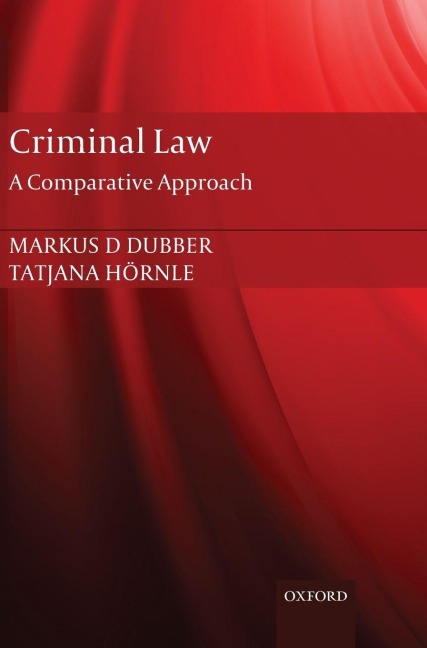
Criminal Law: A Comparative Approach presents a systematic and comprehensive analysis of the substantive criminal law of two major jurisdictions: the United States and Germany. Presupposing no familiarity with either U.S. or German criminal law, the book will provide criminal law scholars and students with a rich comparative understanding of criminal law's foundations and central doctrines. All foreign-language sources have been translated into English; cases and materials are accompanied by heavily cross-referenced introductions and notes that place them within the framework of each country's criminal law system and highlight issues ripe for comparative analysis. Divided into three parts, the book covers foundational issues - such as constitutional limits on the criminal law - before tackling the major features of the general part of the criminal law and a selection of offences in the special part. Throughout, readers are exposed to alternative approaches to familiar problems in criminal law, and as a result will have a chance to see a given country's criminal law doctrine, on specific issues and in general, from the critical distance of comparative analysis.
Markus D. Dubber is Professor of Law at the University of Toronto. Dubber's scholarship has focused on theoretical, comparative, and historical aspects of criminal law. His publications include Handbook of Comparative Criminal Law, Modern Histories of Crime and Punishment, The New Police Science: The Police Power in Domestic and International Governance, The Police Power: Patriarchy and the Foundations of American Government, Einführung in das US-amerikanische Strafrecht, Criminal Law: Model Penal Code, and Victims in the War on Crime: The Use and Abuse of Victims' Rights.
Tatjana Hörnle is Professor of Criminal Law, Comparative Criminal Law, and Penal Philosophy, Humboldt University Berlin. She writes mainly about substantive criminal law and sentencing and about the foundations of the criminal law in moral and political philosophy and constitutional law. In addition to numerous articles in German and international law journals, Professor Hörnle has published on proportionality in sentencing, on offensive conduct, on punishment theories and on freedom of will and culpability.
Part I: Preliminary
1: Punishment: Concepts, Forms, Limits
2: Legality Principle (nulla poena sine lege)
3: Constitutional limits on substantive criminal law
4: Jurisdiction
5: Procedural Contexts
6: Analysis of Criminal Liability
Part II: General Part
7: Actus Reus (Objective Elements)
8: Mens Rea (Subjective Elements)
9: Causation
10: Complicity
11: Corporate criminal liability
12: Inchoate offenses
13: Justifications
14: Excuses
Part III The Special Part
15: Offenses Against the Person
16: Offenses Against Sexual Autonomy: Rape and Sexual Assault
17: Other Offenses