Und dann auf "Zum Home-Bildschirm [+]".

Stöbern
genialokal zum Startbildschirm hinzufügen
Installieren Sie die genialokal App auf Ihrem Startbildschirm für einen schnellen Zugriff und eine komfortable Nutzung.
Installieren Sie die genialokal App auf Ihrem Startbildschirm für einen schnellen Zugriff und eine komfortable Nutzung.
Ihr gewünschter Artikel ist in 0 Buchhandlungen vorrätig - wählen Sie hier eine Buchhandlung in Ihrer Nähe aus:


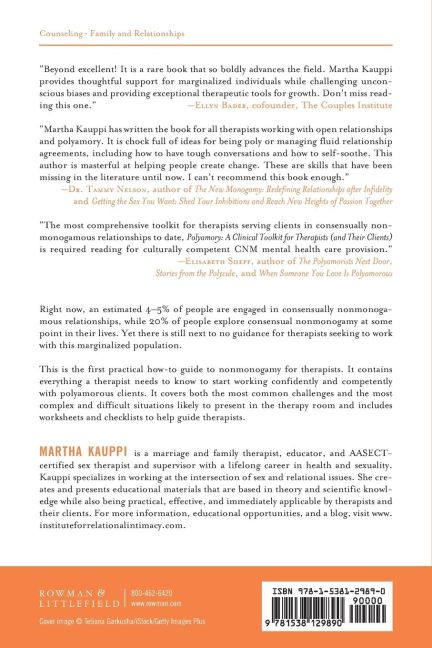
This is the first practical, how-to guide to non-monogamy for therapists. It contains everything a therapist needs to know to start working confidently and competently with polyamorous clients. It covers both the most common challenges and the most complex and difficult situations likely to present in the therapy room.
Martha Kauppi, LMFT, ACST, is a marriage and family therapist, speaker, educator, AASECT-certified sex therapist, and AAMFT-approved supervisor. She is the founder of the Institute for Relational Intimacy, a series of online and in-person courses and workshops for therapists on working effectively with complicated sex issues, relational issues, and alternative sexualities. Kauppi holds a Masters in Marriage & Family Therapy, Edgewood College, Madison, WI.
Table of Contents Acknowledgements Introduction PART I: POLYAMORY FROM A THERAPIST'S PERSPECTIVE Chapter 1: Consensual Non-Monogamies: What Are The Options? Chapter 2: Polyamory: What the Research Tells Us Chapter 3: Overlapping Marginalized Populations and Intersectionality Chapter 4: Polyamory Theory, or Why Polyamory Makes Sense to Some Chapter 5: Who Can Benefit From Consensual Non-Monogamy? PART II: CREATING A STRONG FOUNDATION FOR THERAPY WITH POLYAMORY Chapter 6: The Therapist: Bias, Strengths, and Challenges Chapter 7: What Makes a Good Relationship? Chapter 8: Conceptualizing the Case: If Polyamory Isn't The Problem, What Is? Chapter 9: Using The Initiator/Inquirer Process to Support Differentiation and Move Toward Decisions Chapter 10: Getting Polyamory Therapy off to a Strong Start: Understanding the Change Process PART III: POLYAMORY IN THE THERAPY ROOM: COMMON PRESENTING PROBLEMS Chapter 11: Negotiating Polyamory: Forming Good Agreements Chapter 12: Negotiating Polyamory: Talking Points for Partners Chapter 13: Understanding and Addressing Jealousy Chapter 14: Infidelity, Broken Agreements, and Building Trust Chapter 15: Working with Mono-Polyams and Reluctant Polyams Chapter 16: Recovering from Polyamory Gone Wrong Chapter 17: Role-Related Challenges and Benefits: Primaries, Secondaries, Hinges, Etc. Chapter 18: Relationship Transitions: New Relationships Energy, Relationship Decisions, Shifting Between Partners, and Breakups Chapter 19: Polyamorous Families With Children and Coming Out Issues PART IV: PROFESSIONAL CONSIDERATIONS Chapter 20: Ethical Considerations Chapter 21: Marketing Yourself as a Polyamory-Friendly Therapist Appendices A: Relationship Concept Worksheets B: Emotional Balance Worksheets C: Preparation for Communication Worksheets D: Relationship Enrichment Handouts E: Creating Change Worksheet Set F: Crafting Your Unique Open Relationship Handout Set Bibliography Index About the Author