Und dann auf "Zum Home-Bildschirm [+]".

Stöbern
genialokal zum Startbildschirm hinzufügen
Installieren Sie die genialokal App auf Ihrem Startbildschirm für einen schnellen Zugriff und eine komfortable Nutzung.
Installieren Sie die genialokal App auf Ihrem Startbildschirm für einen schnellen Zugriff und eine komfortable Nutzung.
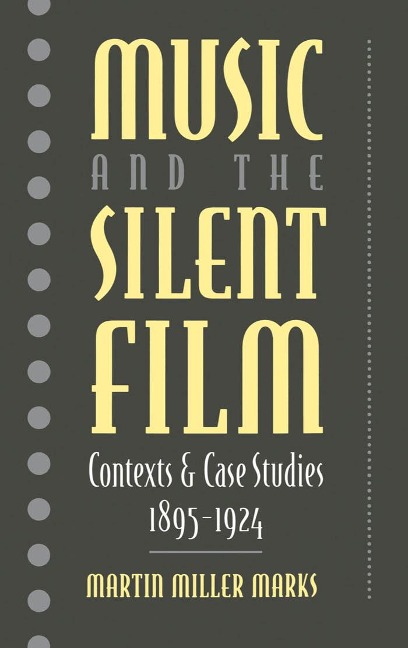
In this book, a leading authority on film music examines scores of the silent film era. The first of three projected volumes investigating music written for films, this thoughtful and pathbreaking study demonstrates the richness of silent film music as it details the way in which scores were often planned from the start as an integral part of the whole cinematic experience. Following an introductory chapter that outlines several key theoretical questions and surveys eight decades of writing on film music, Martin Miller Marks focuses on those scores created between 1895 and 1924. He begins by considering two early examples, one German (written by persons unknown for Skladanowsky's Bioskop exhibitions in 1895 and 1896) and one French (scored by Camille Saint-Saëns for the 1908 film L'Assassinat du Duc de Guise). Subsequent chapters fully discuss Walter Cleveland Simon's music for the American film An Arabian Tragedy (1912) as well as the Joseph Breil accompaniment to D. W. Griffith's Birth of a Nation (1915). As described in this book, Breil's memorable score--though a compilation derived from many sources--was played by an orchestra as Griffith's sweeping images filled the screen, thus contributing significantly to the great film's success while also achieving remarkable power in its own right. Marks then concludes with a look at Erik Satie's witty and innovative music for the French film Entr'acte (1924), which was the first film score of consequence by an avant-garde composer. Giving unprecedented attention to a vibrant, important, and oft-neglected facet of twentieth-century music, Music and the Silent Film will interest scholars of film theory, film history, modern music, and modern aesthetics.
Martin Miller Marks is a Senior Lecturer in the Department of Music and Theater Arts at MIT. He has written and spoken extensively on the history of film music, and also frequently performs piano accompaniment for silent films.
Dieses eBook wird im PDF-Format geliefert und ist mit einem Adobe Kopierschutz (DRM) versehen. Sie können dieses eBook mit allen Geräten lesen, die das PDF-Format und den Adobe Kopierschutz (DRM) unterstützen.
Zum Beispiel mit den folgenden Geräten:
• tolino Reader
Laden Sie das eBook direkt über den Reader-Shop auf dem tolino herunter oder übertragen Sie das eBook auf Ihren tolino mit einer kostenlosen Software wie beispielsweise Adobe Digital Editions.
• Sony Reader & andere eBook Reader
Laden Sie das eBook direkt über den Reader-Shop herunter oder übertragen Sie das eBook mit der kostenlosen Software Sony READER FOR PC/Mac oder Adobe Digital Editions auf ein Standard-Lesegeräte mit epub- und Adobe DRM-Unterstützung.
• Tablets & Smartphones
Möchten Sie dieses eBook auf Ihrem Smartphone oder Tablet lesen, finden Sie hier unsere kostenlose Lese-App für iPhone/iPad und Android Smartphone/Tablets.
• PC & Mac
Lesen Sie das eBook direkt nach dem Herunterladen mit einer kostenlosen Lesesoftware, beispielsweise Adobe Digital Editions, Sony READER FOR PC/Mac oder direkt über Ihre eBook-Bibliothek in Ihrem Konto unter „Meine eBooks“ - „online lesen“.
Schalten Sie das eBook mit Ihrer persönlichen Adobe ID auf bis zu sechs Geräten gleichzeitig frei.
Bitte beachten Sie, dass die Kindle-Geräte das Format nicht unterstützen und dieses eBook somit nicht auf Kindle-Geräten lesbar ist.