Und dann auf "Zum Home-Bildschirm [+]".

Stöbern
genialokal zum Startbildschirm hinzufügen
Installieren Sie die genialokal App auf Ihrem Startbildschirm für einen schnellen Zugriff und eine komfortable Nutzung.
Installieren Sie die genialokal App auf Ihrem Startbildschirm für einen schnellen Zugriff und eine komfortable Nutzung.
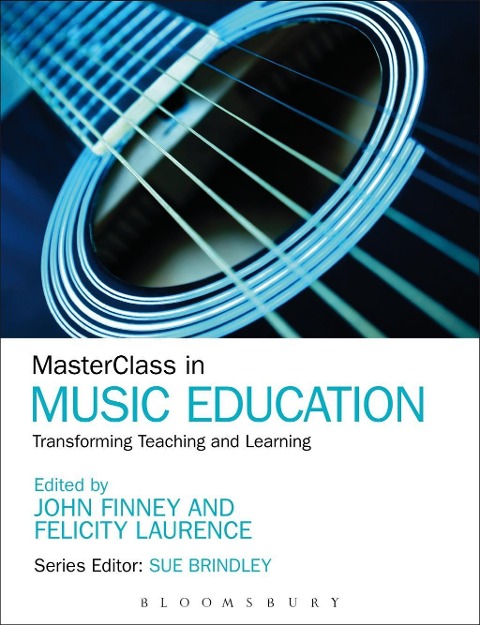
MasterClass in Music Education provides vivid, topical, reflective and above all 'real' accounts from existing teachers researching in the field, together with theoretical insights and a guided view of the relevant existing literature.
Students embarking upon research will gain a many-faceted understanding of the possibilities for using action research and other research methods to explore the interesting and challenging issues confronting music education. At the same time, they will be able to develop an understanding of how to carry out research from the real life case study accounts written by their peers. John Finney and Felicity Laurence provide overarching support, drawing on their own experiences as supervisors of MA Music Education students to frame the debates and reflections which arise.
John Finney is Senior Lecturer in Music Education at the Faculty of Education, University of Cambridge, UK.
Felicity Laurence is Lecturer in Music Education at Newcastle University, UK, where she is Director of the MA in Music and Education.
Series Foreword, Sue Brindley (University of Cambridge, UK)
Acknowledgements
Notes on Contributors
Preface
Prologue: Rethinking Assessment in Music, Di Brady (Essex, UK)
Part I: Setting the Scene: Reflective Music Teaching
1. Music Teachers as Researchers, John Finney (University of Cambridge, UK)
2. Doing Research in Music Education, Felicity Laurence (Newcastle University, UK)
Part II: Investigating Music Educational Practice
Introduction, Felicity Laurence (Newcastle University, UK)
3. Young Children's Inventive Singing: A Critical Reading, Isla Hughes (Newcastle University, UK)
4. Singing for Learning: Questions of Methodology and Method, Hannah Craine (London, UK)
5. Children's Enjoyment of Singing in a Primary School: Processes and Problems in Survey Methodology, Rachael Baskaran (Hampshire, UK)
6. Being Researched, Becoming a Researcher: Ethical Dilemmas, Julia Partington (Newcastle-upon-Tyme, UK)
7. Transforming an 'Unmusical' Primary Teacher into a Confident Musician: A Case of Personal Narrative Enquiry, Zoe Bremner (Newcastle-upon-Tyme, UK)
8. GCSE Music - Why so Few? Looking Again at Others' Research, Zoë-Laura Bridel (Jersey, UK)
Part III: Teacher and Pupils Exploring Together
Introduction, John Finney (University of Cambridge, UK)
9. Understanding Children's Musical Engagement in the Primary School Through Collaborative Research, Elizabeth Kelly (Oxfordshire, UK)
10. Developing Positive Attitudes Towards Singing in Year 7 Through Dialogue and Negotiation, Eleanor Man (London, UK)
11. Pupil Consultation as Catalyst for Cross-Curricular Learning in Secondary Schools, Oliver Bond (Hertfordshire, UK)
Part IV: Understanding Young People's Musical Lives In and Out of School
Introduction, John Finney (University of Cambridge, UK)
12. The Problems of School Music: Self-Efficacy and Musical Identities in Years 7, 8 and 9, Hannah Bibby (Essex, UK)
13. An After School Rock School Investigated: Why Are They Here? Joanne Cheetham (Hertfordshire, UK)
14. Tom Becoming a Composer: A Narrative Account of One Pupil's Creative Journey, Laura Scott (Suffolk, UK)
15. Playstation Power: Removing Performance Barriers to Musical Composition, Alex Baxter (Hertfordshire, UK)
16. Performing Samba, Finding 'Flow': Fostering Engagement in the Secondary Music Classroom, Katy Ambrose (London, UK)
Part V: Reflections
Introduction, Felicity Laurence (Newcastle University, UK)
17. Making Sense of the Music of the Stranger, Kathryn Jourdan (Edinburgh, UK)
Epilogue: Changing Music Education, Ruth Wright (University of Western Ontario, Canada)
A Guided Reading List
Index
Dieses eBook wird im PDF-Format geliefert und ist mit einem Adobe Kopierschutz (DRM) versehen. Sie können dieses eBook mit allen Geräten lesen, die das PDF-Format und den Adobe Kopierschutz (DRM) unterstützen.
Zum Beispiel mit den folgenden Geräten:
• tolino Reader
Laden Sie das eBook direkt über den Reader-Shop auf dem tolino herunter oder übertragen Sie das eBook auf Ihren tolino mit einer kostenlosen Software wie beispielsweise Adobe Digital Editions.
• Sony Reader & andere eBook Reader
Laden Sie das eBook direkt über den Reader-Shop herunter oder übertragen Sie das eBook mit der kostenlosen Software Sony READER FOR PC/Mac oder Adobe Digital Editions auf ein Standard-Lesegeräte mit epub- und Adobe DRM-Unterstützung.
• Tablets & Smartphones
Möchten Sie dieses eBook auf Ihrem Smartphone oder Tablet lesen, finden Sie hier unsere kostenlose Lese-App für iPhone/iPad und Android Smartphone/Tablets.
• PC & Mac
Lesen Sie das eBook direkt nach dem Herunterladen mit einer kostenlosen Lesesoftware, beispielsweise Adobe Digital Editions, Sony READER FOR PC/Mac oder direkt über Ihre eBook-Bibliothek in Ihrem Konto unter „Meine eBooks“ - „online lesen“.
Schalten Sie das eBook mit Ihrer persönlichen Adobe ID auf bis zu sechs Geräten gleichzeitig frei.
Bitte beachten Sie, dass die Kindle-Geräte das Format nicht unterstützen und dieses eBook somit nicht auf Kindle-Geräten lesbar ist.