Und dann auf "Zum Home-Bildschirm [+]".

Stöbern
genialokal zum Startbildschirm hinzufügen
Installieren Sie die genialokal App auf Ihrem Startbildschirm für einen schnellen Zugriff und eine komfortable Nutzung.
Installieren Sie die genialokal App auf Ihrem Startbildschirm für einen schnellen Zugriff und eine komfortable Nutzung.
Ihr gewünschter Artikel ist in 0 Buchhandlungen vorrätig - wählen Sie hier eine Buchhandlung in Ihrer Nähe aus:

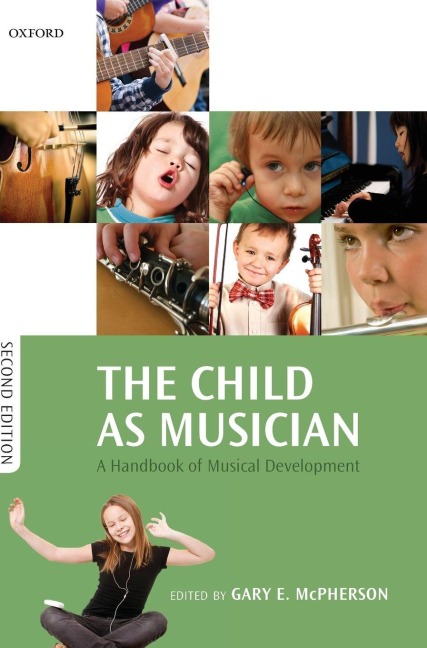
The new edition of 'The Child as Musician' celebrates the richness and diversity of the many different ways in which children can engage in and interact with music. It presents theory - both cutting edge and classic - in an accessible way for readers by surveying research concerned with the development and acquisition of musical skills
Gary E. McPherson is the Ormond Professor and Director of the Melbourne Conservatorium of Music at the University of Melbourne. He has served as National President of the Australian Society for Music Education and President of the International Society for Music Education. His research interests are broad and his approach interdisciplinary. His most important research examines the acquisition and development of musical competence, and motivation to engage and participate in music from novice to expert levels. With a particular interest in the acquisition of visual, aural and creative performance skills, he has attempted to understand more precisely how music students become sufficiently motivated and self-regulated to achieve at the highest level.
Section 1: Development
1: Richard Parncutt: Prenatal Development
2: Sandra E. Trehub and Franziska Dege?: Reflections on Infants as Musical Connoisseurs
3: Donald A. Hodges: The Child Musician's Brain
4: Susan Hallam: Musicality
5: Kathleen A. Corrigall and E. Glenn Schellenberg: Music cognition in childhood
6: Jackie Wiggins: Musical Agency
7: Adam Ockelford: The potential impact of autism on musical development
Section 2: Engagement
8: E. Glenn Schellenberg: Music and Nonmusical Abilities
9: Janet Mills and Gary E. McPherson: Musical Literacy: Reading traditional clef notation
10: Chris Philpott: Musical Literacy: Music as language
11: Andrew Brown: Engaging in a sound musicianship
12: Emery Schubert and Gary E. McPherson: Underlying Mechanisms and Processes in the Development of Emotion Perception in Music
13: David J. Elliott and Marissa Silverman: Felt Experiences of Popular Musics
14: Sharon G. Davis: Children, Popular Music, and Identity
15: Paul Woodford: The Child as Music Critic
16: David J. Hargreaves, Adrian C. North, and Mark Tarrant: How and why do musical preferences change in childhood and adolescence?
Section 3: Differences
17: Paul Evans: Motivation
18: Gary E. McPherson and Aaron Williamon: Building gifts into musical talents
19: Judith A. Jellison: Inclusive Music Classrooms: A Universal Approach
20: Costanza Preti and Katrina S. McFerran: Music and Wellbeing during Illness
21: Katrina S. McFerran: Adolescent Music Is Not Problematic
Section 4: Skills
22: Gary E. McPherson, Jane W. Davidson and Paul Evans: Playing an instrument
23: Margaret Sarah Osborne: Building performance confidence
24: Graham Welch: Singing and vocal development
25: Kathryn Marsh and Susan Young: Musical play
26: Pamela Burnard and Hsu-Chan Kuo: The Individual and Social Worlds of Children's Musical Creativities
27: Peter Webster: Computer-Based Technology
Section 5: Contexts
28: Gordon Cox: Historical Perspectives
29: Frank Abrahams and Daniel Abrahams: Child as Musical Apprentice
30: Patricia Shehan Campbell: Global Practices
31: Alexandra Kertz-Welzel: Transcultural Childhoods
32: Lee Higgins: My Voice is Important Too: Non-formal Music Experiences and Young People
33: Susan A. O'Neill: Transformative Music Engagement and Musical Flourishing
34: Jane W. Davidson and Robert Faulkner: The transition from adolescent to adult music learner
35: Stephanie E. Pitts: Fostering lifelong engagement in music