Und dann auf "Zum Home-Bildschirm [+]".

Stöbern
genialokal zum Startbildschirm hinzufügen
Installieren Sie die genialokal App auf Ihrem Startbildschirm für einen schnellen Zugriff und eine komfortable Nutzung.
Installieren Sie die genialokal App auf Ihrem Startbildschirm für einen schnellen Zugriff und eine komfortable Nutzung.

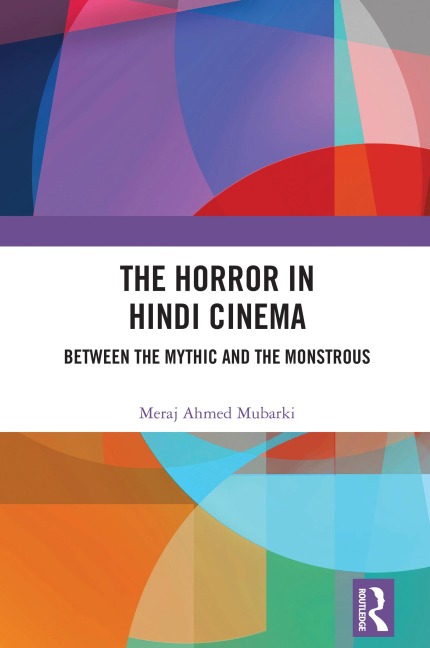
The book offers a lively and detailed analysis of the ideological subtext of Hindi Horror cinema. It unearths its codes and conventions, its relationship to spectatorship, the genre's conjunctions and departures from Hollywood, and the unique features of Hindi horror. It posits the Hindi horror genre as a project of / for the 'nation' in the making. Analysing films from Mahal (1948) to Bhediya (2022), this book uncovers narrative strategies, frames unique approaches of investigation, and reviews the transformation taking place within the genre. It argues that Hindi horror cinema lies at the intersection of myths, competing ideologies, dominant socio-religious thoughts revealing three major strands of narrative constructs, each corresponding to the way the nation has been imagined at different times in post-colonial India. It establishes a theoretical framework of Hindi horror cinema, and demonstrates for the first time how this genre, with its subsets, provides a means to contemplate the nation. This volume will be useful to students, researchers and faculty members working in mass communication, journalism, political science, film studies, political sociology, gender / women studies, Culture studies and post-colonial Indian politics. It will also be an invaluable and interesting reading for those interested in South Asian popular culture studies.
Meraj Ahmed Mubarki is Assistant Professor in the Department of Mass Communication & Journalism at Maulana Azad National Urdu University, Hyderabad. He has a Master's Degree and a PhD in Journalism and Mass Communication from the University of Calcutta. He has taught at Asutosh College and Shri Shikshayatan College, Kolkata. He has contributed articles to prestigious international peer-reviewed journals like the History and Sociology of South Asia (Sage Publications), Contemporary South Asia (a Routledge Imprint), Visual Anthropology (Routledge Imprint), Indian Journal of Gender Studies (Sage Publications), South Asia: Journal of South Asian Studies (Routledge Imprint), Social Semiotics (Routledge Imprint), Quarterly Review of Film & Video (Routledge Imprint)and Feminist Media Studies (Routledge Imprint). In 2020, he was awarded a Fellowship by the National Film Archives of India, Pune to study film censorship in Colonial India. His articles have been included in the Reading Lists of the Sussex University, U.K.; Central University of Gujarat, India; the Indian Institute of Technology (IIT) Tirupati, India; St Paul's University, Canada; University of California, Riverside, USA.
1. Indian Cinema and Ideology , Codes and the Horror Cinema 4. Return of Traditional -Cultural Narrative 5. The Inflection of the Post-Secular Horror Cinema Bibliography