Und dann auf "Zum Home-Bildschirm [+]".

Stöbern
genialokal zum Startbildschirm hinzufügen
Installieren Sie die genialokal App auf Ihrem Startbildschirm für einen schnellen Zugriff und eine komfortable Nutzung.
Installieren Sie die genialokal App auf Ihrem Startbildschirm für einen schnellen Zugriff und eine komfortable Nutzung.
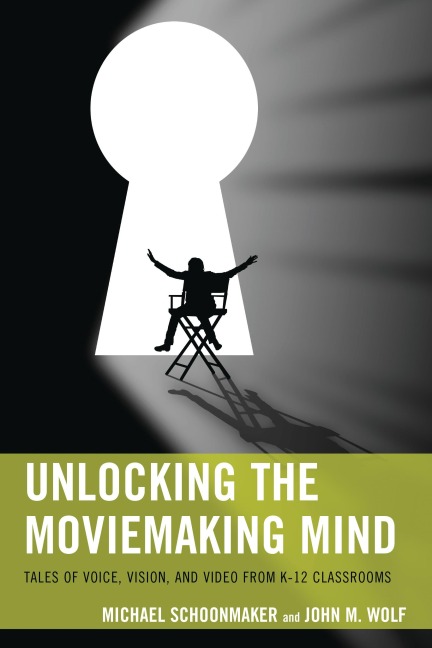
Have you ever had an idea for a book, a movie, or a TV show? Chances are that you've had many. Today's students, who are coming of age in a world that is increasingly mediated by smartphones, pads, pods, apps, and the Internet, are even more likely to think of their lives and experiences in terms of stories. Unlocking the Moviemaking Mind explores how our innate abilities as storytellers can be used in the K-12 classroom to stimulate new approaches to learning. Relying on data collected during a multi-year research project in a variety of school settings, this book relies on story and synthesis to present tried and true methods of introducing media making practices in the classroom. Unlocking the Moviemaking Mind also offers strategies for overcoming individual and systematic barriers that educators and administrators are likely to encounter when incorporating storytelling into their curricula. Moreover, the book broaches topics that are especially germane to today's students, including literacy, motivation, and experiential learning.
Michael Schoonmaker is the long-time Chairman of the Television-Radio-Film Department at Syracuse University's Newhouse School, and author of the book Camera in the Classroom: Educating the Post-TV Generation, a guide for K-12 teachers who wish to integrate film and video into their curricula. His professional credits include production management roles at MTV and NBC Olympic Unit's Emmy Award-winning coverage of the 1988 Olympic Games in Seoul, Korea.
John Wolf (Ph.D., Syracuse University) teaches in the Science, Technology, and Society Program at the New Jersey Institute of Technology in Newark. His research focuses on digital culture, deviance, and social change.
Preface
Introduction
Part One: Keys
Chapter 1: Telling Stories and Storytelling
InstinctConnectionNatureMotivationChapter 2: Video Is Not Vocation
ExpressionPurposeSolutionIntegrationChapter 3: Destination and Journey in Video Production
ReasonInventionResiliencePart Two: Locks
Chapter 4: Behind the Camera, In Front of the Lens: Video and Self-Discovery
BoundariesAcknowledgmentPathsChapter 5: Video and Voice
ListeningHearingPerspectiveNoiseFringeHumanity Part Three: Unlocking the Moviemaking Mind
Chapter 6: Media and Literacy
ReciprocityEmpowermentTransformationChapter 7: The Mess Is the Message
MotiveConfabulationConclusion
References
Dieses eBook wird im PDF-Format geliefert und ist mit einem Adobe Kopierschutz (DRM) versehen. Sie können dieses eBook mit allen Geräten lesen, die das PDF-Format und den Adobe Kopierschutz (DRM) unterstützen.
Zum Beispiel mit den folgenden Geräten:
• tolino Reader
Laden Sie das eBook direkt über den Reader-Shop auf dem tolino herunter oder übertragen Sie das eBook auf Ihren tolino mit einer kostenlosen Software wie beispielsweise Adobe Digital Editions.
• Sony Reader & andere eBook Reader
Laden Sie das eBook direkt über den Reader-Shop herunter oder übertragen Sie das eBook mit der kostenlosen Software Sony READER FOR PC/Mac oder Adobe Digital Editions auf ein Standard-Lesegeräte mit epub- und Adobe DRM-Unterstützung.
• Tablets & Smartphones
Möchten Sie dieses eBook auf Ihrem Smartphone oder Tablet lesen, finden Sie hier unsere kostenlose Lese-App für iPhone/iPad und Android Smartphone/Tablets.
• PC & Mac
Lesen Sie das eBook direkt nach dem Herunterladen mit einer kostenlosen Lesesoftware, beispielsweise Adobe Digital Editions, Sony READER FOR PC/Mac oder direkt über Ihre eBook-Bibliothek in Ihrem Konto unter „Meine eBooks“ - „online lesen“.
Schalten Sie das eBook mit Ihrer persönlichen Adobe ID auf bis zu sechs Geräten gleichzeitig frei.
Bitte beachten Sie, dass die Kindle-Geräte das Format nicht unterstützen und dieses eBook somit nicht auf Kindle-Geräten lesbar ist.