Und dann auf "Zum Home-Bildschirm [+]".

Stöbern
genialokal zum Startbildschirm hinzufügen
Installieren Sie die genialokal App auf Ihrem Startbildschirm für einen schnellen Zugriff und eine komfortable Nutzung.
Installieren Sie die genialokal App auf Ihrem Startbildschirm für einen schnellen Zugriff und eine komfortable Nutzung.
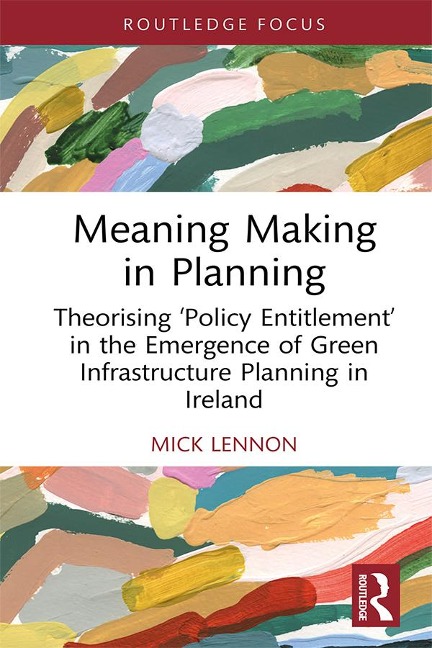
Planning theorists normally focus on issues of contest and critique. The field of planning theory is thereby replete with studies of conflict, collaboration and criticism. Considerably less critical attention is afforded to policy approaches that emerge, evolve and are widely adopted in the apparent absence of discord. This book addresses this knowledge gap. A case study of the emergence of green infrastructure policy in Ireland is used to both inform and illustrate a theory of 'Policy Entitlement'. This interpretive approach focuses on meaning making in context to explain the counter-intuitive processes through which a new policy concept can emerge and reprofile planning activities by producing the seemingly pre-existing objective reality to which such policy is then applied and the discipline (re)orientated. This approach accounts for how a new planning concept can appear to resolve problematic policy ambiguity by suspending disagreement on issues where dispute could be expected. This book will be of interest to those studying planning theory and the policy process, as well as those concerned with the undertheorized but swift rise to prominence of green infrastructure planning.
Mick Lennon is Associate Professor in the School of Architecture, Planning and Environmental Policy at University College Dublin, Ireland. His work focuses on the intersections between planning and environmental policy, with a particular emphasis on using novel theoretical approaches to cultivate resilience in the context of social and environmental transitions. Mick was a practicing town planner for several years prior to entering academia. He is author of Planning for the Common Good published by Routledge in 2022.
Introduction Chapter 1 Interpreting Policy Discourses Chapter 2 Case Study Summary Chapter 3 Narrative Production Chapter 4 Naming Attributes & Effects Chapter 5 Rationality Resonance Chapter 6 Narrative Modality Chapter 7 Policy Entitlement
Dieses eBook wird im PDF-Format geliefert und ist mit einem Adobe Kopierschutz (DRM) versehen. Sie können dieses eBook mit allen Geräten lesen, die das PDF-Format und den Adobe Kopierschutz (DRM) unterstützen.
Zum Beispiel mit den folgenden Geräten:
• tolino Reader
Laden Sie das eBook direkt über den Reader-Shop auf dem tolino herunter oder übertragen Sie das eBook auf Ihren tolino mit einer kostenlosen Software wie beispielsweise Adobe Digital Editions.
• Sony Reader & andere eBook Reader
Laden Sie das eBook direkt über den Reader-Shop herunter oder übertragen Sie das eBook mit der kostenlosen Software Sony READER FOR PC/Mac oder Adobe Digital Editions auf ein Standard-Lesegeräte mit epub- und Adobe DRM-Unterstützung.
• Tablets & Smartphones
Möchten Sie dieses eBook auf Ihrem Smartphone oder Tablet lesen, finden Sie hier unsere kostenlose Lese-App für iPhone/iPad und Android Smartphone/Tablets.
• PC & Mac
Lesen Sie das eBook direkt nach dem Herunterladen mit einer kostenlosen Lesesoftware, beispielsweise Adobe Digital Editions, Sony READER FOR PC/Mac oder direkt über Ihre eBook-Bibliothek in Ihrem Konto unter „Meine eBooks“ - „online lesen“.
Schalten Sie das eBook mit Ihrer persönlichen Adobe ID auf bis zu sechs Geräten gleichzeitig frei.
Bitte beachten Sie, dass die Kindle-Geräte das Format nicht unterstützen und dieses eBook somit nicht auf Kindle-Geräten lesbar ist.