
Stöbern
genialokal zum Startbildschirm hinzufügen
Installieren Sie die genialokal App auf Ihrem Startbildschirm für einen schnellen Zugriff und eine komfortable Nutzung.
Installieren Sie die genialokal App auf Ihrem Startbildschirm für einen schnellen Zugriff und eine komfortable Nutzung.
Tippen Sie einfach auf Teilen:
 Und dann auf "Zum Home-Bildschirm [+]".
Bei genialokal.de kaufen Sie online bei Ihrer lokalen, inhabergeführten Buchhandlung!
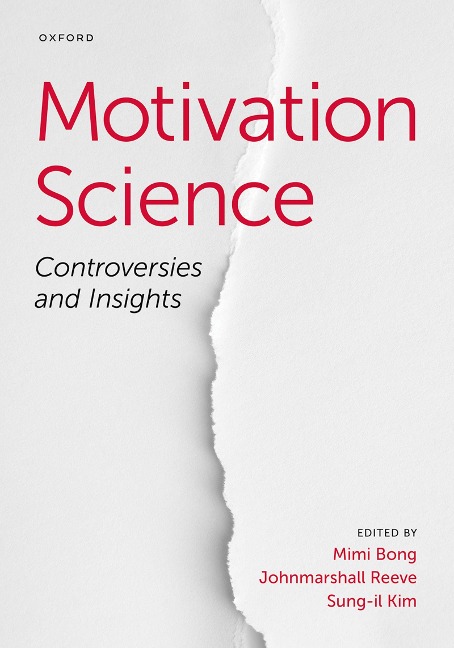
When, why, and how are people motivated? This is the essential question that motivation science has sought to address since the field's inception, and yet motivation scientists have offered many contrasting and even conflicting perspectives that have stalled key conversations in the research. This volume captures the nature of these critical debates, while also moving the field towards greater coherence by bringing differing perspectives from experts together in one volume. Posing 10 fundamental questions to 57 prominent motivation researchers around the globe, Motivation Science: Controversies and Insights covers topics such as the nature of motivation, cultural differences in motivational processes, evidence-based strategies to enhance motivation, and predictions for the future of the field. Edited by three leaders in motivation science, this volume provides readers with a rare opportunity to see how different theorists and researchers recognize, evaluate, and prescribe solutions to the same motivation problem. By sharing current thinking and providing innovative insights into the important questions and controversies in the study of motivation, the book brings together cutting-edge theory and research that readers can use to generate fresh and effective applications and interventions.
Dr. Mimi Bong is a Professor of Educational Psychology and the Director of the Brain and Motivation Research Institute at Korea University. For the past 27 years, she has been studying the achievement motivation of children and adolescents, focusing on the role of self-efficacy beliefs, value perceptions, and achievement goals in student motivation and self-regulation. Bong is the Editor-in-Chief of the Journal of Experimental Education and has served or currently serves on the editorial boards of numerous journals, including American Educational Research Journal, Child Development, Contemporary Educational Psychology, Educational Psychologist, Educational Psychology Review, Educational Researcher, Journal of Educational Psychology, and Learning and Instruction. Dr. Johnmarshall Reeve is a Professor in the Institute for Psychology and Education at the Australian Catholic University in Sydney, Australia. His research focuses on all aspects of human motivation and emotion, but mostly on autonomy-supportive teaching, students' agentic engagement, and the neuroscience of intrinsic motivation. He has published 86 articles in peer-reviewed journals such as the Journal of Educational Psychology and authored 4 books, including Understanding Motivation and Emotion and Supporting Students' Motivation. Dr. Sung-il Kim is the Dean of the College of Education and the Graduate School of Education and a Professor of Educational Psychology at Korea University. His research focuses on interest, curiosity, neural bases of motivation, and modeling interest-based learning. He has served as the President of the Korean Educational Psychology Association, the Korean Society for Cognitive Science, and the Korean Mind, Brain, and Education Society, and the Director of the Brain and Motivation Research Institute. He is an Associate Editor of Frontiers in Psychology and serves on the editorial board of Motivation and Emotion.
Section 1What Is Motivation?
Question 1: What Is Motivation?
What Is Motivation, Where Does It Come from, and How Does It Work?Carol S. Dweck, Matthew L. Dixon, and James J. Gross
Energization and Direction Are Both Essential Parts of MotivationAndrew J. Elliot
What Is Motivation?Edwin A. Locke
Motivation Processes and OutcomesDale H. Schunk
Motivation Is the Interaction Between Dispositions and ContextDeborah Stipek
Motivation Is the State of Wanting Something. But Do We Want the Right Things?Kennon M. Sheldon
Wanting to Feel Effective in Our Goal Pursuits for Both Outcomes and Process E. Tory Higgins and Emily Nakkawita
Pleasure, Utility, and Goals: Motivation as a Value-Based Decision-Making ProcessSung-il Kim
Jingle-Jangle Fallacies in Motivation Science: Toward a Definition of Core MotivationReinhard Pekrun
Academic Self-Concept: A Central Motivational ConstructGeetanjali Basarkod and Herbert W. Marsh
Motivation Resides Only in Our Language, Not in Our Mental ProcessesKou Murayama
Insights Gained from Controversy #1
Section 2What Are the Current Controversies in Motivation Science?
Question 2: Are Motivational Processes Universal Across Cultures and Contexts?
Does One Size Fit All? Cultural Perspectives on School MotivationDennis M. McInerney
Where Will Michelle Go to College? Culture and Context in the Study of MotivationPaul A. Schutz
Can We Really Say that Motivational Processes Are Universal Across Cultures and Contexts? Briana P. Green, DeLeon L. Gray, Elan C. Hope, and Jamaal S. Matthews
Vitamins for Psychological Growth: A Universal Foundation for Motivating OthersBart Soenens and Maarten Vansteenkiste
Big-Fish-Little-Pond Effect (BFLPE): Universality of Psychological Comparison ProcessesHerbert W. Marsh and Geetanjali Basarkod
Insights Gained from Controversy #2
Question 3: Is There Such a Thing as "Good" Motivation and "Bad" Motivation?
Some Motivations Make Us Happier than OthersKennon M. Sheldon
The Good, the Bad, and the Ugly of MotivationNikos Ntoumanis
Less Is Sometimes More: Differentiating 'Must-ivation' from 'Want-ivation'Maarten Vansteenkiste and Bart Soenens
Do We Sometimes Surrender Our Good Motivation for Bad? Some Reflections on the Quality of MotivationAllan Wigfield
Good Versus Bad Motivation? Avoiding the Lure of False DichotomiesPatricia A. Alexander
Insights Gained from Controversy #3
Question 4: Does Extrinsic Incentive (e.g., Rewards, Competition) Undermine Motivation?
Extrinsic Rewards Undermine Motivation in the Classroom... Sometimes Eric M. Anderman
Extrinsic Incentives/Rewards - Short-Term Fix that Can Undermine Long-Term MotivationWendy S. Grolnick
Interest and Its Relation to Rewards, Reward Expectations, and Incentives Suzanne E. Hidi and K. Ann Renninger
Competition Can Enhance Motivation-but Typically Undermines ItJohnmarshall Reeve
Insights Gained from Controversy #4Question 5: Can We Control Our Motivation?
The Unconscious Sources of Motivation and GoalsJohn A. Bargh and Peter M. Gollwitzer
Two Routes to the Self-Regulation of Motivation and GoalsPeter M. Gollwitzer and John A. Bargh
The Uneasy Relationship Between Conscious and Non-Conscious MotivationTimothy Urdan
Controlling Your Own Motivation Is an Acquired SkillChristopher A. Wolters
A Key to Motivation Is Thinking and Acting like You Can Change ThingsErika A. Patall
Finding the Second Wind: Motivation Is Within Our ControlEllen L. Usher
Insights Gained from Controversy #5
Question 6: Can You Distinguish Motivation from Cognition and Emotion?
Cognitions and Emotions Energize and Sustain MotivationDale H. Schunk
Dissecting the Elephant: Cognition, Emotion, and Motivation as Distinct but Intertwined EntitiesReinhard Pekrun
Exploring the Boundaries Between Motivation, Cognition, and Emotion: Theoretical, Empirical, and Practical DistinctionsPatricia A. Alexander
Transactions Among Motivation, Emotion, and Cognition: Blurring the Lines Paul A. Schutz
Are Cognition, Motivation, and Emotion the Same or Different? Let's Abandon That ThinkingKou Murayama
Insights Gained from Controversy #6Question 7: What Are the Unanswered Questions and Unresolved Controversies in Motivation Study?
Understanding Motivation: So Much Is Known, So Much Left to LearnTimothy Urdan
How Does Context Shape Motivation?Mimi Bong
Is a Focus on Looking Smart Beneficial for Students' Engagement, Learning, and Achievement?Lisa Linnenbrink-Garcia
Is There a Need for Psychological Needs in Theories of Achievement Motivation?Allan Wigfield and Alison C. Koenka
Should Theoretical Integration Occur in the Motivation Literature? Considering What, for Whom, and WhenAlison C. Koenka and Allan Wigfield
Insights Gained from Controversy #7
Section 3How Do We Motivate People?
Question 8: How Do We Motivate People?
How Do We Motivate People? Connecting to People's Existing Goals and ValuesCarol S. Dweck
Creating a Motivating Learning Environment: Guiding Principles from Philosophy, Psychology, and PedagogyPatricia A. Alexander
Easy to Get People to Do Things, More Challenging to Facilitate Their MotivationWendy S. Grolnick
When It Comes to Motivating Others, What's Easy Is Not Always What WorksErika A. Patall
Motivating People: It Depends on What, and It Depends on WhenEric M. Anderman
How Do We Motivate People? By Working with Their Self-BeliefsEllen L. Usher
A Control-Value Approach to Affective Growth Reinhard Pekrun
How to Foster Motivation? The Need-Based Motivating Compass as a Source of InspirationMaarten Vansteenkiste and Bart Soenens
You Can Motivate Others by Nurturing Five Experiences that Satisfy Their Need for Autonomy: Authentic Inner Compass, Authentic Intentions, and FreedomAvi Assor, Moti Benita, and Yael Geifman
Improving Social Contexts Can Enhance Student MotivationKathryn R. Wentzel
What Teachers Need to Know About Promoting Student Motivation to LearnHelen Patrick
Insights Gained from Controversy #8
Section 4What Is the Future of Motivation Science?
Question 9: What Is the Most Fundamental Limitation in Contemporary Motivation Theory and Research?
Is Academic Motivation a Tree Trunk, a Fan, a Wall, a Rope, a Snake, or a Spear? No, It's an Elephant and It's on FireEllen A. Skinner
Gaps in Contemporary Motivation Research: A Biopsychological PerspectiveAndrew J. Martin and Emma C. Burns
Identifying the Role of Social Relationships in Motivating Students to LearnKathryn R. Wentzel
Most Motivation Research in Education Is Not Yet Useful for Teachers Helen Patrick
Motivational Researchers Must Move Beyond Linear Models to Consider Motivational Processes as Part of a Complex SystemLisa Linnenbrink-Garcia
The Most Fundamental Limitation in Motivation Theory and Research Is Our TheoriesEric M. Anderman
Infatuation with Constructs and Losing Sight of the Motivational PhenomenonAvi Kaplan
Theoretical and Methodological Disintegration Is the Most Fundamental Limitation in Contemporary Motivation ResearchBenjamin Nagengast and Ulrich Trautwein
Insights Gained from Controversy #9
Question 10: What Will Be the Most Significant Development in Motivation Science in the Next Decade?
The Next Decade: Making Motivation the Foundation of Psychology AgainCarol S. Dweck
Harnessing Biopsychology and Mobile Technology to Develop Motivation Science in the Next DecadeAndrew J. Martin, Emma C. Burns, Roger Kennett, and Joel Pearson
Digitization Will Bring Profound Changes in Educational Practice and Research on MotivationUlrich Trautwein and Benjamin Nagengast
Understanding Human Motivation and Action as a Complex Dynamic SystemAvi Kaplan
Assessing Motivation Dynamically Dale H. Schunk
Motivation in the Wild: Capturing the Complex Social Ecologies of Academic MotivationEllen A. Skinner, Thomas A. Kindermann, Justin W. Vollet, and Nicolette P. Rickert
Community-Engaged Research: The Next Frontier in Motivation ScienceDeLeon L. Gray and Brooke Harris-Thomas
Insights Gained from Controversy #10
Dieses eBook wird im PDF-Format geliefert und ist mit einem Adobe Kopierschutz (DRM) versehen. Sie können dieses eBook mit allen Geräten lesen, die das PDF-Format und den Adobe Kopierschutz (DRM) unterstützen.
Zum Beispiel mit den folgenden Geräten:
• tolino Reader
Laden Sie das eBook direkt über den Reader-Shop auf dem tolino herunter oder übertragen Sie das eBook auf Ihren tolino mit einer kostenlosen Software wie beispielsweise Adobe Digital Editions.
• Sony Reader & andere eBook Reader
Laden Sie das eBook direkt über den Reader-Shop herunter oder übertragen Sie das eBook mit der kostenlosen Software Sony READER FOR PC/Mac oder Adobe Digital Editions auf ein Standard-Lesegeräte mit epub- und Adobe DRM-Unterstützung.
• Tablets & Smartphones
Möchten Sie dieses eBook auf Ihrem Smartphone oder Tablet lesen, finden Sie hier unsere kostenlose Lese-App für iPhone/iPad und Android Smartphone/Tablets.
• PC & Mac
Lesen Sie das eBook direkt nach dem Herunterladen mit einer kostenlosen Lesesoftware, beispielsweise Adobe Digital Editions, Sony READER FOR PC/Mac oder direkt über Ihre eBook-Bibliothek in Ihrem Konto unter „Meine eBooks“ - „online lesen“.
Schalten Sie das eBook mit Ihrer persönlichen Adobe ID auf bis zu sechs Geräten gleichzeitig frei.
Bitte beachten Sie, dass die Kindle-Geräte das Format nicht unterstützen und dieses eBook somit nicht auf Kindle-Geräten lesbar ist.