Und dann auf "Zum Home-Bildschirm [+]".

Stöbern
genialokal zum Startbildschirm hinzufügen
Installieren Sie die genialokal App auf Ihrem Startbildschirm für einen schnellen Zugriff und eine komfortable Nutzung.
Installieren Sie die genialokal App auf Ihrem Startbildschirm für einen schnellen Zugriff und eine komfortable Nutzung.
Ihr gewünschter Artikel ist in 0 Buchhandlungen vorrätig - wählen Sie hier eine Buchhandlung in Ihrer Nähe aus:

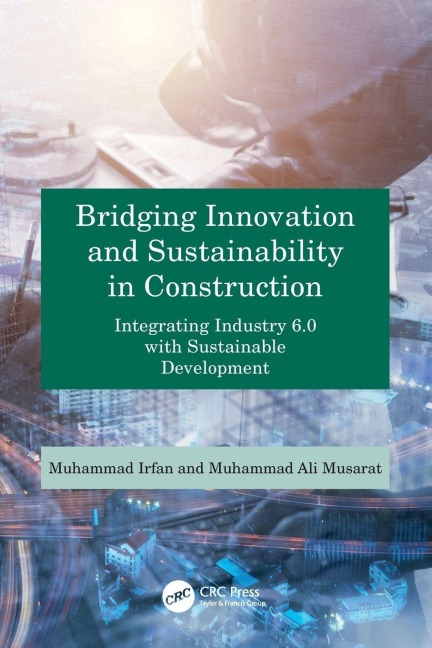
This book comprehensively analyses Industry 6.0 and its integration with the UN's Sustainable Development Goals (SDGs) in the construction industry.
Muhammad Irfan is the Manager of Project Development at the National Disaster Management Authority, Islamabad, Pakistan. He holds a bachelor's degree from UET, Taxila, and a Master's from NUST, Islamabad. He is pursuing a PhD at COMSATS University Islamabad, Pakistan, with a focus on carbon pricing mechanisms in the construction industry. Muhammad Ali Musarat is a distinguished Civil Engineer specializing in Construction Engineering and Management, particularly in Automated and Digital Construction. He has a robust background in research and development, demonstrated by his numerous peer-reviewed publications, books authored, and multiple patents, which underscore his significant contributions to construction technology. Dr. Musarat serves as a reviewer for several leading international journals and holds editorial board positions with several reputed journals. His research focuses on the automation and digital transformation of construction processes, emphasizing innovative approaches that enhance efficiency, sustainability, and productivity in the built environment. Dr. Musarat is widely regarded in academic and industry circles as a forward-thinking expert driving the evolution of construction engineering.
1. Introduction 2. Origins of Industry 6.0 3. Relationship of IR 6.0 with the Construction Industry 4. Construction's Role in SDGs and Industry 6.0 Integration 5. Worldwide Regulatory Frameworks 6. Key Findings from Case Studies 7. Defining the Future of IR 6.0 in Construction - Recommended Directions 8. Holistic Framework Proposal and Conclusion