Und dann auf "Zum Home-Bildschirm [+]".

Stöbern
genialokal zum Startbildschirm hinzufügen
Installieren Sie die genialokal App auf Ihrem Startbildschirm für einen schnellen Zugriff und eine komfortable Nutzung.
Installieren Sie die genialokal App auf Ihrem Startbildschirm für einen schnellen Zugriff und eine komfortable Nutzung.
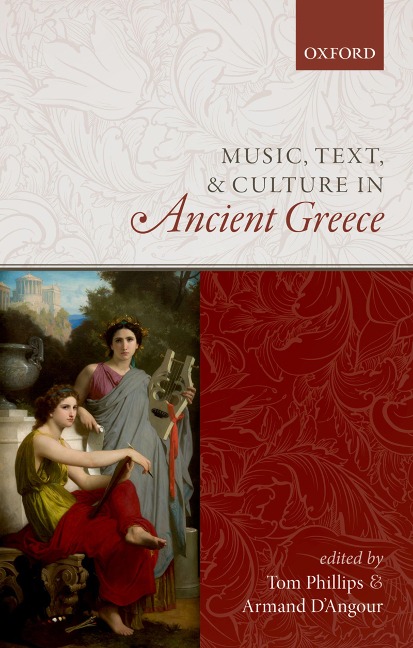
What difference does music make to performance poetry, and how did the ancients themselves understand this relationship? Although scholars have long recognized the importance of music to ancient performance culture, little has been written on the specific effects that musical accompaniment, and features such as rhythmical structure and melody, would have created in individual poems.
This volume attempts to answer these questions by exploring more fully the relationship between music and language in the poetry of ancient Greece. Arranged into two parts, the essays in the first half engage closely with the evidential and interpretative challenges posed by the interaction of ancient music and poetry, and propose original readings of a range of texts by authors such as Homer, Pindar, and Euripides, as well as later poets such as Seikilos and Mesomedes. While they emphasize different formal features, they also argue collectively for a two-way relationship between music and language: attention to the musical features of poetic texts, insofar as we can reconstruct them, enables us to better understand not only their effects on audiences, but also the various ways in which they project and structure meaning.
In the second part, the focus shifts to ancient attempts to conceptualize interactions between words and music; the essays in this section analyse the contested place that music occupied in the works of Plato, Aristotle, Plutarch, and other critical writers of the Hellenistic and Imperial periods. Thinking about music is shown to influence other domains of intellectual life, such as literary criticism, and to be vitally informed by ethical concerns. These essays illustrate the importance of music for intellectual culture in ancient Greece and the ancients' abiding concern to understand and control its effects on human behaviour.
Tom Phillips is a Supernumerary Fellow at Merton College, Oxford, having previously held a Junior Research Fellowship at the college from 2013-16. He is currently working on the Leverhulme-funded project 'Anachronism and Antiquity', and his research focuses on archaic and classical lyric, Hellenistic poetry, and ancient scholarly culture. His first book, Pindar's Library: Performance Poetry and Material Texts (Oxford University Press, 2016) deals with the reception of Pindar in the Hellenistic period. Armand D'Angour is Associate Professor in Classical Languages and Literature at the University of Oxford and has been a Fellow and Tutor in Classics at Jesus College since 2000. He is the author of numerous articles on Greek and Latin literature and on ancient Greek music, as well as the monograph The Greeks and the New: Novelty in Ancient Greek Imagination and Experience (Cambridge University Press, 2011). He is a composer of verse in Latin and Greek, including commissioned Odes for the Athens Olympics in 2004 and the London Olympics in 2012.
- Frontmatter - List of Figures - List of Abbreviations - List of Contributors - 0: Tom Phillips: Introduction: Music, Text, and Culture - I: Interpretation - 1: John C. Franklin: Epicentric Tonality and the Greek Lyric Tradition - 2: Armand D'Angour: The Musical Setting of Ancient Greek Texts - 3: Tom Phillips: Words and the Musician: Pindar's Dactylo-Epitrites - 4: Oliver Thomas: Music in Euripides' Medea - 5: Stelios Psaroudakes: Mesomedes' Hymn to the Sun: The Precipitation of Logos in the Melos - II: Theory, Reception, Contexts - 6: Naomi Weiss: Hearing the Syrinx in Euripidean Tragedy - 7: Anastasia-Erasmia Peponi: Lyric Atmospheres: Plato and Mimetic Evanescence - 8: Pierre Destrée: Aristotle on Music for Leisure - 9: James I. Porter: Sounds You Cannot Hear: Cicero and the Tradition of Sublime Criticism - 10: Andrew Barker: Disreputable Music: A Performance, a Defence, and their Intertextual and Intermedial Resonances (Plutarch Quaest. conv. 704c4-705b6) - Endmatter - Bibliography - Index
Dieses eBook wird im PDF-Format geliefert und ist mit einem Adobe Kopierschutz (DRM) versehen. Sie können dieses eBook mit allen Geräten lesen, die das PDF-Format und den Adobe Kopierschutz (DRM) unterstützen.
Zum Beispiel mit den folgenden Geräten:
• tolino Reader
Laden Sie das eBook direkt über den Reader-Shop auf dem tolino herunter oder übertragen Sie das eBook auf Ihren tolino mit einer kostenlosen Software wie beispielsweise Adobe Digital Editions.
• Sony Reader & andere eBook Reader
Laden Sie das eBook direkt über den Reader-Shop herunter oder übertragen Sie das eBook mit der kostenlosen Software Sony READER FOR PC/Mac oder Adobe Digital Editions auf ein Standard-Lesegeräte mit epub- und Adobe DRM-Unterstützung.
• Tablets & Smartphones
Möchten Sie dieses eBook auf Ihrem Smartphone oder Tablet lesen, finden Sie hier unsere kostenlose Lese-App für iPhone/iPad und Android Smartphone/Tablets.
• PC & Mac
Lesen Sie das eBook direkt nach dem Herunterladen mit einer kostenlosen Lesesoftware, beispielsweise Adobe Digital Editions, Sony READER FOR PC/Mac oder direkt über Ihre eBook-Bibliothek in Ihrem Konto unter „Meine eBooks“ - „online lesen“.
Schalten Sie das eBook mit Ihrer persönlichen Adobe ID auf bis zu sechs Geräten gleichzeitig frei.
Bitte beachten Sie, dass die Kindle-Geräte das Format nicht unterstützen und dieses eBook somit nicht auf Kindle-Geräten lesbar ist.