Und dann auf "Zum Home-Bildschirm [+]".

Stöbern
genialokal zum Startbildschirm hinzufügen
Installieren Sie die genialokal App auf Ihrem Startbildschirm für einen schnellen Zugriff und eine komfortable Nutzung.
Installieren Sie die genialokal App auf Ihrem Startbildschirm für einen schnellen Zugriff und eine komfortable Nutzung.
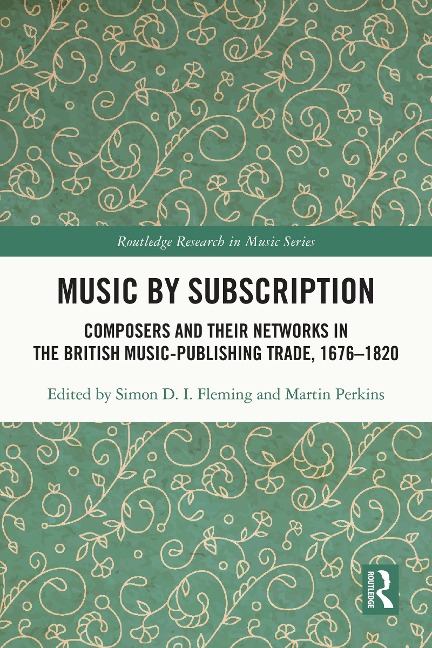
This book breaks new ground in the social and cultural history of eighteenth-century music in Britain through the study of a hitherto neglected resource, the lists of subscribers that were attached to a wide variety of publications, including musical works. These lists shed considerable light on the nature of those who subscribed to music, including their social status, place of employment, residence, and musical interests. Through broad analysis of subscription data, the contributors reveal insights into social and economic changes during the period, and the types of music favoured by groups like music clubs, the aristocracy, the clergy, and by men and women. With chapters on female composers and listeners, music and the slave economy, musical patronage, the print trade, and nationality, this book provides innovative perspectives that enhance our understanding of music's social spheres, the emergence of music publishing, and the potential of digital musicology research.
Simon D.I. Fleming holds a PhD in music from Durham University, and formerly taught in the Department of Music. He is currently Head of Music at the Queen Elizabeth Sixth Form College, Darlington, UK. Martin Perkins holds a PhD from the Royal Birmingham Conservatoire, Birmingham City Unveristy, where he lectures in music history, theory, and performance.
Chapter 1. Introduction. Simon D. I. Fleming and Matin Perkins Section 1. The Production of Musical Works by Subscription Chapter 2. Thomas Mace and the Publication by Subscription of Musick's Monument (1676). Stephanie Carter Chapter 3. Cecilia Maria Barthélemon's Three Sonatas, op 1. Michael Kassler Chapter 4. Maria Hester Park and her Subscribers. Lise Karin Meling Chapter 5. Publishing Music by Subscription in Eighteenth-Century Edinburgh: John Watlen and his Collections of Circus Tunes. Simon D. I. Fleming Chapter 6. William Felton and John Pixell: The Musical Circles of the Vicar Composer. Simon D. I. Fleming Section 2. The Consumption of Music Published by Subscription Chapter 7. Gentry, Servants, and Musicians: A Network of Subscribers in North-East England. Roz Southey Chapter 8. The Music-Making of the Bridgeman Family, Weston Park. Martin Perkins Chapter 9. A Big Data Study: Musical Societies in Subscription Lists. Simon D. I. Fleming and Martin Perkins Chapter 10. Strathspeys, Reels, and Instrumental Airs: A National Product. Karen E. McAulay Chapter 11. Profiting from the Slave Economy and Subscribing to Music: The British Experience in the Eighteenth Century. David Hunter Chapter 12. Foreign Composers, the Subscription Market, and the Popularity of Continental Music in Eighteenth-Century Britain. Simon D. I. Fleming
Dieses eBook wird im PDF-Format geliefert und ist mit einem Adobe Kopierschutz (DRM) versehen. Sie können dieses eBook mit allen Geräten lesen, die das PDF-Format und den Adobe Kopierschutz (DRM) unterstützen.
Zum Beispiel mit den folgenden Geräten:
• tolino Reader
Laden Sie das eBook direkt über den Reader-Shop auf dem tolino herunter oder übertragen Sie das eBook auf Ihren tolino mit einer kostenlosen Software wie beispielsweise Adobe Digital Editions.
• Sony Reader & andere eBook Reader
Laden Sie das eBook direkt über den Reader-Shop herunter oder übertragen Sie das eBook mit der kostenlosen Software Sony READER FOR PC/Mac oder Adobe Digital Editions auf ein Standard-Lesegeräte mit epub- und Adobe DRM-Unterstützung.
• Tablets & Smartphones
Möchten Sie dieses eBook auf Ihrem Smartphone oder Tablet lesen, finden Sie hier unsere kostenlose Lese-App für iPhone/iPad und Android Smartphone/Tablets.
• PC & Mac
Lesen Sie das eBook direkt nach dem Herunterladen mit einer kostenlosen Lesesoftware, beispielsweise Adobe Digital Editions, Sony READER FOR PC/Mac oder direkt über Ihre eBook-Bibliothek in Ihrem Konto unter „Meine eBooks“ - „online lesen“.
Schalten Sie das eBook mit Ihrer persönlichen Adobe ID auf bis zu sechs Geräten gleichzeitig frei.
Bitte beachten Sie, dass die Kindle-Geräte das Format nicht unterstützen und dieses eBook somit nicht auf Kindle-Geräten lesbar ist.