Und dann auf "Zum Home-Bildschirm [+]".

Stöbern
genialokal zum Startbildschirm hinzufügen
Installieren Sie die genialokal App auf Ihrem Startbildschirm für einen schnellen Zugriff und eine komfortable Nutzung.
Installieren Sie die genialokal App auf Ihrem Startbildschirm für einen schnellen Zugriff und eine komfortable Nutzung.
Ihr gewünschter Artikel ist in 0 Buchhandlungen vorrätig - wählen Sie hier eine Buchhandlung in Ihrer Nähe aus:

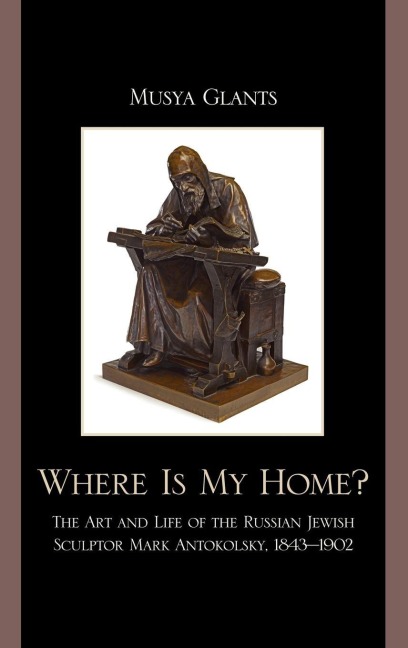
Where Is My Home? is a biography of Mark Antokolski (1843-1902), one of the leading innovative sculptors in Russian and Western art of the late 19th century. This interdisciplinary study pays particular attention to his status as a great Jewish social figure as well as to the theme of national identity.
Musya Glants is a fellow in the Davis Center for Russian Studies atHarvard University.
Chapter 1 Introduction: Mark Antokolskii and his role in Russian, Jewish, and European Culture. Chapter 2 Chapter 1: Vilna. Childhood and youth. Family and friends. Jewish life under Nicholas I and Alexander II: religion, tradition, and the struggle for secularism and education; the Jewish Enlightenment. Antokolskii's search for his own way in life and his fi Chapter 3 Chapter 2: St. Petersburg. The Academy of Arts: a dream fulfilled. The liberal atmosphere of the 1860s-early 1870s. Professors and new friends. Il'ia Repin. Estrangement from classicism. The Russian intellectual milieu. New friends outside the Academy. Th Chapter 4 Chapter 3: The strong links to home and Jewishness. Letters to Yakov Barel and the hardship of life in the capital. Between past and present: the intensifying sense of duality. Summer vacations at home. Images of Jews: "The Tailor" (1864), "The Miser" (18 Chapter 5 Chapter 4: Towards a new style: "Ivan the Terrible" (1871)-an innovative turn in Russian sculpture. The success and the sweetness of fame. Serious Illness. Chapter 6 Chapter 5: Trip to Italy: a window to the world. Rising hopes and inspirations. Life in Rome. Images of Italy. New friends: the Mamontov family, the Polenovs. The Mamontov circle. "Peter the Great" (1872). Marriage to Elena Apatova (1872). Chapter 7 Chapter 6: Disturbing news from the homeland: the growth of anti-Semitism. The expanding feeling of dual belonging. The death of his son Lev (1876). Search for his own style in sculpture. Christian images as a reflection of his strong ideas to draw Jews a Chapter 8 Chapter 7: Removal to Paris, 1877. Life in Paris. The Russian intellectual community. The "Society of Russian Artists in Paris". I. Turgenev; A. Bogoliubov. Art in Paris and French sculpture of that time. The portrait gallery; World Exhibition, 1878 and A Chapter 9 Chapter 8: Exploring genres: distinctive memorials (M. Obolenskaia, 1875-1877) and monuments, accomplished (Catherine II, 1901-1902) and unrealized (A. Pushkin, 1875; I. Fiodorov). Political reaction in Russia: persecution of Jews and pogroms. Visits to R Chapter 10 Chapter 9: Images of Russian historical figures: "Nestor" (1890) and "Yermak" (1891) as a silent call for national tolerance. Official and unofficial manifestations of intensifying ill will towards the sculptor. Antokolskii and his path to Modernism: a ne Chapter 11 Chapter 10: The late 1880s and 1890s: prolific last years. Triumph in Munich (1892). Extensive writing. "Dreyfus". "Reminiscences of Italy". "Letter to H. Gintsburg." The pain of lost ideals and illusions. Illness and death. The funeral-a symbolic homecom Chapter 12 Conclusion: M. Antokolskii's human and artistic fate as emblematic for an artist and a Jew in Late Imperial Russia.