Und dann auf "Zum Home-Bildschirm [+]".

Stöbern
genialokal zum Startbildschirm hinzufügen
Installieren Sie die genialokal App auf Ihrem Startbildschirm für einen schnellen Zugriff und eine komfortable Nutzung.
Installieren Sie die genialokal App auf Ihrem Startbildschirm für einen schnellen Zugriff und eine komfortable Nutzung.
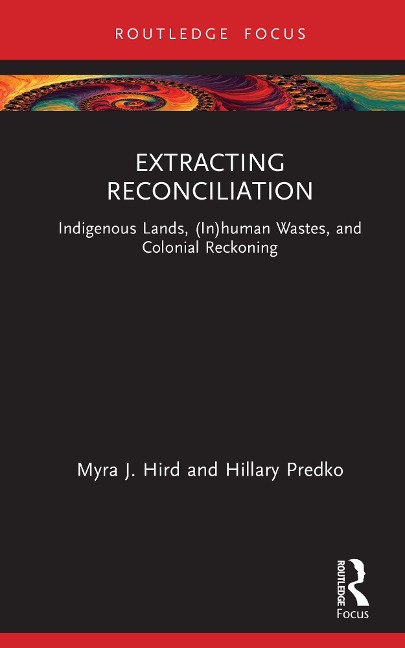
Extracting Reconciliation argues that reconciliation constitutes a critical contemporary mechanism through which colonialism is seeking to ensure continuing access to Indigenous lands and resources. Making use of two historical case studies concerned with the intersection of resource extraction, Crown/Inuit relations, and waste legacies in Nunavut, Canada, the authors illuminate the mechanisms of colonial and neoliberal governance globally that promise reconciliation while delivering the status quo. Through Indigenous and non-Indigenous anticolonial and posthuman concepts and theories, the book engages with the inhuman politics of settler colonial extractivism and explores the socio-ethical social justice dimensions, political possibilities, and environmental implications of a much more challenging and accountable reckoning between (settler) colonialism and Indigenous land rights. This book is of interest to students and scholars in gender studies, postcolonial studies, environmental studies, Indigenous studies, and politics.
Hillary Predko (MES Queen's) is a researcher, writer, and artist based in Ontario. Her research explores issues around the materiality of waste, climate change, and social justice. Her Masters of Environmental Studies research explored the waste politics of resource extraction in Nunavut and earned Social Sciences and Humanities Research Council of Canada funding. Myra J. Hird (DPhil Oxford) is Professor, elected Fellow of the Royal Society of Canada, and Queen's National Scholar in the School of Environmental Studies, Queen's University, Canada. Professor Hird is Director of the research project Waste Flow and has published 12 books and over 80 articles and book chapters on a diversity of topics relating to waste and science studies.
Introduction; 1. Reconciling Reconciliation; 2. Reconciling Geology; 3. Reconciling Resource Extraction; 4. Reconciling Waste; Conclusions: Reckoning
Dieses eBook wird im PDF-Format geliefert und ist mit einem Adobe Kopierschutz (DRM) versehen. Sie können dieses eBook mit allen Geräten lesen, die das PDF-Format und den Adobe Kopierschutz (DRM) unterstützen.
Zum Beispiel mit den folgenden Geräten:
• tolino Reader
Laden Sie das eBook direkt über den Reader-Shop auf dem tolino herunter oder übertragen Sie das eBook auf Ihren tolino mit einer kostenlosen Software wie beispielsweise Adobe Digital Editions.
• Sony Reader & andere eBook Reader
Laden Sie das eBook direkt über den Reader-Shop herunter oder übertragen Sie das eBook mit der kostenlosen Software Sony READER FOR PC/Mac oder Adobe Digital Editions auf ein Standard-Lesegeräte mit epub- und Adobe DRM-Unterstützung.
• Tablets & Smartphones
Möchten Sie dieses eBook auf Ihrem Smartphone oder Tablet lesen, finden Sie hier unsere kostenlose Lese-App für iPhone/iPad und Android Smartphone/Tablets.
• PC & Mac
Lesen Sie das eBook direkt nach dem Herunterladen mit einer kostenlosen Lesesoftware, beispielsweise Adobe Digital Editions, Sony READER FOR PC/Mac oder direkt über Ihre eBook-Bibliothek in Ihrem Konto unter „Meine eBooks“ - „online lesen“.
Schalten Sie das eBook mit Ihrer persönlichen Adobe ID auf bis zu sechs Geräten gleichzeitig frei.
Bitte beachten Sie, dass die Kindle-Geräte das Format nicht unterstützen und dieses eBook somit nicht auf Kindle-Geräten lesbar ist.