Und dann auf "Zum Home-Bildschirm [+]".

Stöbern
genialokal zum Startbildschirm hinzufügen
Installieren Sie die genialokal App auf Ihrem Startbildschirm für einen schnellen Zugriff und eine komfortable Nutzung.
Installieren Sie die genialokal App auf Ihrem Startbildschirm für einen schnellen Zugriff und eine komfortable Nutzung.
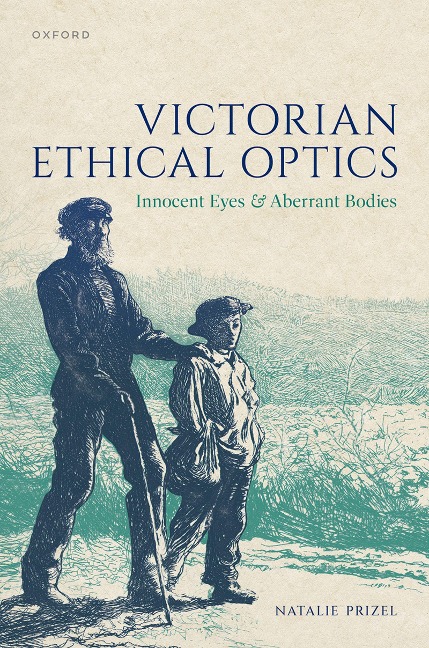
Victorian Ethical Optics asks how artists and authors in the Victorian period answer the ethical question of how one should live with others by turning to a more specific one: how should one look at others? Looking would seem to necessarily lead to interpretation and judgment, but this book shows how Victorian artists and authors imagined other ethical and optical relations. In an era in which aberrant, deformed, and disabled bodies proliferated--particularly those bodies ravaged by industrial labor and poverty--the ideological and economic stakes of looking at such bodies peaked; moreover, as work became a gospel and the question of deservingness became central, looking at aberrant bodies was always a matter of ethics and politics. The aesthetic thinking of John Ruskin animates the visual ethics at the center of this book, as he advocates for "innocence of the eye," which calls for a return to infantile sight of a kind that precedes judgment or classification. Although Ruskin understands such innocence to be an asymptote, optical innocence remains an ethical demand, and it is to this demand that this book attends. Among the authors and artists included are Charles Dickens, George Eliot, Wilkie Collins, Henry Mayhew, Ford Madox Brown, John Everett Millais, and other members of the Pre-Raphaelite Brotherhood. Encounters between normative and aberrant characters or figures within a text or visual object shape the encounter that the external reader or viewer has with those same aberrant bodies. The category of the aberrant draws on ideas from queer and disability studies but makes a case for a broader understanding of strange bodies; in this book, aberrant bodies are those whose visible forms lead to a breakdown in cognition, a breakdown that makes space for the innocent eye to move. In thinking about such bodies, this book introduces the term extranormative to explain the complex and often complicit relationship these figures exemplify in relation to a (surprisingly expansive) Victorian norm. Thinking in terms of extranormativity as an essential feature of Victorian life disrupts tired notions of the period as one in which a narrow definition of bourgeois normativity took hold.
Natalie Prizel is a scholar of nineteenth-century British literature and art, focused on queer and disability theory and comparative approaches to race. She was Andrew W. Mellon Senior Fellowship in European Painting at the Metropolitan Museum of Art and the Haarlow-Cotsen Fellow in English and Humanistic Studies in the Princeton Society of Fellows. Previously, she was a Visiting Assistant Professor at Bard College. Her work has appeared in Victorian Studies, Victorian Literature and Culture, GLQ, Victorian Poetry, and Literature Compass. She is working on another book entitled Pre-Raphaelite in Black, treating the presence of black subjects in Pre-Raphaelite art.
- Introduction - PART ONE - 1: Art Work - 2: The Ruskinian Draughtsman - PART TWO - 3: The Beggars' Opera - 4: The Dead Man Come to Life - PART THREE - 5: The Genre of Blindness - 6: Stunners - Epilogue: What We Have Lost - Appendix: Edward Albert, The Dead Man Come to Life
Dieses eBook wird im PDF-Format geliefert und ist mit einem Adobe Kopierschutz (DRM) versehen. Sie können dieses eBook mit allen Geräten lesen, die das PDF-Format und den Adobe Kopierschutz (DRM) unterstützen.
Zum Beispiel mit den folgenden Geräten:
• tolino Reader
Laden Sie das eBook direkt über den Reader-Shop auf dem tolino herunter oder übertragen Sie das eBook auf Ihren tolino mit einer kostenlosen Software wie beispielsweise Adobe Digital Editions.
• Sony Reader & andere eBook Reader
Laden Sie das eBook direkt über den Reader-Shop herunter oder übertragen Sie das eBook mit der kostenlosen Software Sony READER FOR PC/Mac oder Adobe Digital Editions auf ein Standard-Lesegeräte mit epub- und Adobe DRM-Unterstützung.
• Tablets & Smartphones
Möchten Sie dieses eBook auf Ihrem Smartphone oder Tablet lesen, finden Sie hier unsere kostenlose Lese-App für iPhone/iPad und Android Smartphone/Tablets.
• PC & Mac
Lesen Sie das eBook direkt nach dem Herunterladen mit einer kostenlosen Lesesoftware, beispielsweise Adobe Digital Editions, Sony READER FOR PC/Mac oder direkt über Ihre eBook-Bibliothek in Ihrem Konto unter „Meine eBooks“ - „online lesen“.
Schalten Sie das eBook mit Ihrer persönlichen Adobe ID auf bis zu sechs Geräten gleichzeitig frei.
Bitte beachten Sie, dass die Kindle-Geräte das Format nicht unterstützen und dieses eBook somit nicht auf Kindle-Geräten lesbar ist.
Dieser Titel wird im Fixed Layout-Format angeboten. Diese optimierte Darstellung für Bilder und Grafiken wie in Comics und Manga wird aktuell vom tolino webreader und der tolino app (Android) unterstützt. Bitte beachten Sie, dass Fixed Layout-eBooks keine Änderung der Texteinstellungen (wie z. B. Schriftart oder Schriftgröße) erlauben.