Und dann auf "Zum Home-Bildschirm [+]".

Stöbern
genialokal zum Startbildschirm hinzufügen
Installieren Sie die genialokal App auf Ihrem Startbildschirm für einen schnellen Zugriff und eine komfortable Nutzung.
Installieren Sie die genialokal App auf Ihrem Startbildschirm für einen schnellen Zugriff und eine komfortable Nutzung.
Ihr gewünschter Artikel ist in 0 Buchhandlungen vorrätig - wählen Sie hier eine Buchhandlung in Ihrer Nähe aus:

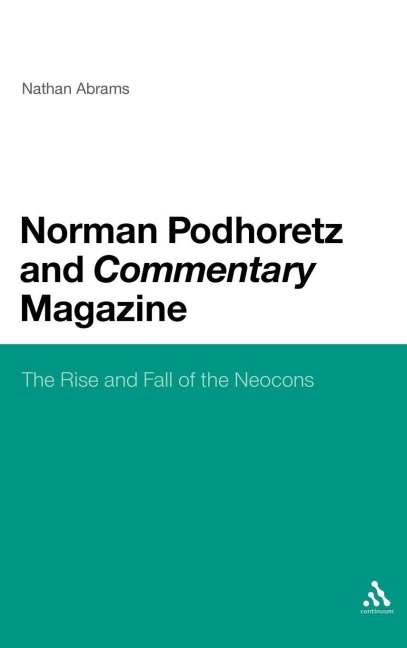
Struggling for Empire is a unique study of the neoconservative movement’s leading thinker and magazine: Norman Podhoretz and Commentary. In this book, Nathan Abrams examines the origins, rise, and fall of neoconservatism and argues that much of what has been said about it in the last six years is the result of willful distortion and exaggeration by both the neocons and their opponents. The main goal of this critical and balanced survey is to dispel misconceptions of what the much widely used and abused term “neocon” actually refers to. Norman Podhoretz (b. 1930) was one of the neocon movement’s leading intellectuals. With ten books and 35 years as Editor of the magazine Commentary, Podhoretz was a powerful force who helped shape neoconservatism. In fact, neoconservatism was almost Podhoretz’s personal ideology, one in which he promoted his own ideas for the future direction of America. However, in spite of being described as “the conductor of the neocon orchestra,” Podhoretz is often ignored by current assessments of the neocon movement. A fair examination of his work, as done in Struggling for Empire, will foster better understanding of the roots, concepts, and intellectual background of the movement. The book is also unique in that it is the first complete study to cover the years 1960 to the present of Commentary, puncturing, where necessary, some of the mythology that surrounds the flagship neocon magazine. Based on archival and unpublished materials, including Podhoretz’s private papers, Struggling for Empire is the first detailed and critical study of neoconservatism to focus exclusively on Podhoretz and Commentary. A notable contribution to the study of conservatism in America, this timely book will appeal to anyone who seeks to understand better the movement that has shaped contemporary American politics.
Nathan Abrams is Professor of Film Studies at Bangor University, UK. He is the founding co-editor of Jewish Film and New Media: An International Journal. He is the author and editor of a number of books and articles, including most recently The New Jew in Film: Exploring Jewishness and Judaism in Contemporary Cinema (2012). He is currently editing a collection entitled Hidden in Plain Sight: Jews and Jewishness in British Film, Television, and Popular Culture (forthcoming).
Introduction
Chapter One: Taking Over
Examines Podhoretz's early life and career from 1930 to the 1960s, with a special focus on how he sought to change Commentary after taking on its editorship in 1960.
Chapter Two: The Revised Standard Version
Looks at the inaccurate evaluations of both Podhoretz and Commentary and how the events of the 60s helped neoconservatism to emerge. Argues that in the 60s, Podhoretz turned the magazine into a source of anti-liberal and anti-black conservatism, but did not change key fundamentals about the magazine.
Chapter Three: War
Examines Podhoretz's shift in the 1970s toward neoconservatism in his war against the New Left and the counterculture, which he collectively called "the movement."
Chapter Four: Resurrection
Looks at how Podhoretz, as a result of his fight with "the movement," recycled ideas from the past, returning Commentary to a very similar position as when he took it over.
Chapter Five: Empire
Focuses on Podhoretz and Commentary's zenith, when the magazine featured the major ideologues of the "Reagan Revolution." Demonstrates the influence of the magazine on the Reaganite agenda.
Chapter Six: Decline
Traces the crumbling of Podhoretz's influence.
Chapter Seven: Fall
Looks at the decline, in terms of influence and readership, of both Podhoretz and neoconservatism, a process capped by the election of President Clinton in 1992. Examines how neoconservatism became a mild variant of the more orthodox and familiar conservative mainstream, which has been called 'paleoconservatism,' and which differs markedly from the original neoconservatism of the 1970s and 1980s.
Chapter Eight: After the Fall
Looks at Podhoretz, the movement, and the magazine after Podhoretz left Commentary in 1995. Since then, Podhoretz has acted as the Republican Presidential candidate Rudolph Giuliani's foreign policy advisor, and is now editor-at-large at Commentary. Examines the neocons' influence on George W. Bush's policies since 2001, and prospects for the future.
Conclusion
Summarizes Podhoretz's career and its impact on our understanding of neoconservatism.