Und dann auf "Zum Home-Bildschirm [+]".

Stöbern
genialokal zum Startbildschirm hinzufügen
Installieren Sie die genialokal App auf Ihrem Startbildschirm für einen schnellen Zugriff und eine komfortable Nutzung.
Installieren Sie die genialokal App auf Ihrem Startbildschirm für einen schnellen Zugriff und eine komfortable Nutzung.
Ihr gewünschter Artikel ist in 0 Buchhandlungen vorrätig - wählen Sie hier eine Buchhandlung in Ihrer Nähe aus:

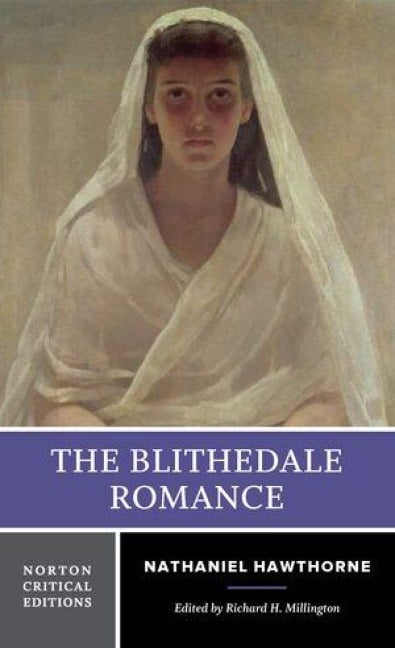
This Norton Critical Edition of The Blithedale Romance is based on the Centenary Edition of the Works of Nathaniel Hawthorne, widely considered the best available edition. It is accompanied by explanatory annotations to help readers with Hawthorne's many historical and literary references as well as with other possible sources of difficulty in the text.
"Contexts" is thematically organized and includes a rich and varied selection of materials, both public and private, focusing on Hawthorne's inspirations for the novel. Included are letters, excerpts from journals, published accounts of Brook Farm and the growth of antebellum social reform, Hawthorne's letters to Sophia Peabody and Louisa Hawthorne about his first days at Brook Farm, and later letters describing his growing reservations about and decision to leave the utopian community. The Blithedale Romance raises interesting questions about the role of women, the popularity of mesmerism, and the growth of cities in mid-nineteenth-century America. Margaret Fuller, Charles Baudelaire, and Hawthorne, among others, provide invaluable insight.
"Criticism" begins with major contemporary reviews by Herman Melville, William B. Pike, George S. Hillard, James T. Fields, Henry Fothergill Chorley, and others that suggest The Blithedale Romance's initial reception. "Selections from Classic Studies" reprints key excerpts from influential essays published through the 1970s, including those by Henry James, D. H. Lawrence, Irving Howe, and James McIntosh.
"Recent Criticism" collects a striking range of scholarly interpretation by Nina Baym, Joel Pfister, Gillian Brown, Richard H. Brodhead, Lauren Berlant, Russ Castronovo, Robert S. Levine, and Richard H. Millington.
A Chronology and a Selected Bibliography are also included.
NATHANIEL HAWTHORNE was four years old when his father, a sea captain, died in 1808. He grew up under the roof of his maternal uncles in Salem, Massachusetts, and attended Bowdoin College in Maine, where he discovered his vocation as a writer. The publication of his short story "Young Goodman Brown" in 1835 was followed by the collections Twice-Told Tales (1837) and Mosses from an Old Manse (1846). The latter took its name from the house in Concord, Massachusetts, where he and his wife, Sophia, lived after their marriage in 1842. Unable to earn a living from his writing, he sought employment as a government bureaucrat, first in the Salem Custom House and later as United States consul in Liverpool, England. Despite his chronic financial insecurity, he continued to produce such notable works as The Scarlet Letter (1850), The House of the Seven Gables (1851), The Blithedale Romance (1852), and The Marble Faun (1860). He died in Plymouth, New Hampshire, in 1864.