Und dann auf "Zum Home-Bildschirm [+]".

Stöbern
genialokal zum Startbildschirm hinzufügen
Installieren Sie die genialokal App auf Ihrem Startbildschirm für einen schnellen Zugriff und eine komfortable Nutzung.
Installieren Sie die genialokal App auf Ihrem Startbildschirm für einen schnellen Zugriff und eine komfortable Nutzung.
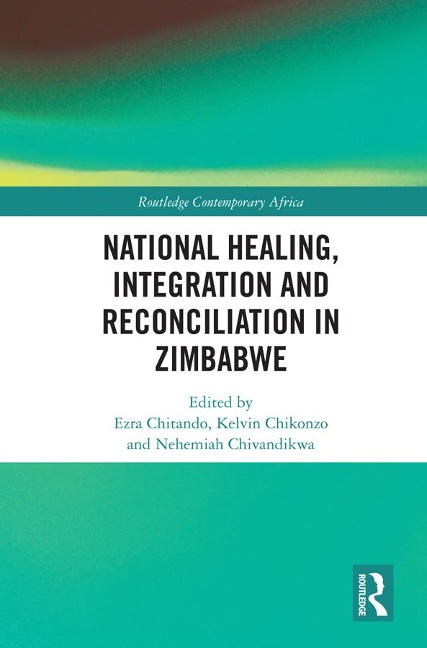
This book brings together scholars from diverse backgrounds to provide interdisciplinary perspectives on national healing, integration, and reconciliation in Zimbabwe. Taking into account the complex nature of healing across moral, political, economic, cultural, psychological, and spiritual dimensions of communities and the nation, the chapters discuss approaches, disparities, tensions, and solutions to healing and reconciliation within a multidisciplinary framework. Arguing that Zimbabwe's development agenda is severely compromised by the dominance of violence and militancy, the contributors analyse the challenges, possibilities and opportunities for national healing. This book will be of interest to scholars of African studies, conflict and reconciliation, and development studies.
Ezra Chitando serves as a professor in the Department of Religious Studies, Classics, and Philosophy at the University of Zimbabwe and a theology consultant on HIV and AIDS for the World Council of Churches. He has published extensively on religion and HIV, gender, masculinity, politics, and methodology. Kelvin Chikonzo is a senior lecturer who has researched intensively on protest theatre in Zimbabwe. He is interested in studying various aspects of democracy protest theatre as a way of ensuring that protest theatre does not replicate the oppression that it purports to fight against in terms of multivocalism, mediation of agency and liberating the spectator. Nehemiah Chivandikwa is an Associate Professor at the University of Zimbabwe. He teaches theatre and development communication and applied media technologies. His research interests are in performance and body politics, gender, disability, applied theatre performances and media. He has published several articles in both regional and international journals in these areas. Prof Chivandikwa has been involved in several projects in applied theatre on gender, political violence, disability and rural and urban development. His latest 2017 publications are: 'Subverting Ableist Discourse as an Exercise in Precarity' in the Journal of Applied Theatre and Performance, 35(3):pp.61-75 and 'Political-Ethical Approach to Disability in Theatre for Development Context' in Applied Theatre Research, 5(2):83-97.
Author biographies Introduction: national healing, integration and reconciliation in Zimbabwe 1. The elusive search for national healing and reconciliation in Zimbabwe 2. The social imaginary for healing and reconciliation 3. The significance of inclusivity: national healing and reconciliation in Zimbabwe 4. The government of national unity and national healing in Zimbabwe 5. Tinkering with the commission: Zimbabwe's use of commissions of inquiry as a transitional justice mechanism 6. Theorising reconciliation and national healing in Zimbabwe 7. Violence as a peace repellent: the politics of Zimbabwe and hate language during the "Old Dispensation" 8. The Shona proverbs as a resource for reconciliation 9.Sahwira and/as endogenous healing and therapy in Shona funerary rituals: insights for national healing 10. Theatre, grassroots civility, and healing/reconciliation: a critique of Heal the Wounds11.Ngozi spirits and healing the nation at the grassroots 12. Media and healing in Zimbabwe: millstone or milestone? 13. Remembering and healing post-colonial violence: an analysis of Christopher Mlalazi's Running with Mother14. The beauty of forgiveness: lessons for Zimbabwe in conflict-transformation and peace-building from Chimamanda Ngozi Adichie's Purple Hibiscus and Half of a Yellow Sun15. The potential role of education in peacebuilding in Zimbabwe 16. "The Bruised and Troubled Nation": Pentecostals, reconciliation, and development in Zimbabwe 17. Zimbabwean theology and religious studies promoting national healing and reconciliation: towards curriculum transformation 18. Trauma and healing among children on the streets in Zimbabwe 19. The environmental healing promises of a Zimbabwean traditional religio-mythical paradise Index
Dieses eBook wird im PDF-Format geliefert und ist mit einem Adobe Kopierschutz (DRM) versehen. Sie können dieses eBook mit allen Geräten lesen, die das PDF-Format und den Adobe Kopierschutz (DRM) unterstützen.
Zum Beispiel mit den folgenden Geräten:
• tolino Reader
Laden Sie das eBook direkt über den Reader-Shop auf dem tolino herunter oder übertragen Sie das eBook auf Ihren tolino mit einer kostenlosen Software wie beispielsweise Adobe Digital Editions.
• Sony Reader & andere eBook Reader
Laden Sie das eBook direkt über den Reader-Shop herunter oder übertragen Sie das eBook mit der kostenlosen Software Sony READER FOR PC/Mac oder Adobe Digital Editions auf ein Standard-Lesegeräte mit epub- und Adobe DRM-Unterstützung.
• Tablets & Smartphones
Möchten Sie dieses eBook auf Ihrem Smartphone oder Tablet lesen, finden Sie hier unsere kostenlose Lese-App für iPhone/iPad und Android Smartphone/Tablets.
• PC & Mac
Lesen Sie das eBook direkt nach dem Herunterladen mit einer kostenlosen Lesesoftware, beispielsweise Adobe Digital Editions, Sony READER FOR PC/Mac oder direkt über Ihre eBook-Bibliothek in Ihrem Konto unter „Meine eBooks“ - „online lesen“.
Schalten Sie das eBook mit Ihrer persönlichen Adobe ID auf bis zu sechs Geräten gleichzeitig frei.
Bitte beachten Sie, dass die Kindle-Geräte das Format nicht unterstützen und dieses eBook somit nicht auf Kindle-Geräten lesbar ist.