Und dann auf "Zum Home-Bildschirm [+]".

Stöbern
genialokal zum Startbildschirm hinzufügen
Installieren Sie die genialokal App auf Ihrem Startbildschirm für einen schnellen Zugriff und eine komfortable Nutzung.
Installieren Sie die genialokal App auf Ihrem Startbildschirm für einen schnellen Zugriff und eine komfortable Nutzung.
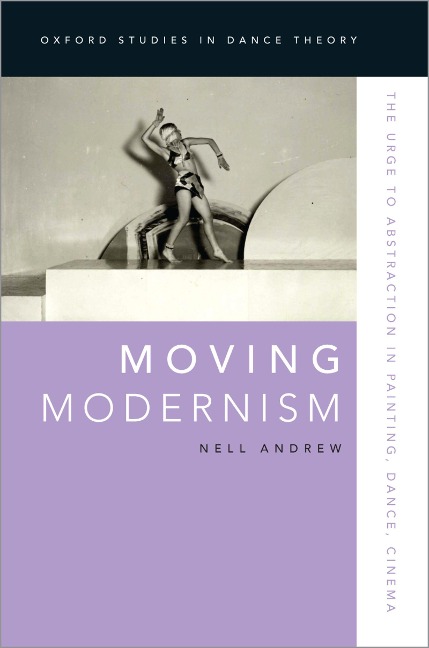
The emergence of modern dance and the early history of cinema ran concurrent with the European avant-garde's development of pictorial abstraction in the first decades of the 20th century. However, many assume that modernist abstraction resulted from a century of natural, autonomous evolution to painting styles and tastes. In Moving Modernism, author Nell Andrew challenges this assumption. By examining dance and film created during this period, she argues that performative modes of art created the link between bodily movement and movement depicted in modernist paintings. In a seeming paradox, dance and film - durational arts, involving real bodies in space-participated in the development of abstract art. With archival material collected in North America and Europe, Moving Modernism resurfaces lost performances, identifies working methods, and establishes the circles of aesthetic influence and reception for avant-garde dance pioneers and experimental film makers from the turn of the century to the interwar period. Reexamining the motivation that fueled the emergence of abstraction, Andrew claims that painters sought meaning not only in the material and formal picture but also in temporal and sensorial experience. Andrew looks at major figures and intellectual movements including Loïe Fuller and Symbolism; Valentine de Saint-Point and the Cubo-Futurist and neo-Symbolist movements; and early cinematic abstraction from Edison and the Lumières to Hans Richter and Marcel Duchamp. Close examinations of each figure show that theatrical display, embodied self-projection, and kinesthetic desire are not necessarily in opposition to pictorial abstraction; in fact, they expand our understanding of the urges that created modern art.
Nell Andrew is Associate Professor of Art History and Co-Director of the Interdisciplinary Modernisms Workshop at the University of Georgia, Athens. She teaches and researches in the fields of modern art and the historical avant-garde, dance history, and early film.
Acknowledgements Introduction: The Medium is a Muscle Chapter one: The Idea in Motion: Loïe Fuller at the Banquet Chapter two: Futurist Moment/um: Valentine de Saint-Point's Métachorie Chapter three: Dada Dance: Sophie Taeuber's Visceral Abstraction Chapter four: Living Art: Akarova's Music-Architecture Chapter five: The Dance of Abstract Cinema List of Illustrations Selected Bibliography Index
Dieses eBook wird im PDF-Format geliefert und ist mit einem Adobe Kopierschutz (DRM) versehen. Sie können dieses eBook mit allen Geräten lesen, die das PDF-Format und den Adobe Kopierschutz (DRM) unterstützen.
Zum Beispiel mit den folgenden Geräten:
• tolino Reader
Laden Sie das eBook direkt über den Reader-Shop auf dem tolino herunter oder übertragen Sie das eBook auf Ihren tolino mit einer kostenlosen Software wie beispielsweise Adobe Digital Editions.
• Sony Reader & andere eBook Reader
Laden Sie das eBook direkt über den Reader-Shop herunter oder übertragen Sie das eBook mit der kostenlosen Software Sony READER FOR PC/Mac oder Adobe Digital Editions auf ein Standard-Lesegeräte mit epub- und Adobe DRM-Unterstützung.
• Tablets & Smartphones
Möchten Sie dieses eBook auf Ihrem Smartphone oder Tablet lesen, finden Sie hier unsere kostenlose Lese-App für iPhone/iPad und Android Smartphone/Tablets.
• PC & Mac
Lesen Sie das eBook direkt nach dem Herunterladen mit einer kostenlosen Lesesoftware, beispielsweise Adobe Digital Editions, Sony READER FOR PC/Mac oder direkt über Ihre eBook-Bibliothek in Ihrem Konto unter „Meine eBooks“ - „online lesen“.
Schalten Sie das eBook mit Ihrer persönlichen Adobe ID auf bis zu sechs Geräten gleichzeitig frei.
Bitte beachten Sie, dass die Kindle-Geräte das Format nicht unterstützen und dieses eBook somit nicht auf Kindle-Geräten lesbar ist.