Und dann auf "Zum Home-Bildschirm [+]".

Stöbern
genialokal zum Startbildschirm hinzufügen
Installieren Sie die genialokal App auf Ihrem Startbildschirm für einen schnellen Zugriff und eine komfortable Nutzung.
Installieren Sie die genialokal App auf Ihrem Startbildschirm für einen schnellen Zugriff und eine komfortable Nutzung.
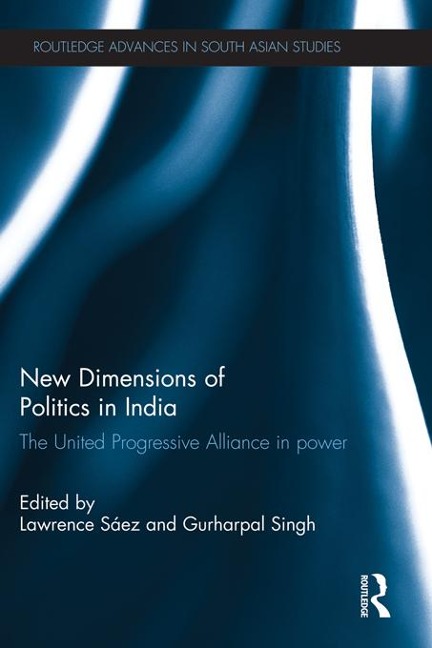
Following India's general election in May 2009, this book undertakes a critical evaluation of the performance of the United Progressive Alliance (UPA). It presents a thorough analysis of the UPA coalition government, and by providing an understanding of the new innovations in the UPA's policies, the book goes on to evaluate the effectiveness of these policies against their aims and objectives. This book suggests that there is an analytical framework for assessing the political consequences of the policies and the UPA's success, both at the national and state levels, with particular reference to new policies in governance, secularism and security. These three areas constitute important fault lines between the main national political parties in India, and provide an interesting point of departure to explore the new emerging trends, as well as the strong underlying continuities between the UPA administration and its predecessors. The book offers new insights into the structure of Indian politics, and is a useful contribution to studies in South Asian Politics, Governance and Political Parties.
Lawrence Saez is Associate Professor in Comparative and International Politics at the School of Oriental and Asian Studies (SOAS), UK. He is also Director of the Centre for South Asian Studies at SOAS and an Associate Fellow in the International Economics programme at Chatham House. Gurharpal Singh is the Nadir Dinshaw Chair in Inter-Religious Relations and the Deputy Director of the Religions and Development Research Programme (DFID). He is based in the School of Philosophy, Theology and Religion at the University of Birmingham, UK.
1. Introduction Lawrence Saez and Gurharpal Singh Part 1:Governance 2. Did the central government's poverty initiatives help to re-elect it? James Manor 3. The UPA and federalism: a paradigm shift? Harihar Bhattacharya 4. Educational exclusion and inclusive development in India Shailaja Fennell Part 2: Secularism 5. UPA and secularism, 2004-2009. Gurharpal Singh 6. The UPA and Muslims Steve Wilkinson 7. Beyond identity? The UPA rhetoric on social justice and reservations Rochana Bajpai Part 3: Security 8. The UPA's foreign policy, 2004-2009 Kanti Bajpai 9. India's energy security during the UPA government Lawrence Saez 10. India's anti-terrorism and security policy in the first UPA government Rahul Roy-Chaudhury 11. Conclusion
Dieses eBook wird im PDF-Format geliefert und ist mit einem Adobe Kopierschutz (DRM) versehen. Sie können dieses eBook mit allen Geräten lesen, die das PDF-Format und den Adobe Kopierschutz (DRM) unterstützen.
Zum Beispiel mit den folgenden Geräten:
• tolino Reader
Laden Sie das eBook direkt über den Reader-Shop auf dem tolino herunter oder übertragen Sie das eBook auf Ihren tolino mit einer kostenlosen Software wie beispielsweise Adobe Digital Editions.
• Sony Reader & andere eBook Reader
Laden Sie das eBook direkt über den Reader-Shop herunter oder übertragen Sie das eBook mit der kostenlosen Software Sony READER FOR PC/Mac oder Adobe Digital Editions auf ein Standard-Lesegeräte mit epub- und Adobe DRM-Unterstützung.
• Tablets & Smartphones
Möchten Sie dieses eBook auf Ihrem Smartphone oder Tablet lesen, finden Sie hier unsere kostenlose Lese-App für iPhone/iPad und Android Smartphone/Tablets.
• PC & Mac
Lesen Sie das eBook direkt nach dem Herunterladen mit einer kostenlosen Lesesoftware, beispielsweise Adobe Digital Editions, Sony READER FOR PC/Mac oder direkt über Ihre eBook-Bibliothek in Ihrem Konto unter „Meine eBooks“ - „online lesen“.
Schalten Sie das eBook mit Ihrer persönlichen Adobe ID auf bis zu sechs Geräten gleichzeitig frei.
Bitte beachten Sie, dass die Kindle-Geräte das Format nicht unterstützen und dieses eBook somit nicht auf Kindle-Geräten lesbar ist.